Solar Quartz Movement
A quartz movement powered by a photovoltaic cell beneath the dial — converts ambient light to electricity, no battery.
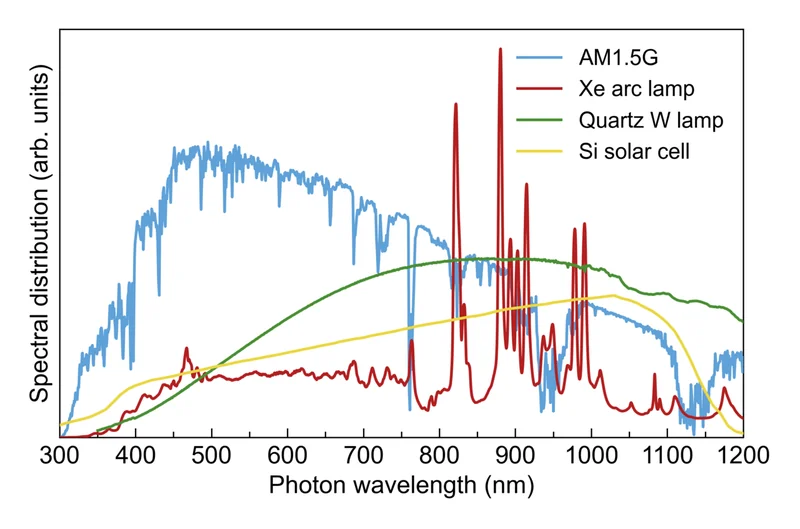
A solar quartz movement uses a photovoltaic cell — typically mounted beneath a translucent dial — to convert both artificial and natural light into electricity, which is stored in a rechargeable secondary cell or capacitor. The timekeeping mechanism is identical to a conventional battery quartz movement: a 32,768 Hz quartz crystal oscillator governs a stepping motor that advances the hands. Citizen pioneered the technology with its Eco-Drive system (commercial launch 1995), and Seiko Solar and Casio Tough Solar followed. A solar watch exposed to normal daily light conditions maintains charge indefinitely; in full darkness, stored energy can sustain operation for 1–12 months depending on calibre.
Quick facts
- Type
- Movement
- Movement
- Quartz
- Era
- 1976 (Citizen patent) / 1995 (Citizen Eco-Drive commercial)
- Origin
- Japan
The Photovoltaic Cell
The solar cell in a watch movement is typically an amorphous silicon photovoltaic panel manufactured as a thin film. It is placed behind the dial, which is made partially translucent (or has an open design) to allow light to reach the cell. Amorphous silicon performs better than crystalline silicon under low-intensity and artificial light — an important property for indoor use. The cell converts both fluorescent office lighting and direct sunlight into usable voltage. Citizen's Eco-Drive panels achieve an efficiency of approximately 10–12% light-to-electricity conversion, sufficient to power the 25–50 microwatt draw of a quartz calibre.
Energy Storage
The converted electricity charges a secondary cell (rechargeable lithium-ion in modern movements) or, in some designs, a supercapacitor. Conventional non-rechargeable batteries are used in traditional quartz watches; solar watches replace them with a rechargeable storage element rated for the life of the movement — typically 10 years before capacity degradation becomes noticeable. Energy management ICs in high-end solar calibres monitor the charge state and activate power-saving modes (stopping the second hand to reduce consumption) when stored energy falls below a threshold, while maintaining the time reference so the hands can be repositioned to the correct time when charging resumes.
Citizen Eco-Drive
Citizen's Eco-Drive platform, commercially launched in 1995 after development work beginning in the 1970s, became the defining solar watch technology. The Calibre 0100 (2019) adds temperature-compensated regulation to achieve ±1 second per year — a level of accuracy requiring no time correction for typical ownership periods. Eco-Drive movements are produced across a range from basic three-hand calibres to multi-complication movements with chronograph, perpetual calendar, and radio-controlled time synchronisation. As of 2025, Citizen reports that Eco-Drive movements have prevented more than 1.5 billion conventional batteries from requiring disposal.
Casio Tough Solar and Multi-Band
Casio markets solar technology under the 'Tough Solar' label, integrated with the G-Shock and Pro Trek lines. Many Casio solar movements are combined with radio-wave reception (Multi-Band 6) that synchronises the watch to atomic time standards broadcast in Japan, North America, Europe, and China, achieving atomic clock accuracy at the wrist. The solar cell in a G-Shock is particularly challenged because the case is designed for shock and water resistance, limiting light transmission; Casio engineers optimised the transparent window area and cell efficiency accordingly.
Sources & further reading (3)
- encyclopedia — accessed 2026-05-07
- encyclopedia — accessed 2026-05-07
- watch-reference — accessed 2026-05-07
Frequently asked questions
Can a solar watch run forever without battery replacement?
Solar watches do not require conventional non-rechargeable battery replacement, but the secondary rechargeable cell (or capacitor) that stores solar energy will eventually lose capacity — typically after 10–15 years of regular use. After that point, the cell can usually be replaced by a watchmaker. The watch's timekeeping mechanism remains functional; it is only the energy storage element that ages.
How long does it take to charge a solar watch?
Charge time varies by model and light intensity. Citizen Eco-Drive documentation indicates that approximately 5 hours of outdoor sunlight can charge a depleted movement enough for full daily operation, while 11 hours of indoor fluorescent light achieves the same. For top-up charging during regular use, any ambient indoor light during normal daily activity is typically sufficient to maintain the charge indefinitely.
Does the dial colour affect how well a solar watch charges?
Yes. Darker dials generally absorb more light and transmit less to the photovoltaic cell than lighter dials, because more light is absorbed or reflected by the dial pigment before reaching the cell. Dial design is a significant engineering consideration in solar watch development: Citizen and Seiko engineers select translucent pigments and optimise dial layer thicknesses to balance aesthetics with charging efficiency.