Omega Speedmaster
A manual-wind chronograph first produced in 1957, NASA-qualified in 1965 — worn on every crewed Moon landing.
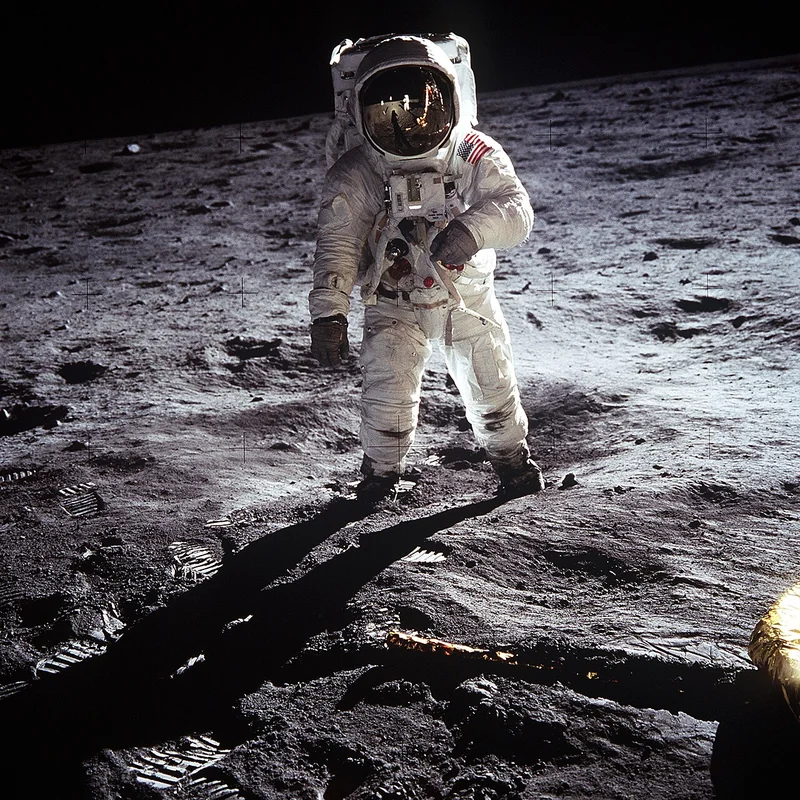
The Omega Speedmaster is a manual-wind chronograph wristwatch introduced by Omega in 1957, designed for automotive and sporting timing applications. In 1964–1965, NASA conducted a competitive evaluation of commercially available chronographs for use in the Gemini and Apollo programs; the Speedmaster was the sole watch to pass all tests, receiving official NASA qualification. The professional reference 105.012 and its successors were worn on all crewed NASA Moon missions from Apollo 11 (1969) to Apollo 17 (1972), and on subsequent NASA missions through the Space Shuttle era. The Speedmaster remains in production as the Speedmaster Professional 'Moonwatch,' and is among the most documented and continuously produced watch references in history.
Quick facts
- Type
- Iconic Watch
- Era
- 1957-present
- Origin
- Switzerland (Biel/Bienne)
Origins and 1957 Introduction
Omega introduced the Speedmaster in 1957 as a sporting chronograph, part of a trio of professional tool watches alongside the Seamaster 300 (diving) and Railmaster (antimagnetic, for railway use). The original reference CK 2915 used Calibre 321 — a column-wheel chronograph movement based on the Lemania 2310 architecture with lateral clutch, designed by Swiss movement maker Lemania. The 'Broad Arrow' hour hand, step-bezel with tachymeter scale, and symmetrical pushers at 2 and 4 o'clock (unusual placement at the time — most chronographs placed pushers at 2 and 10) defined the reference's appearance. The CK 2915 was the first Omega Speedmaster.
NASA Qualification Testing
In 1964, NASA procurement officer James Ragan purchased several chronograph models commercially at retail and subjected them to qualification tests based on NASA specifications. Tests included temperature cycling (from -18°C to +93°C), thermal vacuum, humidity, oxygen atmosphere, shock (6 shocks of 40G, 11 ms duration), vibration (5–2000 Hz across three axes), magnetic fields, and acceleration (to 7.25G for 1 minute per axis). Three manufacturers — Omega (Speedmaster ref. 105.003), Longines (ref. 30L), and Rolex (Cosmograph) — submitted watches. According to NASA's test report (document SE-010-010-1), the Longines and Rolex crystal cracked; the Omega Speedmaster was the sole survivor. Omega received NASA qualification on 1 March 1965.
Apollo Programme and the Moon
The Speedmaster was worn by all Apollo astronauts during Moon landings from Apollo 11 (16 July to 24 July 1969) onward. Neil Armstrong and Buzz Aldrin left their Speedmasters in the Lunar Module during the moonwalk as a backup timer — the LM's electronic timers had been placed in manual override mode, so the Speedmasters served as redundant timing references. David Scott (Apollo 15) conducted the first geological exploration of the Moon while wearing his Speedmaster; Eugene Cernan and Harrison Schmitt (Apollo 17, December 1972) were the last astronauts to use a Speedmaster on the lunar surface. Jack Swigert's Speedmaster on Apollo 13 (April 1970) was used to manually time the critical 14-second engine burn that corrected the stricken spacecraft's trajectory after the oxygen tank explosion.
Calibre 321 to 861 and Beyond
The original Calibre 321 (column-wheel) was replaced with the Calibre 861 (cam-wheel) in 1968, substantially cutting production costs. The change was considered by many collectors and watchmakers to be a reduction in mechanical complexity and finish quality, though both calibres are accurate and durable. The Calibre 1861 (1996) was a revised 861. In 2019, Omega reintroduced the calibre 321 (in modified form) in a limited 'Moonwatch' edition to mark the 50th anniversary of the Moon landing, using modern manufacturing but restoring the column-wheel architecture. The current standard Moonwatch reference 310.30.42.50.01.001 uses the Calibre 3861, which adds a Co-Axial escapement and master chronometer certification.
Sources & further reading (3)
- encyclopedia — accessed 2026-05-07
- encyclopedia — accessed 2026-05-07
- watch-reference — accessed 2026-05-07
Frequently asked questions
Was the Omega Speedmaster the only watch used on the Moon?
All crewed US lunar missions used the Omega Speedmaster Professional as the official NASA-qualified chronograph. The Russian Mir cosmonauts used the Fortis Cosmonaut Chronograph on ISS missions; some Mir-era missions also used Russian-manufactured Strela chronographs. The Speedmaster is the only watch to have been worn on the lunar surface by multiple astronauts across six missions.
What does 'Professional' mean in Omega Speedmaster Professional?
'Professional' refers to the NASA-qualified professional reference line, as distinct from the Speedmaster Automatic (self-winding) and other Speedmaster derivative models (Reduced, Racing, etc.). The Professional designation specifically indicates the manual-wind model qualified for NASA use — reference 105.012 and successors. Omega introduced the Speedmaster Automatic (reference 376.0822) in 1969, but the Professional remained the NASA-qualified and astronaut-issued model.
What is the sapphire sandwich crystal on the Speedmaster?
From 2021, the standard Moonwatch reference uses a 'sapphire sandwich' construction — an inner flat sapphire crystal below a domed outer sapphire crystal, with a small air gap between them. This configuration reproduces the optical appearance of the older hesalite (acrylic) crystals (which dome outward naturally), maintains the domed visual aesthetic traditional to the Moonwatch, and provides the scratch resistance of sapphire. The original Moonwatch used a hesalite acrylic crystal that was more impact-resistant but prone to scratching. Some purists prefer the hesalite for its period-correct appearance and greater shock resistance.