Lacquer Dial
A dial finished with multiple coats of solvent-based lacquer, oven-cured between layers — the dominant type since 1950.
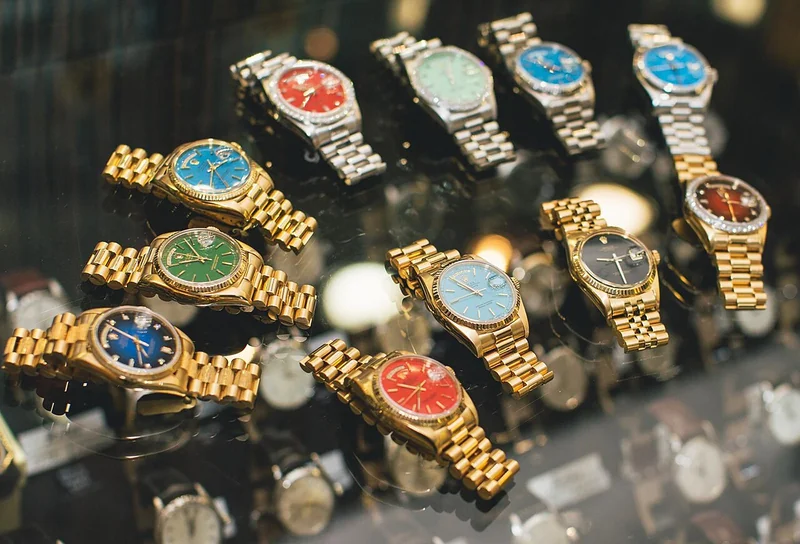
A lacquer dial is a watch dial produced by applying one or more coats of synthetic lacquer to a metal (typically brass) substrate, then curing by heat or UV exposure. Lacquer dials can be produced in opaque solid colours — black, white, cream, silver, grey — or translucent tints. The lacquer application method and curing profile determine the final surface: a high-gloss wet-look lacquer produces a mirror-like surface distinct from matte or satin dials; a matte finish lacquer is produced by adding flattening agents or by a controlled surface texture in the substrate. Lacquer dials are the most common dial type in volume watch production from the mid-20th century onward, replacing painted enamel and introduced alongside automation of dial production. They are distinguished from grand feu enamel (fired vitreous glass), sunburst (satin brushed metal), and stone (mineral slice) dials by their synthetic composition and coating-layer structure.
Quick facts
- Type
- Dial Type
- Era
- 1950s-present
- Origin
- Switzerland / Japan (industrial dial production)
Lacquer Dial Production
Lacquer dials begin with a brass stamping — a flat disc with the feet (mounting posts) formed in the blank. The blank is cleaned, primed if needed, and coated by spraying, dipping, or brushing with an acrylate or nitrocellulose lacquer solution. In production dial factories, spray application in a controlled temperature and humidity chamber provides uniform coating thickness. Successive coats are applied with intermediate curing periods; final coat thickness is typically 20–60 micrometres depending on the finish specification. After final curing, the dial receives printing — indices, numerals, brand logo, subsidiary dial text — by pad printing (tampo printing), a process in which a flexible silicone pad picks up ink from an etched plate and transfers it to the curved dial surface. Applied indices are installed after the lacquer is complete, pressing into pre-drilled holes in the dial body.
Gloss vs Matte vs Satin
The surface character of a lacquer dial is determined by the lacquer formulation and substrate preparation. Gloss lacquer (no flattening agent, smooth substrate) produces a mirror finish — the Rolex dial described as 'black gloss' is a lacquer dial with a high-gloss cured surface, creating a wet, jewel-like appearance. Matte lacquer (flattening agents added to the formulation, or rough substrate prepared before coating) produces a flat, low-reflectance surface — used in military-specification field and pilot watches, where reflection from the dial could cause glare. Satin lacquer falls between these extremes: produced by a semi-gloss formulation and moderate surface preparation. These finish types are not strictly 'dial types' in the same sense as enamel or guilloche — a lacquer dial can be finished in any of these sheens depending on the specification.
Lacquer vs Enamel Historically
Before the widespread adoption of synthetic lacquer in dial production (mid-20th century), dials were commonly produced using vitreous enamel — ground glass fired at high temperature onto a copper or brass substrate. Enamel dials are more durable than lacquer dials against solvent and UV exposure but require significantly more production time and expertise, and the firing process introduces a risk of stress cracking. As production volumes increased through the 1950s and 1960s, lacquer replaced enamel as the primary dial coating for volume production. Grand feu enamel remains in production for premium watches (Patek Philippe, A. Lange & Söhne, independent manufacturers) where the vitreous depth and historical associations justify the additional cost. Lacquer dials have largely displaced enamel in all price segments below the high watchmaking tier.
Notable Lacquer Dial Examples
The Rolex Submariner black dial (original matte lacquer, 1953–1980s; then gloss lacquer from the 1990s) demonstrates the evolution from early matte to contemporary gloss lacquer in a single reference family. The Omega Speedmaster Professional (calibre 321 era) uses a matte black lacquer dial printed with white indices and scale — specifically chosen for legibility under low-light and contrast in the lunar environment. The Patek Philippe Calatrava uses a white lacquer dial (not enamel in standard production) as the ground for its chapter ring and applied indices. The distinction between a white lacquer and a white enamel Calatrava dial requires close inspection — the lacquer version lacks the slight orange-peel texture visible in enamel under magnification.
Sources & further reading (3)
- encyclopedia — accessed 2026-05-07
- encyclopedia — accessed 2026-05-07
- watch-reference — accessed 2026-05-07
Frequently asked questions
How can I tell a lacquer dial from an enamel dial?
Under magnification (loupe or macro photography): a grand feu enamel dial has a depth of surface — the vitreous layer is glassy, slightly three-dimensional, and may show minor orange-peel texture from the firing process. A lacquer dial is thinner and less visually 'deep'; under high magnification, the surface may show slight texture from the spray application. Colour: enamel whites tend slightly warm (cream or ivory); lacquer whites can be cooler and brighter. Practical test: neither is suitable for a buyer without specialist experience to assess at retail — ask the manufacturer whether the dial is grand feu enamel or lacquer.
Do lacquer dials fade or deteriorate?
Lacquer dials are subject to UV-induced fading (colour shift, especially in cream or ivory dials exposed to extended sunlight), solvent damage if cleaned with inappropriate chemicals, and mechanical abrasion if the dial surface is scratched. Vintage lacquer dials — particularly cream/ivory 'tropical' dials from the 1950s–1970s — have developed collector premiums based on the distinctive patination that results from UV and oxidation over decades. Contemporary lacquer formulations are more UV-stable than early nitrocellulose lacquers and deteriorate much more slowly under normal use.
What is a 'tropical' dial?
'Tropical' is a collector term for vintage watch dials — predominantly from the 1950s–1970s — that have undergone a colour transformation from their original colour (typically matte black) to a brown, chocolate, or burgundy tone. The colour shift results from UV exposure, heat, and oxidation affecting the early lacquer or paint formulations used before modern UV stabilisers were available. Tropical dials command significant premiums in vintage Rolex, Heuer, and Omega collecting because the transformation is irreversible and each dial's patination pattern is unique.