Yabukita Cultivar
Japan's dominant tea cultivar — accounting for 70%+ of Japanese tea production, bred for sencha suitability.
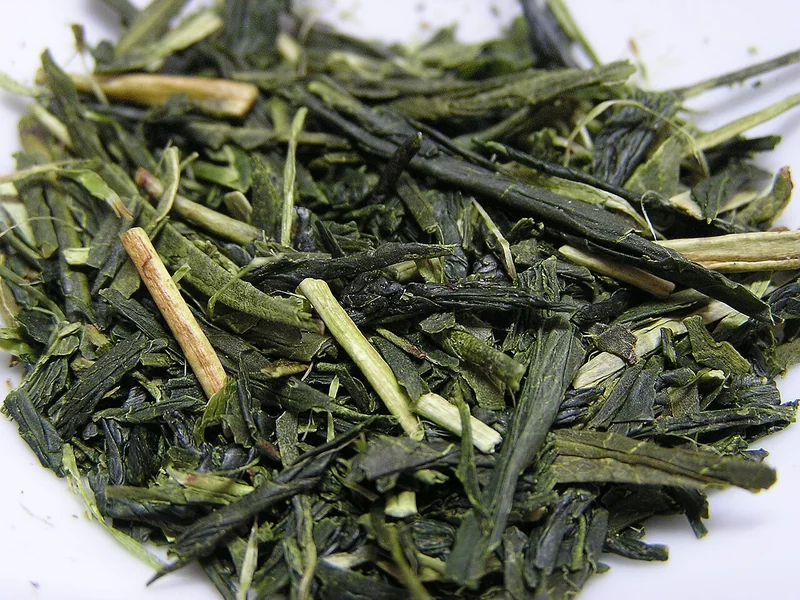
Yabukita (やぶきた) is the dominant cultivar of Camellia sinensis in Japan, accounting for approximately 70–75% of Japan's total tea production area. Developed in the early 20th century by farmer-breeder Hikosaburo Sugiyama in Shizuoka Prefecture, Yabukita was officially registered as a cultivar in 1953 and subsequently promoted as the national standard for sencha production. Its characteristics — cold hardiness, consistent flavour profile, resistance to spring frost, suitability for machine harvesting, and reliable yield — made it ideal for Japan's post-war industrial tea expansion.
Quick facts
- Type
- Tea Plant
- Origin
- Japan (Shizuoka Prefecture; now grown in all major Japanese tea-producing regions)
Development and Official Registration
Yabukita was developed by Hikosaburo Sugiyama (杉山彦三郎), a Shizuoka farmer and amateur breeder who began selecting seedlings from a tea field in the Yabukita district of Shizuoka City around 1908. The name Yabukita (藪北) means 'north of the grove' — a reference to the location in Sugiyama's field where the original seedlings were found and selected. Sugiyama observed that specific seedlings showed superior characteristics: earlier budding, higher yield, cold resistance, and — critically — a flavour profile particularly well-suited to the sencha steaming and rolling process. He selected and propagated these seedlings over decades. After Sugiyama's death, trials continued under agricultural research institutions, and Yabukita was officially registered as an improved cultivar by the Japanese Ministry of Agriculture in 1953. Subsequent government promotion programmes and post-war agricultural industrialisation drove its adoption from Shizuoka to Kagoshima, Uji, Miyazaki, Mie, and all other major tea regions. By the 1980s it had achieved its approximate current 70%+ market share, displacing the prior regional mosaic of local cultivars.
Agronomic Characteristics and Sencha Suitability
Yabukita's rise to dominance was driven by specific agronomic and flavour properties that aligned with Japan's sencha-centric production culture. Cold hardiness: Yabukita can withstand temperatures down to approximately -10°C without significant damage, outperforming many other cultivars in Shizuoka's sometimes cold spring temperatures. Spring frost resistance: its budding timing (typically mid-spring) means it tends to emerge after the most dangerous late-spring frost periods, reducing crop loss compared to earlier-budding cultivars. Machine harvesting compatibility: Yabukita's growth habit produces a consistent, flat table surface (tsura) on the bushes, facilitating the traverse-cutting machine harvesters used in most Japanese commercial tea production. Flavour profile: Yabukita produces a classic sencha character — moderate umami, moderate astringency, fresh vegetal (seaweed or marine) notes — that Japan's tea market calibrates as the standard reference point. The cultivar's consistent and predictable output made standardisation of sencha quality possible at industrial scale, enabling the export market and domestic retail standardisation that characterises modern Japanese tea commerce.
Monoculture Concerns and Cultivar Diversification
Yabukita's 70–75% market share in Japan's tea plantations represents an unusual degree of genetic monoculture for a perennial crop. Japanese agricultural researchers and specialty tea producers have raised concerns about this concentration: a disease or pest specifically targeting Yabukita could affect the majority of Japan's tea production simultaneously; climate change-driven shifts in spring temperature patterns could alter the timing advantage Yabukita's cold hardiness historically provided; and from a flavour perspective, Yabukita's standardised profile limits the diversity available in the Japanese domestic market. In response, NARO (National Agriculture and Food Research Organization) has developed alternative cultivars — Saemidori (earlier budding, more umami-forward), Okumidori (later budding, shade-cultivated, used for gyokuro and matcha), Tsuyuhikari (larger leaves, distinct sweetness), and regional cultivars in Kyushu (Yamakai, Yutakamidori) — that specialty producers are increasingly adopting to differentiate their teas and reduce monoculture risk. Specialty tea retailers in Japan and internationally now actively market cultivar-specific teas as a premium differentiator.
Sources & further reading (2)
- encyclopedia — accessed 2026-05-07
- encyclopedia — accessed 2026-05-07
Frequently asked questions
Why does Yabukita dominate Japanese tea production?
Yabukita was promoted by the Japanese government as a standard cultivar in the 1950s–1970s during the industrial expansion of tea production. Its cold hardiness, machine-harvesting compatibility, consistent flavour, and reliable yield made it the rational choice for commercial sencha production. Government agricultural advisory services recommended it, nurseries specialised in it, and processing equipment was calibrated for its leaf characteristics. Once dominant, network effects reinforced its position: buyers expected its flavour profile, infrastructure was optimised for it, and replanting farmers defaulted to what worked. This self-reinforcing monoculture is now slowly diversifying as specialty markets reward distinctive cultivar characters.
What does Yabukita sencha taste like compared to other cultivars?
Yabukita sencha is the reference point for 'standard' Japanese sencha: moderate vegetal-marine umami, fresh green aroma with light seaweed notes, moderate astringency, and clean finish. It is what most Japanese consumers understand as normal sencha flavour. Alternative cultivars produce distinct variations: Saemidori is sweeter and more umami-forward; Okumidori under shade produces intense umami with less astringency; Kanayamidori has a notably sweet, fruity aromatic character. Yabukita is balanced and reliable rather than distinctive or exceptional in any single dimension — its strength is predictable consistency.
Is Yabukita used for matcha and gyokuro?
Yabukita is used for some shade-grown teas but is not the dominant cultivar for matcha and gyokuro. Okumidori and Samidori are more specifically selected for matcha production at Uji due to their specific amino acid profile under extended shading. Asahi is another important cultivar for premium Uji matcha. For gyokuro, Yabukita is used but competes with Okumidori, Gokou, and others considered to produce superior results under heavy shading. Yabukita's dominance is primarily in standard sencha and bancha production rather than premium shade-grown categories.