Wuyi Shui Xian
A Wuyi rock oolong from an ancient cultivar — darker, fuller-bodied, and more heavily roasted than Da Hong Pao, with a
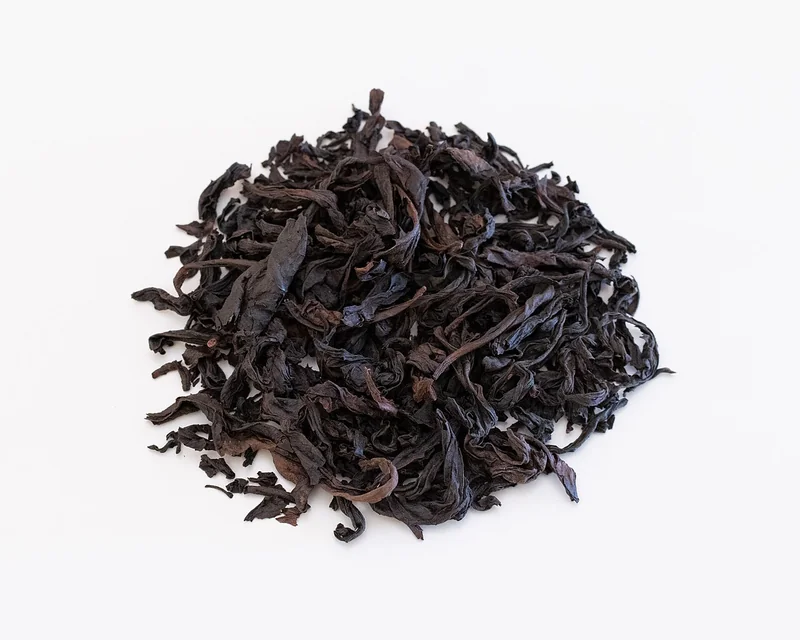
Shui Xian (水仙, 'Water Sprite' or 'Narcissus') is one of the two most important Wuyi rock oolong (yancha, 岩茶) cultivars alongside Da Hong Pao, produced in the Wuyi Mountain Scenic Area of northern Fujian Province. The Shui Xian cultivar is characterised by large, broad leaves and a natural tendency toward a rounder, darker flavour when processed as a rock oolong. Like all Wuyi yancha, it is grown in the unique rocky mineral terrain of the mountain, fully oxidised to 50–70%, and then subjected to multiple rounds of charcoal roasting (peihuo, 焙火) that define the 'mineral' (yanwei, 岩韵) and 'rock rhyme' character. Shui Xian is generally heavier, darker, and more deeply roasted than Da Hong Pao, with a distinctive orchid floral note that surfaces through the roast character.
Quick facts
- Type
- Tea
- Origin
- Wuyi Mountain Scenic Area, Wuyishan City, Fujian Province, China
- Cultivar
- Shui Xian (水仙)
- Oxidation
- Oolong (partial)
- Caffeine
- High
- Astringency
- Low to moderate — roasting softens catechin sharpness
- Sweetness
- Moderate, orchid-honey
- Body
- Full, round
- Tasting notes
- orchid, charcoal, mineral, dark caramel, dried fruit, lingering rock rhyme
The Shui Xian Cultivar
The Shui Xian (水仙) cultivar is one of the oldest and most widely planted tea cultivars in Fujian Province, used not only for Wuyi rock oolong but also for Minnan oolong (particularly Zhang Ping Shui Xian, the only cube-compressed oolong). The cultivar's large leaves, thick cell walls, and naturally robust chemistry make it particularly suited to the extensive roasting required for rock oolong production. Within the Wuyi Mountain classification, Shui Xian grown in the core scenic area on mineral-rich granite and rock formations is designated 'zhengyan' (正岩, true rock) — the highest classification. Shui Xian from the outer growing zones is designated 'banyan' (half-rock) or 'waishan' (outside mountain). The zhengyan designation commands significantly higher prices. Ancient Shui Xian trees (lao cong, 老叢, literally 'old bush') — plants over 60–100 years old — are particularly prized for producing more complex, woody-deep flavours not found in younger plants.
Charcoal Roasting and the Yancha Character
The charcoal roasting (peihuo, 焙火) process is the defining transformation that creates Wuyi rock oolong's distinctive character. After initial oxidation and machine rolling, the semi-finished tea undergoes multiple roasting sessions over bamboo charcoal at various temperatures — each session lasting 8–12 hours at 80–120°C. Between roasting sessions, the tea rests for weeks to 'exhale' (返青, fǎn qīng) — allowing residual moisture and any harsh fire notes to dissipate before the next roasting cycle. Premium zhengyan Shui Xian may undergo 5–8 roasting cycles over several months. This process converts catechins, creates Maillard reaction compounds, and progressively deepens the flavour from fresh oolong through smoky-charred to the complex, multi-layered character of a fully roasted yancha. The 'rock rhyme' (yanwei) is not a specific chemical compound but a combination of minerality from the growing environment and the complex flavour depth from roasting.
Lao Cong Shui Xian: Old Bush Distinction
A significant premium category within Shui Xian is Lao Cong Shui Xian (老叢水仙, 'old bush water sprite') — tea from individual plants that are over 60, 80, or more than 100 years old. Old plants develop deep root systems that penetrate the rock formations, accessing minerals unavailable to younger plants. The leaf chemistry of old Shui Xian bushes differs measurably: higher concentrations of certain amino acids and secondary metabolites that produce a distinctive woody, mossy, almost mushroom-like depth beneath the floral and mineral character. This quality, called 'cong wei' (叢味, 'bush flavour'), is considered the hallmark of true Lao Cong Shui Xian. Verification of genuine old-bush status is difficult for buyers outside the origin community; reputable producers with documented bush ages are the most reliable source.
Sources & further reading (2)
- encyclopedia — accessed 2026-05-07
- encyclopedia — accessed 2026-05-07
Frequently asked questions
What is the difference between Shui Xian and Da Hong Pao?
Both are Wuyi rock oolongs, but they use different cultivars with different flavour profiles and different market positions. Da Hong Pao (the 'commercial' version, made from grafted Qi Dan or blended cultivars) is often lighter in roast with prominent caramel and fruit notes. Shui Xian is typically darker, more fully roasted, with more body and a distinctive orchid note that surfaces beneath the charcoal. Shui Xian, particularly Lao Cong Shui Xian, has a 'bush flavour' depth that Da Hong Pao does not express.
What does 'zhengyan' (true rock) mean?
Zhengyan (正岩) is the highest classification of Wuyi Mountain growing zone, referring to tea grown within the core rocky terrain of the Wuyi Mountain Scenic Area — specifically in the mineral-rich rocky microenvironments closest to the mountain peaks. This classification is valued because the rocky, mineral-laden soil and unique microclimate of these zones contribute to the yanwei ('rock rhyme') quality. Zhengyan teas command significantly higher prices than those from the outer growing zones (banyan, waishan).
How should Shui Xian be stored and how long does roasting last?
Wuyi rock oolongs, including Shui Xian, benefit from sealed airtight storage away from light and heat. Freshly roasted yancha has an intense fire character that many drinkers find too harsh — resting for 2–6 months after roasting allows the fire notes to dissipate and the tea to 'settle' into its mature character. This aging potential is one reason Wuyi yancha is sometimes purchased shortly after roasting and cellared for 6–12 months before drinking. Well-stored Shui Xian can be kept for years, though annual re-roasting by the producer is traditional for maintaining optimal character.