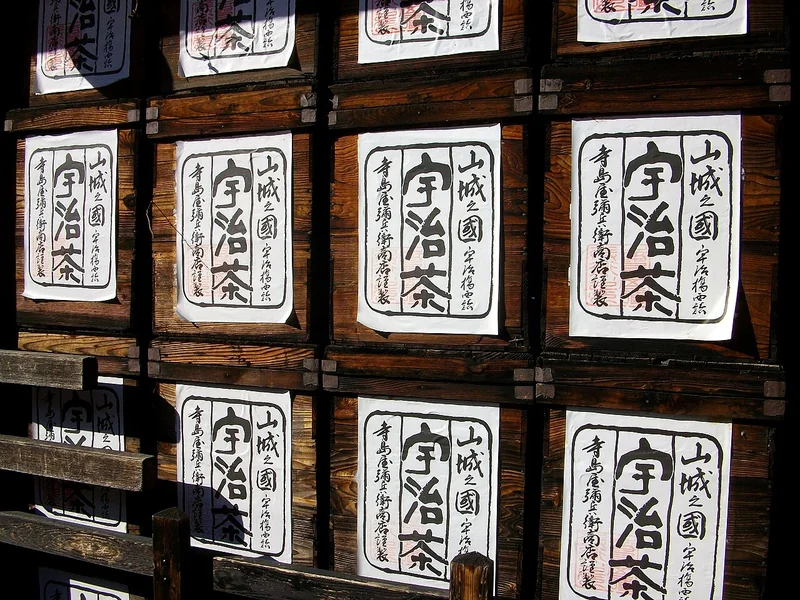
Uji (宇治) is a city located approximately 15 km southeast of Kyoto in Uji City, Kyoto Prefecture, and is the historical centre of Japanese premium tea culture. Tea seeds were brought to Uji from China in the 13th century, and Uji's specific combination of misty river valley microclimate, rich fertile soil, and proximity to the imperial capital made it the preferred source for the highest-grade tea presented to Japan's shogunate and imperial court. Today Uji is synonymous with premium matcha and gyokuro, and the geographical indication 'Uji Tea' (宇治茶) carries legal protection in Japan. The region's long tradition of shade cultivation (tana or kabuse), stone-grinding, and distinct production techniques has influenced Japanese tea culture as a whole.
Quick facts
- Type
- Tea Culture
Historical Foundations: 13th-Century Origins
The origins of Uji's tea culture trace to the Kamakura period (1185–1333 CE). The Buddhist monk Myōan Eisai (明庵栄西) brought tea seeds and preparation knowledge from Song dynasty China to Japan around 1191 CE. Eisai's student Myōe Shōnin (明恵上人) of Kōzan-ji temple in Kyoto is credited with planting tea in Uji around 1215 CE, establishing the gardens that would become the foundation of Uji's tea industry. The specific character of Uji's growing environment — the valley mists from the Uji River, moderate temperatures buffered by surrounding hills, and deep fertile alluvial soils — produced tea of exceptional quality that quickly gained favour with the Ashikaga shogunate. The Muromachi shogunate formalised Uji's status by designating specific Uji gardens as official suppliers (御茶師, o-chashi, 'honoured tea master families'), creating a hereditary production system that persisted from the 14th through the 19th century. The seven families of o-chashi maintained exclusivity of production for the highest grades of tea presented to the shogun.
Shade Cultivation and the Development of Matcha and Gyokuro
Uji's most significant technical contribution to Japanese tea is the systematic development of shade cultivation (覆下栽培, kabuse saibai). By covering tea plants with reed screens or cloth for 20–30 days before harvest, Uji producers discovered that the resulting leaves developed higher theanine content (increasing umami sweetness), lower catechin content (reducing bitterness), and a more vivid green colour with intensified aromatic compounds. This technique, documented in Uji from the 16th century onward, became the foundation of both gyokuro (the premium shade-grown leaf tea) and tencha (the shade-grown, destemmed, stone-ground leaf that becomes matcha). The development of gyokuro is traditionally attributed to Uji tea master Yamamoto Kahei in 1835 — the precise combination of shade duration, harvest timing, and rolling technique that defines gyokuro as a distinct category emerged from Uji's experimental tradition. Modern Uji producers still grow specific cultivars (Okumidori, Samidori, Gokou, Asahi) optimised for shade cultivation and matcha grinding, maintaining a specialisation that other regions have not fully replicated.
Uji Tea Today: GI Protection and Tourism
The 'Uji Tea' geographical indication (宇治茶地理的表示) was registered under Japan's GI protection system, requiring that tea labelled Uji Tea must meet specific geographic and production criteria — though the definition has been a subject of debate, as the Uji Tea designation under the broader framework can include tea from three prefectures (Kyoto, Nara, Shiga) not just Uji city itself. Strictly speaking, Uji City-grown tea represents only a small fraction of total Uji Tea production, with most coming from Wazuka, Minamiyamashiro, and Kyotanabe — all within the broader Kyoto tea region. The city of Uji itself has become a significant tea tourism destination: the Uji Tea trail connects historic tea merchant houses, the Nakamura Tokichi main shop (established 1854), the Tsuji Riichi Honten tea house, and the Uji River waterfront, where tea-flavoured sweets, matcha parfaits, and tea experiences draw substantial domestic and international visitors. The Uji Tea Museum documents the region's history and production techniques.
Sources & further reading (2)
- encyclopedia — accessed 2026-05-07
- encyclopedia — accessed 2026-05-07
Frequently asked questions
Is all matcha from Uji?
No — matcha is now produced in multiple Japanese prefectures, primarily Shizuoka (highest volume), Aichi (Nishio), Kyoto (Uji region), Fukuoka, and Kagoshima. 'Uji matcha' specifically refers to matcha from the Uji tea-growing region of Kyoto Prefecture, and it commands premium prices based on the region's historical prestige and specific cultivar and production traditions. Many commercial matcha products labelled 'Uji matcha' may contain blends from the broader Uji tea GI region rather than Uji city itself. For the highest-grade ceremonial matcha, Kyoto's Uji-region producers — Ippodo, Marukyu-Koyamaen, Horii Shichimeien — are considered benchmark sources.
What makes Uji's growing conditions distinctive for tea?
Uji benefits from a combination of factors: the Uji River creates morning mists that moderate temperature fluctuations and maintain humidity around the tea plants during the critical spring flush; the valley topography provides protection from severe frosts; and the deep, well-drained alluvial soils along the river tributaries support healthy root systems. The region's latitude (approximately 34°N) gives it warmer winters than northern Honshu while still providing enough cold dormancy for quality spring-flush production. The shade cultivation technique amplifies these natural advantages by further controlling light exposure and temperature in the final weeks before harvest.
What are the most famous tea shops in Uji?
The most historically significant and widely recognised Uji tea establishments include: Ippodo Tea Co. (founded 1717, main shop in Kyoto's Nakagyo ward, with Uji connections); Nakamura Tokichi Honten (founded 1854, famous for matcha-based sweets and tea services in Uji city); Marukyu-Koyamaen (premier matcha specialist supplying tea ceremony schools); Taihoan (Uji city's public tea ceremony hall, offering public matcha experience); and Horii Shichimeien (oldest continuously operating Uji tea shop, established 1860). The Byodoin temple, a UNESCO World Heritage Site on the Uji River, anchors the tourist district where most of these establishments are concentrated.