Tulsi (Holy Basil)
India's sacred holy basil brewed as a clove-pepper-herbal tisane — a culturally significant plant consumed across South
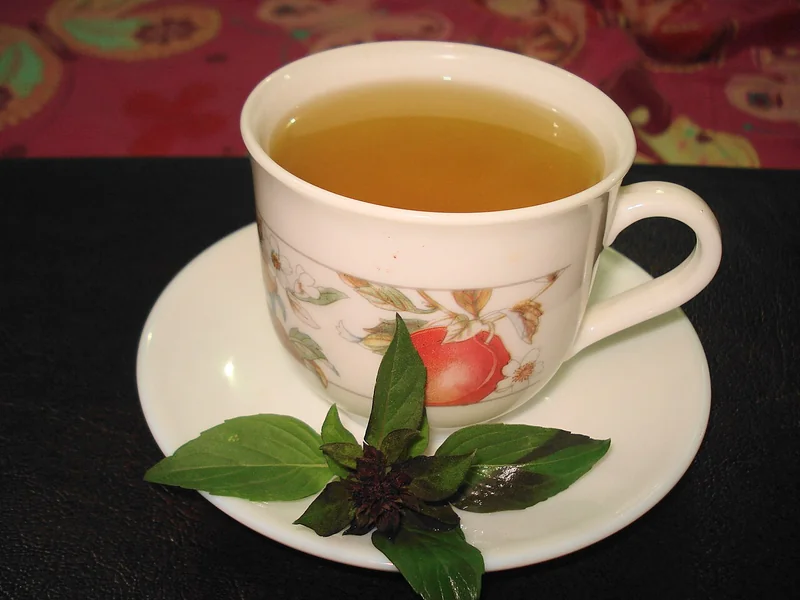
Tulsi (Ocimum tenuiflorum, also Ocimum sanctum), known in English as holy basil, is a plant of the Lamiaceae (mint) family native to the Indian subcontinent, held as sacred in Hinduism and widely cultivated across South and Southeast Asia. When dried leaves and flowers are brewed as an infusion, tulsi produces a complex herbal tisane with a characteristic clove-peppery, slightly sweet, and herbal aromatic profile — quite different from culinary sweet basil (Ocimum basilicum). Multiple cultivars exist, including Rama, Vana, and Krishna tulsi, each with slightly different aromatic profiles. The tisane is caffeine-free and is consumed widely across India and South Asian diaspora communities as a daily beverage.
Quick facts
- Type
- Herbal Infusion
- Origin
- Indian subcontinent; widely cultivated across South and Southeast Asia
- Astringency
- Low to moderate
- Sweetness
- Light, with clove-like warmth
- Body
- Light
- Tasting notes
- clove, black pepper, herbal, light floral, slightly spicy
Botanical and Cultural Significance
Ocimum tenuiflorum is a perennial aromatic herb in the Lamiaceae family, growing to 30–60 cm with deeply veined leaves and small white to purple flowers. In Hinduism, tulsi is considered a manifestation of the goddess Lakshmi and is worshipped daily in many households — the plant is watered, circumambulated, and treated with reverence. The Tulsi Vivah festival marks the ceremonial marriage of the tulsi plant to Vishnu, signalling the beginning of the Hindu wedding season. This sacred status has made tulsi one of the most cultivated and most culturally embedded plants in Indian domestic life. Three main varieties are distinguished: Rama tulsi (green leaves, mild clove aroma), Vana tulsi (stronger, more camphor-spicy character), and Krishna (Shyama) tulsi (purple-tinted leaves, more intensely aromatic and peppery).
Tulsi as a Beverage
Fresh or dried tulsi leaves, stems, flowers, and seeds can be used to prepare an infusion. Fresh tulsi tea is prepared by steeping a small handful of fresh leaves and stems in hot water for 5–7 minutes — the result is a greenish, strongly aromatic beverage. Dried tulsi (used commercially) is milder in aroma but more practical for consistent year-round use. Tulsi is frequently combined with other aromatics in commercial herbal tea products: common blends include tulsi with ginger, tulsi with rose, or tulsi with turmeric. In Ayurvedic practice (India's traditional medical system), tulsi preparations — including decoctions made by simmering leaves, seeds, and stems — are a traditional remedy for a wide range of conditions, though the scope and efficacy of such uses is the subject of ongoing scientific investigation and is separate from the factual description of tulsi as a beverage plant.
Aromatic Chemistry
Tulsi's distinctive aroma is produced by a complex blend of essential oil compounds that vary by cultivar. Eugenol — the compound responsible for clove's characteristic aroma — is present in significant concentrations in Rama tulsi, giving it the characteristic clove-like note. Methyl chavicol (estragole) and linalool contribute additional herbal and floral dimensions. Krishna tulsi has a higher proportion of anthocyanins (giving the purple colour) and a somewhat different essential oil profile leaning toward camphor-like notes. Vana tulsi, considered the wild type, has a more intensely aromatic and camphor-peppery character than the cultivated varieties. The essential oil composition of tulsi is distinct from sweet basil (Ocimum basilicum) which uses primarily linalool and methyl chavicol without the clove-eugenol signature.
Sources & further reading (2)
- encyclopedia — accessed 2026-05-07
- encyclopedia — accessed 2026-05-07
Frequently asked questions
Is tulsi the same as regular basil?
No. Tulsi (Ocimum tenuiflorum / O. sanctum) and culinary sweet basil (Ocimum basilicum) are different species within the same genus. Sweet basil is the variety used in Italian cuisine (pesto, Caprese) with a mild, sweet, anise-like aroma. Tulsi is significantly different in aroma — clove-peppery, more herbal-medicinal, and quite distinct from sweet basil. Tulsi is not typically used in Italian-style cooking, and sweet basil is not used in tulsi tea or Ayurvedic contexts.
Does tulsi tisane contain caffeine?
No. Tulsi (Ocimum tenuiflorum) is not related to Camellia sinensis and contains no caffeine. Tulsi tisane is a fully caffeine-free herbal infusion. However, commercial products that combine tulsi with actual tea leaves (Camellia sinensis) would contain caffeine from the tea component — so checking ingredients is important if caffeine avoidance is desired.
Why is tulsi considered sacred in Hinduism?
In Hindu theology, tulsi is considered a manifestation of the goddess Lakshmi, the consort of Vishnu, and is associated with purity, devotion, and protection. The plant is worshipped daily in many Hindu households and is required for many religious rituals, including offerings to Vishnu and other deities. The Tulsi Vivah ceremony — in which the plant is ceremonially married to a Shaligram stone (representing Vishnu) — is a major autumn festival. Consuming tulsi as food or drink is also considered auspicious. The plant's sacred status means it is grown in virtually every traditional Hindu household.