Tibetan Butter Tea (Po Cha)
Tibet's traditional salted yak butter tea — churned with brick tea into a frothy, calorie-dense drink suited to high
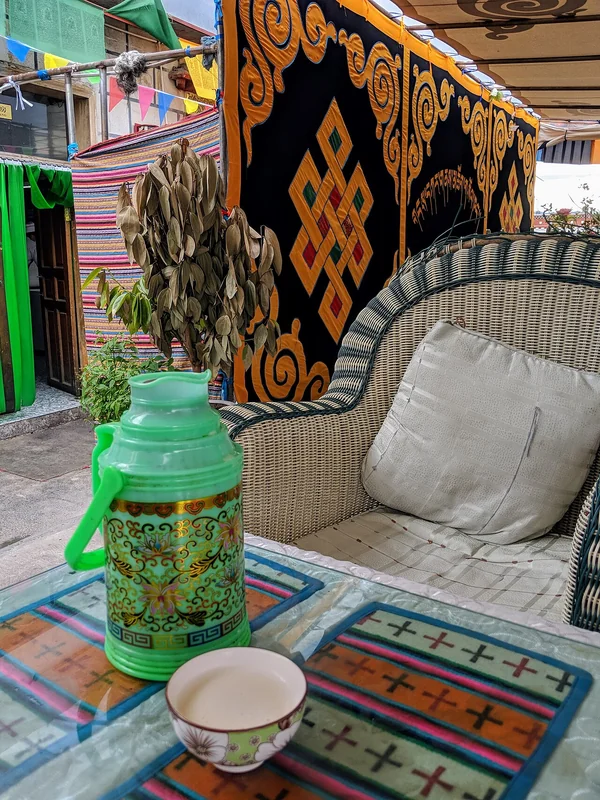
Po cha (བོད་ཇ།, Tibetan: bod ja, 'Tibetan tea') is the traditional beverage of Tibet and high-altitude Himalayan communities, made by churning strongly brewed compressed brick tea (typically Chinese dark tea or pu-erh) with yak butter and salt in a cylindrical wooden churn (dongmo). The result is an emulsified, thick, savoury-fatty beverage that functions as a calorie-dense food as much as a drink, suited to the extreme cold and high altitude of the Tibetan Plateau. Po cha is consumed in large quantities throughout the day by Tibetan communities — sometimes 40–60 cups per day by nomadic herders. It is offered to guests as an immediate act of hospitality and plays a central ceremonial role in Tibetan Buddhist practice and social customs.
Quick facts
- Type
- Tea Culture
- Culture
- Tibetan butter tea
Preparation and Ingredients
Traditional po cha requires three core components: strongly brewed brick tea, yak butter, and salt. The brick tea (黑茶, hei cha or pu-erh brick) is simmered in water for an extended period — often several hours — to produce a very strong, dark concentrate called chaku. This concentrate is then poured into a wooden churn (dongmo, a cylindrical vessel traditionally made from bamboo or wood) with a large quantity of yak butter (typically 30–50 grams per litre of tea) and salt. The mixture is churned vigorously by pumping the handle up and down for several minutes — a process that emulsifies the fat into the tea, producing a thick, uniform, milky-brown liquid. The churned tea is then poured from the dongmo into a heavy copper or wooden pot (chamdong) that keeps it warm, and served in wooden, metal, or porcelain cups throughout the day. Modern preparations sometimes substitute cow butter or margarine for yak butter in urban contexts.
Nutritional and Environmental Context
The high fat content and salt of po cha are directly adaptive to the Tibetan environment. The Tibetan Plateau sits at average altitudes of 4000–4500 metres, where temperatures regularly drop far below freezing, caloric demands are extreme for herders and farmers working in cold weather, and carbohydrate-based foods are scarce. Yak butter provides concentrated caloric energy, fat-soluble nutrients, and thermal regulation support. Salt replenishes electrolytes lost through exertion in dry, high-altitude conditions. The brick tea provides fluids, alkaloids (caffeine), and trace minerals. Together, po cha functions more like a food supplement than a beverage in the Western sense. The Tibetan tsampa (roasted barley flour) breakfast often involves mixing po cha with barley flour to form a dough-like paste eaten by hand — a practice that further integrates tea into the nutritional structure of the diet.
Social and Ceremonial Role
Po cha is deeply embedded in Tibetan hospitality protocol. Guests are offered po cha immediately upon arrival, and refusing is considered impolite. The host keeps the guest's cup filled — a continuously refilled cup is the norm, not the exception. In Tibetan Buddhist monastery culture, butter tea plays a role in daily monastic routine — monks consume multiple cups throughout the day, and large quantities are prepared for ceremonies, prayer assemblies (puja), and festivals. During Losar (Tibetan New Year) and other festivals, the preparation and sharing of po cha is a central ceremonial act. In the Tibetan diaspora (particularly Dharamsala, India, and Tibetan communities in Nepal), butter tea preparation continues as a cultural practice, though with adaptations based on available ingredients.
Sources & further reading (2)
- encyclopedia — accessed 2026-05-07
- encyclopedia — accessed 2026-05-07
Frequently asked questions
What does Tibetan butter tea taste like?
Po cha is savoury, fatty, and earthy — quite unlike any sweet or purely aromatic tea. The dominant sensation is the yak butter, which gives a rich, creamy-fatty coating to the palate. The salt adds a savoury dimension. The strong brick tea provides a deep, slightly earthy-tannin background. Newcomers to po cha often describe it as surprising or challenging; those who grew up with it find it deeply comforting and satisfying in cold conditions. It is not sweet, not floral, and not herbal in any conventional sense.
What type of tea is used to make po cha?
Traditionally, compressed brick tea made from post-fermented dark tea (hei cha) is used — specifically the type manufactured and traded from Chinese provinces (particularly Yunnan and Sichuan) along the Tea Horse Road (茶马古道, chámǎ gǔdào) trade route that historically connected Yunnan to Tibet. This brick tea is robust enough to withstand long simmering and provide the necessary colour, caffeine, and flavour base. In modern Tibet, various compressed or loose-leaf dark teas are used, with pu-erh being a common option.
Is yak butter different from cow butter in po cha?
Yes, meaningfully so. Yak butter (from Bos grunniens) has a higher fat content, a richer, more intense flavour, and a slightly different fatty acid profile compared to typical cow butter. The distinctive richness and slightly gamey depth of authentic po cha come partly from yak butter's specific character. Cow butter or commercial margarine substitutes produce a milder, less complex version of butter tea — functional but not identical. The difference is most noticeable in the depth and satiety of the drink.