Nilgiri Tea
South India's blue mountain black tea — brisk, bright, and fragrant, from high estates in Tamil Nadu's western Ghats.
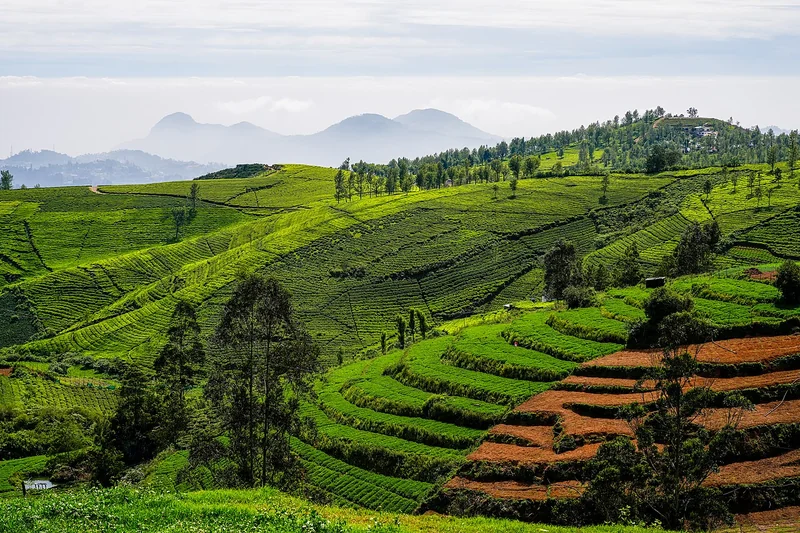
Nilgiri tea is produced in the Nilgiri Hills (Blue Mountains) of Tamil Nadu, South India, at elevations of 1000–2500 metres above sea level. The region's year-round growing conditions — mild temperatures, consistent rainfall, and altitude — allow multiple harvests annually, unlike seasonal Darjeeling. Nilgiri teas are known for their briskness, brightness, and fragrant floral character — qualities that have led to their widespread use in iced tea and blends. The best Nilgiri teas, particularly the frost teas produced during the cold December–January period when frost triggers flavour concentration in the leaf, are considered specialty products. Most Nilgiri production is orthodox (whole-leaf) or CTC (cut-tear-curl) destined for domestic Indian consumption or international blends.
Quick facts
- Type
- Tea
- Origin
- Nilgiri Hills, Tamil Nadu, South India
- Oxidation
- Black (full)
- Caffeine
- High
- Astringency
- Moderate — brisk character, less heavy than Assam
- Sweetness
- Moderate, sometimes floral
- Body
- Medium
- Tasting notes
- brisk citrus, floral, light malt, fruity, clean finish
Growing Conditions and Year-Round Production
The Nilgiri Hills extend across Tamil Nadu, Kerala, and Karnataka in South India, with the main tea-producing estates concentrated in the Ooty (Udhagamandalam), Coonoor, and Kotagiri areas. Elevations range from 1000 to 2500 metres, with the highest estates producing the most fragrant teas. Unlike Darjeeling — which has a defined seasonal structure (first flush, second flush, autumnal) determined by monsoon patterns — Nilgiri's mild, relatively stable climate allows year-round cultivation. This continuous growing cycle makes Nilgiri an economically important region for consistent supply to blenders. The Nilgiri hills receive significant rainfall from both the southwest and northeast monsoons, giving the region more consistent moisture than many other Indian tea districts.
Frost Tea: The Nilgiri Specialty
Nilgiri's most distinctive specialty product is the frost tea (也 called 'frost tip' or 'winter frost'), produced during the coldest period of the year — typically December and January — when night temperatures near frost level stress the tea plant. Cold stress triggers the plant to produce more aromatic compounds and concentrate sugars, resulting in teas with a distinctive muscatel-like or spicy-fruity fragrance similar to but distinct from Darjeeling's second-flush muscatel. Frost tea production volume is very small (the growing season is interrupted and yields drop), and the teas command premium prices relative to standard Nilgiri production. In specialty tea circles, high-quality Nilgiri frost teas are considered among India's finest teas — distinct from both Darjeeling and Assam in character.
Role in Blends and Iced Tea
The majority of Nilgiri tea production enters commercial blends, both within India and internationally. The bright, clear liquor and moderate astringency make Nilgiri ideal for iced tea — it does not cloud when cooled (a phenomenon called 'chill haze' that affects some teas, particularly those high in theaflavins like Assam). This cold-stable character is why Nilgiri is commonly used as a base for commercial iced tea products in North America. Nilgiri also appears in commercial breakfast blends where its briskness and brightness complement the body of Assam and the fragrance of Ceylon teas. The single-origin Nilgiri market for specialty buyers is less developed than for Darjeeling or Assam but has grown with increased interest in Indian tea diversity.
Sources & further reading (2)
- encyclopedia — accessed 2026-05-07
- encyclopedia — accessed 2026-05-07
Frequently asked questions
How does Nilgiri tea differ from Darjeeling tea?
Both are Indian high-altitude teas, but they differ in geography, cultivar, seasonal structure, and character. Darjeeling uses primarily Chinese-variety Camellia sinensis var. sinensis cultivars producing delicate, muscatel-noted teas with defined flushes. Nilgiri uses Camellia sinensis var. assamica and hybrid cultivars, producing brighter, more brisk, and more year-round teas. Darjeeling has globally recognised GI protection and structured flush designation; Nilgiri has GI protection as a geographic indication but less structured flush differentiation in market presentation.
What is Nilgiri frost tea?
Frost tea is a specialty Nilgiri tea harvested during the cold December-January period when near-frost temperatures concentrate aromatic compounds in the leaf. Cold stress causes the plant to redirect resources toward protective compounds, producing teas with a distinctive spicy-fruity or muscatel-like character. Frost tea is produced in very small quantities, is more expensive than standard Nilgiri, and is considered the highest-quality expression of the region's potential. It is sought by specialty tea buyers who compare it favourably to Darjeeling second-flush in quality.
Why is Nilgiri tea used for iced tea?
Nilgiri tea's liquor remains clear when chilled, unlike teas high in certain polyphenol complexes that cloud ('chill haze') when cooled. This optical stability at cold temperatures, combined with Nilgiri's brisk, fruity character that remains appealing without milk, makes it commercially ideal for iced tea production. The tea's flavour also scales well to dilution with ice, which is necessary for iced tea recipes.