Jin Xuan Cultivar (TTES #12)
Taiwan's 'milk oolong' cultivar — a 1981 TRES release with natural creamy notes when lightly oxidized.
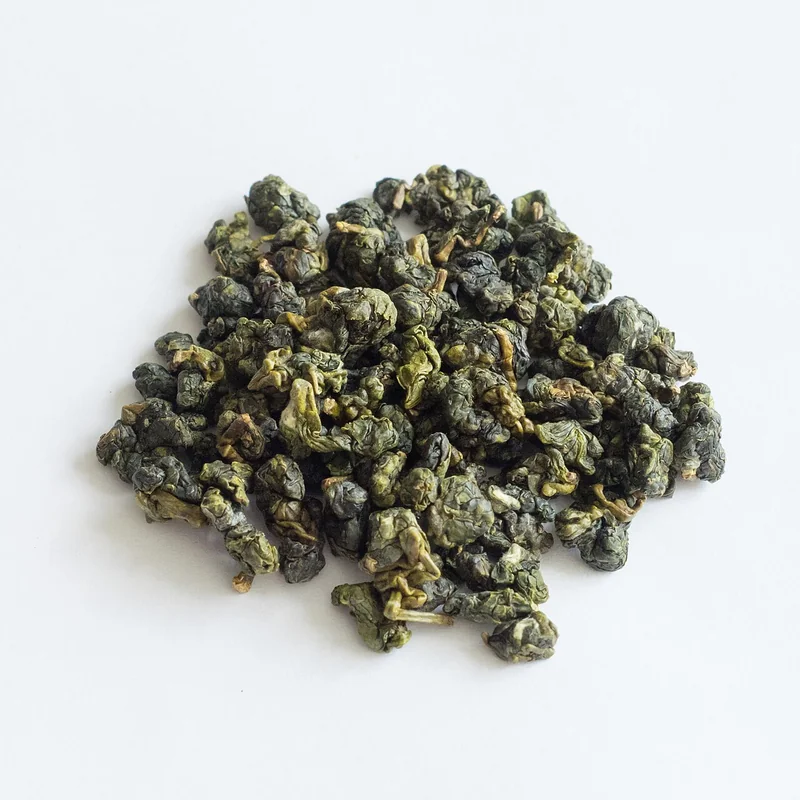
Jin Xuan (金萱, Jīn Xuān, also known as TTES #12 or Taiwan Tea Experiment Station Selection #12) is a tea cultivar developed by the Taiwan Tea Experiment Station (TRES) and released in 1981. It is now one of Taiwan's most widely planted and commercially significant tea cultivars. Jin Xuan is most associated with lightly oxidized oolongs that display a distinctive natural creamy or milky aroma — leading to its international marketing name 'milk oolong.' This creaminess is a characteristic of the cultivar itself, not an additive, arising from specific volatile aromatic compounds produced during the light oxidation of Jin Xuan leaves. The cultivar adapts well across a range of altitudes and climates across Taiwan, making it productive at both high-mountain and low-altitude plantation settings.
Quick facts
- Type
- Tea Plant
- Origin
- Taiwan (developed at Taiwan Tea Experiment Station, Taoyuan; now grown across Taiwan's tea regions)
TRES Breeding Programme and Release
Jin Xuan was bred by the Taiwan Tea Experiment Station (TRES, 台灣茶業改良場) through a hybridisation programme spanning several decades in the mid-20th century. TTES #12 was selected from crosses that prioritised productivity, disease resistance, wide adaptability, and distinctive flavour profile. The 1981 official release came alongside TTES #13 (Cui Yu / Emerald Jade) and two other numbered selections. TRES #12 was commercially promoted under the cultivar name Jin Xuan (meaning 'golden daylily,' referring to a flower). It proved immediately popular with Taiwanese tea farmers due to its adaptability across elevation zones — it performs well from 300m to 1600m — and its rapid, productive growth relative to older cultivars like Qingxin Oolong, which requires higher altitudes and produces lower yields. By the 1990s, Jin Xuan had become one of the most planted cultivars in Taiwan and was also exported to other tea-growing regions including Vietnam, Thailand, and parts of China, where it is grown for export under the milk oolong label.
Natural Creamy Aroma: The Milk Oolong Character
The signature characteristic of Jin Xuan processed as a lightly oxidized oolong is its natural creamy, milky, or buttery aroma — a profile so consistent and distinctive that it led to the marketing term 'milk oolong' in international specialty tea retail. This creamy aroma is cultivar-specific: specific volatile aromatic compounds (including certain lactones and terpenoid derivatives) are produced in Jin Xuan leaves during the light oxidation phase of oolong processing. The aroma is natural and requires no flavouring additives. This distinguishes genuine Jin Xuan milk oolong from artificially flavoured 'milk oolong' products (which do exist in the market) that use flavouring compounds to imitate the natural character. Genuine Jin Xuan has subtler, more integrated creaminess than artificially flavoured versions; the latter typically have a more intense, artificial-butter or vanilla note. The creaminess is most pronounced in lightly oxidized oolongs (15–25% oxidation) from lower-altitude Jin Xuan production; at higher altitudes, additional floral complexity layers over the creamy base.
Altitude Range and Processing Versatility
One of Jin Xuan's commercial advantages is productive performance across a wide range of growing altitudes — unlike Qingxin Oolong, which demands high-altitude cool climates to develop its full aromatic complexity, Jin Xuan produces commercially viable teas from low-altitude plantation settings as well as high-mountain environments. At low altitudes (300–600m), Jin Xuan produces the creamiest, most characteristic milk oolong notes with efficient yields. At high altitudes (1200–1600m), the cultivar produces teas with additional floral complexity layered onto its creamy base. Jin Xuan can also be fully oxidized to produce Jin Xuan black tea, or used for green tea production — in these alternative processing modes, the creamy character diminishes or disappears and the cultivar's mild vegetal and sweet base character dominates. The cultivar is also processed into Oriental Beauty (bug-bitten heavy oxidation) at some producers who find its large leaves and productive growth useful for this labour-intensive tea type.
Sources & further reading (2)
- encyclopedia — accessed 2026-05-07
- encyclopedia — accessed 2026-05-07
Frequently asked questions
Is the creaminess in Jin Xuan milk oolong natural or artificial?
Natural — when the tea is genuine Jin Xuan cultivar lightly oxidized oolong, the creamy aroma is a natural result of the cultivar's specific aromatic chemistry during oxidation. No flavouring additives are used in authentic Jin Xuan milk oolong. However, the 'milk oolong' name has also been applied to artificially flavoured teas that use added flavouring compounds to imitate the natural character. Genuine Jin Xuan has integrated, subtle creaminess; artificially flavoured versions tend to have sharper, more prominent butter or vanilla notes. Buying from reputable Taiwanese specialty tea suppliers is the best way to ensure genuine Jin Xuan.
What does TTES #12 mean?
TTES #12 is the official designation from the Taiwan Tea Experiment Station (TRES). Cultivars developed at TRES are assigned sequential numbers in the order they are officially released. Jin Xuan was the 12th officially released TRES cultivar selection. The numbered designation (TTES #12) is used in botanical and technical contexts; the commercial name Jin Xuan (金萱) is more commonly used in retail and export contexts. TTES #13 (Cui Yu, Emerald Jade) was released the same year and is the second-most commercially significant TRES cultivar, though it has a smaller international profile than Jin Xuan.
How does Jin Xuan compare to Qingxin Oolong?
Qingxin Oolong (also called Ruanzhi, 軟枝) is the traditional Taiwan oolong cultivar most associated with high-mountain teas including Alishan, Dong Ding, and Li Shan. Qingxin produces teas with exceptional floral complexity — particularly at high altitude — but requires specific growing conditions and yields less per hectare than Jin Xuan. Jin Xuan is more productive, adaptable to lower altitudes, and produces its characteristic creamy notes absent in Qingxin. For connoisseurs, high-altitude Qingxin oolongs are often considered the apex of Taiwan oolong quality; Jin Xuan's commercial versatility and distinctive milk character serve different markets and tea drinkers.