Indian Masala Chai
India's spiced milk tea — simmered with ginger, cardamom, cinnamon, and clove, sweetened generously, served hot in
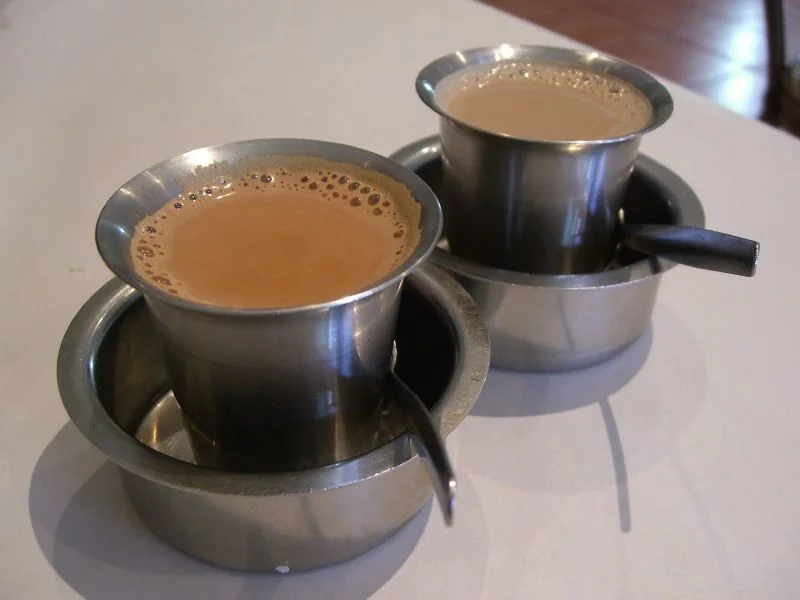
Masala chai (मसाला चाय, 'spiced tea') is India's dominant domestic tea preparation — a blend of strong black tea (typically Assam CTC), whole milk, sugar, and a spice mixture (masala) that typically includes ginger, cardamom, cinnamon, black pepper, and cloves. The tea, milk, water, sugar, and spices are simmered together in a single pot — the extended simmering extracts and integrates flavours from all components into a unified drink rather than separately adding components to brewed tea. Masala chai is consumed throughout India from a daily household drink to street-stall (cutting chai) service in small clay cups (kulhad) or thin glasses. It is the primary form of tea consumption in India, which is the world's largest tea-consuming nation.
Quick facts
- Type
- Tea Culture
- Culture
- Indian masala chai
Preparation and Regional Variation
Masala chai preparation varies significantly by region, household, and chai wallah (tea vendor). The basic method involves combining water, milk (whole milk is standard), sugar, broken or CTC black tea leaves, and whole or freshly ground spices in a pot and bringing the mixture to a rolling boil — then simmering for 2–5 minutes before straining into cups. The ratio of milk to water varies: southern and western Indian styles tend toward more milk; northern Indian styles more tea-and-water forward. The spice combination (masala) is not standardised: common ingredients include fresh ginger (nearly universal), cardamom (whole pods or seeds), cinnamon, black peppercorns, cloves, fennel seeds, star anise, and occasionally tulsi. Some recipes use pre-made masala powder; others use freshly ground or hand-bruised whole spices. Maharashtra's cutting chai is served in very small portions from large batches at street stalls; Kolkata's street chai has its own distinct spice profile.
History of Tea Drinking in India
Tea cultivation in India is a product of British colonial development — the British East India Company established commercial plantations in Assam and Darjeeling in the 1830s–1860s. Initially, tea was produced primarily for export to Britain, and domestic Indian consumption was low. The colonial government and tea industry ran campaigns in the early 20th century to promote domestic tea consumption among Indian workers. The integration of Indian spice traditions with the imported tea leaf created masala chai, which emerged as a specifically Indian mode of tea preparation that differed entirely from British plain-tea-with-milk conventions. The practice of boiling all ingredients together (rather than brewing tea separately and adding milk) accommodated both the robustness required of CTC tea and the integration of fresh spices. Today, India consumes approximately 75% of its domestic tea production internally — masala chai is the vehicle for most of that consumption.
Street Chai Culture and Cutting Chai
The chai wallah (tea seller) is an iconic figure in Indian urban life — small stalls at railway stations, markets, offices, and street corners prepare and serve masala chai continuously throughout the day. The term 'cutting chai' (cutting tea) refers to a half-glass serving, literally 'cutting' a full serving into smaller portions to allow the customer to get a quick, inexpensive energy boost. Cutting chai became particularly associated with Mumbai street culture. The kulhad (कुल्हड़) — an unglazed terracotta clay cup — is the traditional vessel for street chai; the slight earthiness the clay imparts is considered part of the flavour. Some chai wallahs maintain a continuous simmering pot (dabacha) that intensifies throughout the day. The ritual of chai as a social beverage — offered to guests, consumed at business meetings, shared during breaks — is deeply embedded in Indian social practice.
Sources & further reading (2)
- encyclopedia — accessed 2026-05-07
- encyclopedia — accessed 2026-05-07
Frequently asked questions
What is the difference between masala chai and 'chai tea' sold in Western cafes?
Authentic Indian masala chai is made by simmering strong CTC black tea with whole milk, sugar, and fresh or whole spices as a unified drink. 'Chai tea' in Western cafes typically refers to a chai concentrate (often sweetened syrup with artificial spice flavouring) added to steamed milk — similar in concept but very different in execution and authenticity. The Western cafe version is usually pre-sweetened, spiced with extract rather than whole spices, and less intensely spiced than authentic masala chai. 'Chai tea latte' at major chains is a further dilution.
What spices are essential for masala chai?
The only truly universal ingredient across masala chai variations is ginger — fresh or dried ginger appears in virtually every regional version. Cardamom is nearly as universal. Beyond these two, the masala composition varies: cinnamon, clove, black pepper, fennel, star anise, and tulsi are commonly included depending on region and preference. There is no single 'correct' masala — household recipes often reflect family tradition, regional spice availability, and personal taste.
Does masala chai always contain black tea?
Traditionally yes — CTC Assam or similar strong Indian black tea provides the necessary robustness to stand up to milk and spices. The strong tea base is essential for the flavour balance: if the tea is too weak, the spices and milk dominate and the drink feels bland and overly milky. Some modern variations use green tea, rooibos, or non-tea bases, but these are contemporary adaptations. Traditional masala chai requires a strong black tea capable of producing dark, robust brew through extended simmering with milk.