Huangshan Mao Feng
Yellow Mountain's signature green tea — bud-with-one-leaf, covered in fine white hairs, with a light apricot-sweet
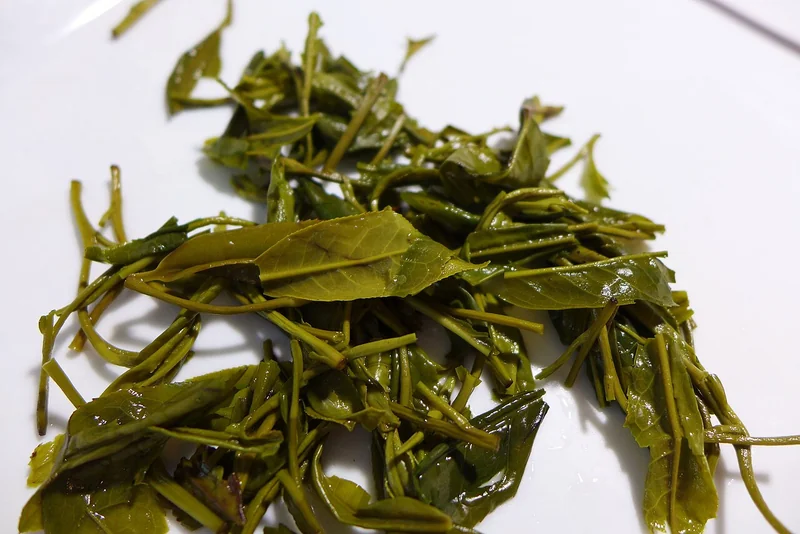
Huangshan Mao Feng (黄山毛峰, 'Yellow Mountain Fur Peak') is a premium Chinese green tea from the Huangshan (Yellow Mountain) area of Anhui Province, considered one of China's Ten Famous Teas. The name describes its appearance: mao (毛, fine white hairs covering the bud) and feng (峰, pointed peak shape of the bud). Harvested in early spring from high-altitude gardens (600–1200 m) in the Huangshan Scenic Area, Mao Feng uses a one-bud-with-one-leaf picking standard. The high altitude, cloud cover, and temperature variation create conditions that produce concentrated flavour compounds. The infusion is pale yellow-green with a gentle, slightly sweet character described as reminiscent of orchid or light apricot.
Quick facts
- Type
- Tea
- Origin
- Huangshan (Yellow Mountain) area, Anhui Province, China
- Oxidation
- Green (unoxidised)
- Caffeine
- Medium
- Astringency
- Low to moderate — high-altitude growth moderates catechin sharpness
- Sweetness
- Moderate, with light apricot or orchid notes
- Body
- Light
- Tasting notes
- orchid floral, apricot, fresh grass, honey sweetness, clean finish
Huangshan Terroir
Huangshan (Yellow Mountain) is a UNESCO World Heritage Site in southern Anhui Province, famous for its granite peaks, pine forests, hot springs, and frequent cloud cover. The tea gardens occupy high-altitude sites at 600–1200 metres, where mist, cloud cover, and temperature variation slow leaf growth and allow greater accumulation of aromatic compounds and amino acids. The soil is granite-derived, slightly acidic, and well-drained — conditions that stress the tea plant beneficially, encouraging more complex root chemistry. These environmental factors are credited with giving Huangshan Mao Feng its distinctive light sweetness and floral character. The highest-grade production comes from the Fuxi and Yungu areas within the Huangshan Scenic Area, where conditions are most pronounced. Gardens at lower elevations or outside the scenic area produce what is marketed as Huangshan Mao Feng but with less distinctive character.
Grade Classification
Huangshan Mao Feng is sold in multiple grades. The highest grade (特级, tèjí) uses only true one-bud-with-one-tiny-leaf harvests from first flush in early spring — the bud must be uniform, covered with white hair, and show the characteristic yellow-ivory colour. The first, second, and third grades use progressively less strict harvest standards, with more developed leaf tissue relative to the bud. The authentic tèjí grade is expensive and limited; most commercially available Huangshan Mao Feng is a lower grade. The appearance test is a reliable indicator: premium Mao Feng has noticeable white hairs (mao) on the bud and a slightly twisted, not fully unrolled leaf — if the leaves are flat, large, or lack visible hair, the grade is likely lower.
Historical Status
Huangshan Mao Feng is consistently listed as one of China's Ten Famous Teas — a cultural designation with no single official authority but repeated in provincial government, industry, and academic contexts. The modern production style traces to the late Qing dynasty (19th century), when tea from the Huangshan area first gained national attention. The tea was reportedly developed by a tea merchant named Xie Zhengde in 1875 who standardised the picking and processing methods. By the Republican era (1912–1949) and through to today, Huangshan Mao Feng has maintained its prestige, aided by the visual appeal of the Huangshan landscape and the UNESCO designation of the area (1990), which gives the name recognition beyond specialist tea drinkers.
Sources & further reading (2)
- encyclopedia — accessed 2026-05-07
- heritage-authority — accessed 2026-05-07
Frequently asked questions
What does 'Mao Feng' mean?
Mao (毛) means fine white hair or down — the soft white trichomes covering the young bud tip that give it a fuzzy, frosted appearance. Feng (峰) means peak or pointed tip, describing the bud's pointed shape after drying. Together, 'Mao Feng' describes the characteristic appearance of the premium bud: a pointed, hair-covered, white-tipped bud. The Huangshan prefix specifies the mountain origin.
How does Huangshan Mao Feng compare to other Anhui green teas?
Anhui Province is home to several famous green teas: Huangshan Mao Feng, Taiping Houkui, and Liu An Gua Pian are the three best-known. Mao Feng uses a bud-with-one-leaf standard and has a delicate, floral character. Taiping Houkui uses the large Shijia cultivar pressed flat, with a more orchid-heavy aroma. Liu An Gua Pian (Melon Seed) uses de-budded leaves processed without the bud, producing a different, more mature leaf character. Each represents a distinct Anhui green tea tradition.
At what temperature should Huangshan Mao Feng be brewed?
75–80°C water with a 1–2 minute steep is recommended for premium grades. The delicate bud structure and high-altitude growth conditions make the tea sensitive to high-temperature damage — very hot water can produce bitterness and destroy aromatic compounds. A transparent glass or white porcelain cup allows the bud leaves to be observed unfurling during brewing, which is part of the aesthetic experience. Two to three infusions can be made from quality leaves before the flavour fades.