Hong Kong Milk Tea
Hong Kong's 'silk stocking' milk tea — strong multi-leaf blend strained through a cloth filter, balanced with
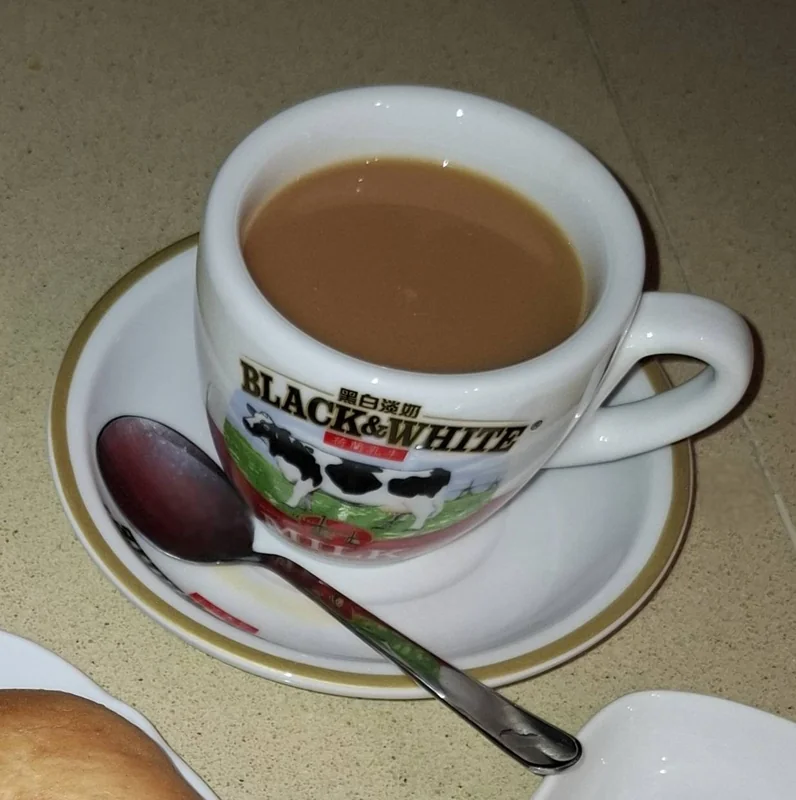
Hong Kong milk tea (港式奶茶, 'Hong Kong-style milk tea') is a black tea preparation unique to Hong Kong's cha chaan teng (茶餐廳, tea restaurant) culture. It uses a blend of 3–4 different black tea leaves — typically a combination of Ceylon grades selected for different characteristics — brewed to a very high strength, then strained through a cloth filter (the 'silk stocking' or 絲襪奶茶 sī wà nǎi chá, 'silk stocking tea') and mixed with evaporated milk or condensed milk. The silk stocking strainer is a long cloth bag that gives the drink its most recognisable name. The result is a smooth, full-bodied, strong-but-not-bitter milk tea that was recognised in 2014 as an element of Hong Kong's Intangible Cultural Heritage.
Quick facts
- Type
- Tea Culture
- Culture
- Hong Kong milk tea
The Silk Stocking Strainer and Brewing Method
The cloth filter used for Hong Kong milk tea — a long, conical bag made from cloth gauze suspended over a pot — resembles a silk stocking or pantyhose, giving the tea its colloquial name sī wà nǎi chá (絲襪奶茶). The filter serves two purposes: it strains fine tea particles from the highly concentrated brew, producing a smooth, clear tea despite the very high leaf-to-water ratio; and the cloth is believed by practitioners to 'soften' the tea as it passes through (a claim based on empirical tradition rather than analytical chemistry). The typical brewing sequence involves pouring the hot concentrated tea back and forth between the pot and filter multiple times — a technique called 'pull' (拉茶) — which aerates the brew and further integrates the flavour components. The tea is brewed to a very high concentration: a ratio approximately 3–4 times stronger than standard Western-style tea, before milk dilution.
Tea Blend and Milk Selection
The specific tea blend used for Hong Kong milk tea is typically a combination of 3–4 Ceylon tea grades chosen to provide specific flavour components: one grade for body, one for colour, one for aroma, and sometimes one for bitterness balance. Common combinations use Ceylon BOP (Broken Orange Pekoe), BOP1, or FBOP grades from different estates. The proprietary blend used by each cha chaan teng is often a trade secret. The milk component is typically evaporated milk (not fresh milk or cream) — a product derived from vacuum-evaporated cow's milk that is denser, slightly caramelised, and richer than fresh milk. Some versions use condensed milk (sweetened evaporated milk) which also adds sweetness. The combination of very strong tea with evaporated milk produces a drink with a characteristic thick, rich, slightly caramelised-creamy quality not achievable with fresh milk.
Cha Chaan Teng Culture and Heritage
Cha chaan teng (茶餐廳, 'tea restaurant') is a uniquely Hong Kong institution — a casual diner offering a menu that fuses Western and Chinese dishes at affordable prices. Originating in the 1940s and 1950s as a local alternative to upmarket Western-style restaurants accessible only to the wealthy, cha chaan teng created a hybrid food culture: pineapple buns (菠蘿包), French toast with condensed milk, macaroni soup, and Spam rice alongside congee, dim sum, and wonton noodles. Hong Kong milk tea is the defining beverage of this culture — served hot or iced, it appears on every cha chaan teng menu. The recognition of Hong Kong milk tea in the city's Intangible Cultural Heritage list in 2014 reflected concern that the traditional skill of brewing it correctly — with the right blend, concentration, and straining technique — was at risk as cha chaan teng faced commercial pressure.
Sources & further reading (2)
- encyclopedia — accessed 2026-05-07
- encyclopedia — accessed 2026-05-07
Frequently asked questions
Why is it called 'silk stocking tea'?
The cloth filter bag used to strain the concentrated tea resembles a silk stocking or pantyhose in shape — a long, conical cloth gauze bag suspended from a metal ring over a pot. The name sī wà nǎi chá (絲襪奶茶, 'silk stocking milk tea') became the most memorable colloquial name for Hong Kong milk tea internationally, largely because the visual of the filter is so distinctive. The filter itself is made from practical cloth gauze, not actual silk.
Why use evaporated milk instead of fresh milk?
Evaporated milk became the standard in cha chaan teng culture partly for practical historical reasons (refrigeration was less available and evaporated milk is shelf-stable) and partly because its richer, slightly caramelised character complements the strongly brewed tea better than fresh milk. Evaporated milk has a lower water content than fresh milk, so it contributes more richness without diluting the tea as much. The specific combination of the concentrated tea blend with evaporated milk produces the characteristic smoothness and body of authentic Hong Kong milk tea.
Is Hong Kong milk tea the same as British milk tea?
Both involve black tea with milk, but they are distinct preparations. British-style milk tea uses a single tea variety (typically English Breakfast blend or Assam), brewed to moderate strength, with fresh milk added to taste. Hong Kong milk tea uses a proprietary multi-grade Ceylon blend, brewed to extreme concentration, strained through cloth, and mixed with evaporated milk. The resulting character is significantly different: Hong Kong milk tea is thicker, stronger, smoother, and richer than British milk tea, with a distinctive flavour from the evaporated milk.