Cha He (Tea Presentation Vessel)
The broad, boat-shaped vessel for presenting dry tea leaves to guests before brewing — enabling sight and aroma
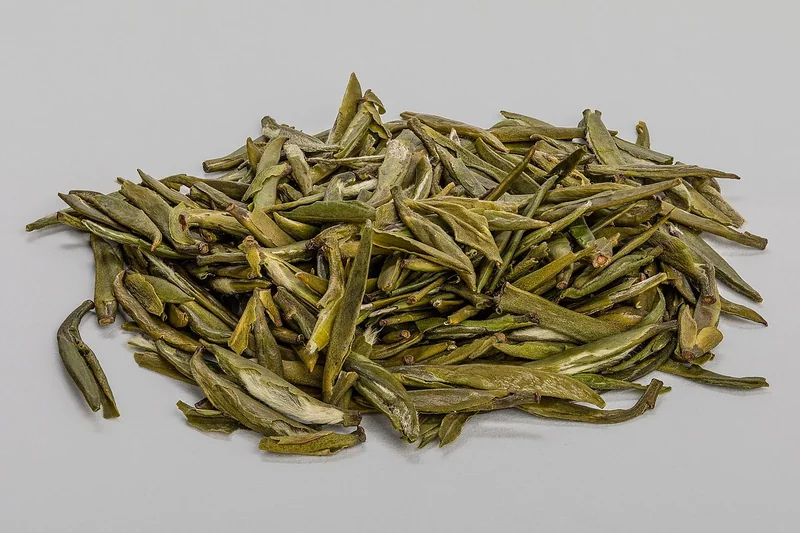
Cha he (茶荷, 'tea lotus') is a broad, shallow, boat-shaped vessel used in Chinese gongfu cha to display dry tea leaves to guests before the brewing session begins. After the tea host scoops dry leaves from the storage container using a cha ze, the leaves are placed in the cha he and passed to guests or held toward them so they can observe the leaf's appearance (colour, shape, grade, trichome coverage) and smell the dry aroma — an important first step in tea appreciation that occurs before any water is added. After the guest's appreciation, the cha he is tilted to funnel the leaves into the brewing vessel. The cha he is typically made from bamboo, porcelain, or carved wood, and shaped to facilitate this display-and-transfer function.
Quick facts
- Type
- Tea Ware
Role in Tea Appreciation
The cha he's function is fundamentally about anticipation and appreciation. In gongfu cha, each stage of the tea session is deliberate — the transition from storage to brewing is not merely functional but an opportunity to observe the leaf in its dry form. Before water alters the appearance and releases volatile aromatics, the dry leaf reveals information: the green freshness or dark oxidised appearance of the leaf, the tightness of the roll or twist, the presence of golden tips or white bud hairs, and the dry aroma (nong xiang, 浓香) that gives a first indication of what the brewed tea will offer. Holding the cha he at the correct angle to direct the leaf's aroma toward the guest's nose — not so close as to be intrusive, but near enough for appreciation — is a learnable aspect of the host's skill in tea presentation.
Design and Materials
The classic cha he shape is a rounded boat — wider at the opening, narrowing to a slight lip or channel at one end that facilitates controlled pouring of the dry leaf into a small brewing vessel. Some versions are entirely flat-bottomed; others have a gentle curve. The material should be neutral — not absorbing tea aroma between sessions. Bamboo and white porcelain are the most common materials; the neutrality of white porcelain also provides an ideal background colour for assessing the leaf's true colour. Wood cha he (from cedar, paulownia, or bamboo) are traditional and widely used. Some artisan craftsmen produce cha he from carved stone (soap stone, jade), lacquerware, or hand-thrown ceramic as display objects that also function. Size ranges from small (suitable for single brewing vessel sessions) to large (for displaying to multiple guests).
Compared to Other Dry-Leaf Tools
In a complete gongfu cha tool set, the cha he and cha ze work in sequence: the cha ze scoops the leaf from the storage tin, the cha he receives and displays it, and then the cha he delivers it to the brewing vessel. In casual or informal brewing, the cha he step is often skipped — the leaf moves directly from storage tin to brewing vessel. The cha he is most significant in formal or guest-hosting contexts where the host wishes to share the appearance and dry aroma of a particular tea. For expensive or rare teas, the cha he presentation is particularly valued because it allows the guest to appreciate the tea's visual quality before it is transformed by heat and water.
Sources & further reading (2)
- encyclopedia — accessed 2026-05-07
- specialty-reference — accessed 2026-05-07
Frequently asked questions
Is the cha he always necessary in gongfu cha?
No. The cha he is most important in formal or host-and-guest settings where the presentation of the dry leaf is a valued part of the experience. Casual everyday gongfu cha — brewing for oneself or in an informal setting — often omits the cha he and transfers tea directly from storage tin to brewing vessel with the cha ze. The cha he elevates the formality and ceremony of the session but is not functionally required for good tea.
Why is white porcelain preferred for the cha he?
White porcelain provides a neutral, clean background that allows accurate assessment of the leaf's colour — dark oolongs, green teas, and white teas all look different against white, whereas a bamboo or dark wood background can make accurate colour assessment difficult. White also signals cleanliness and attention to detail in the presentation. Many tea professionals who work with diverse teas prefer white cha he for colour-accurate leaf assessment.
How much tea should be placed in the cha he?
The amount placed in the cha he should equal the planned brewing quantity — enough to fill the brewing vessel to the appropriate leaf ratio. Typically this is 5–8 grams for a 100–130 ml gaiwan, though the exact quantity depends on the tea type and desired strength. The cha he should hold the full brewing amount comfortably without overflow — its capacity should be slightly larger than the anticipated leaf quantity. Most standard cha he hold 10–20 grams of loose-leaf tea.