Bancha
Japan's everyday late-harvest green tea — brisk, low-caffeine, affordable, and the daily cup of most Japanese
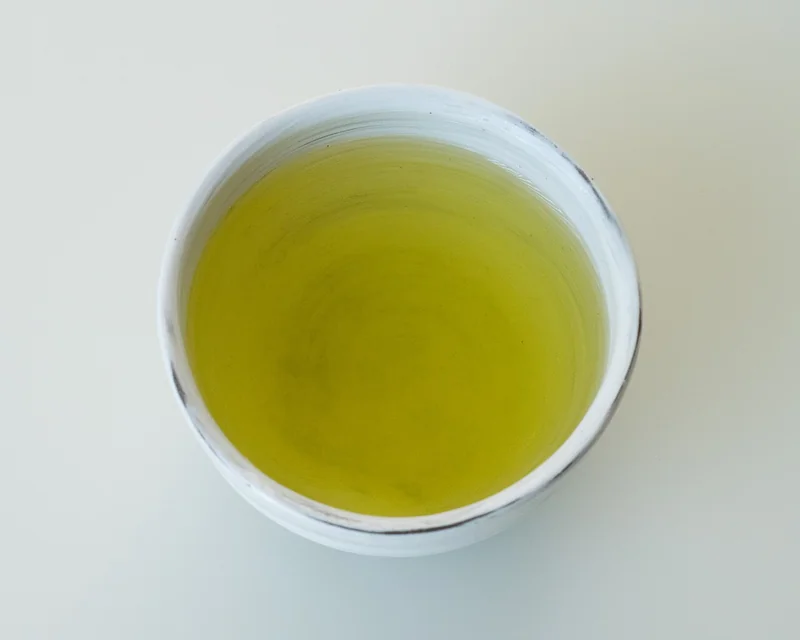
Bancha (番茶, 'ordinary tea') is the everyday Japanese green tea produced from later-season harvests of mature tea leaves, after the premium first and second flushes have been taken. The name 'ban' means 'ordinary' or 'common,' distinguishing it from premium grades. Bancha is harvested from summer through autumn, using larger, tougher, and more mature leaves than those used for sencha or gyokuro — leaves that would otherwise be left on the plant. The result is a tea with less caffeine, more earthy-vegetal character, lower umami, and considerably lower price than premium grades. Bancha is the tea most commonly brewed as barley-free Japanese everyday household tea, served at restaurants and institutions, and used as the base for other Japanese teas including hojicha and genmaicha.
Quick facts
- Type
- Tea
- Origin
- Japan (all major tea regions, primarily Shizuoka and Kagoshima)
- Oxidation
- Green (unoxidised)
- Caffeine
- Low
- Astringency
- Moderate to high compared to premium grades
- Sweetness
- Low
- Body
- Light
- Tasting notes
- dried grass, earthiness, hay, mild vegetal, slightly woody
What Makes Bancha Different from Sencha
The fundamental difference between bancha and sencha is harvest timing and leaf age. Sencha uses young, tender first and second flush leaves (early May through June) that are high in theanine, chlorophyll, and volatile aromatic compounds. Bancha uses the larger, more mature leaves of third and fourth flush harvests (July–October) — these leaves have lower amino acid content (less theanine, less umami), higher catechin-to-amino acid ratios (more astringency and bitterness proportionally), and different cell structure. The mature leaf's tougher cell walls require similar steaming but produce a less vibrant infusion. Some definitions of bancha also include stems and larger leaf fragments that fall out during sencha sorting — material that would otherwise be discarded. This is why bancha pricing is substantially lower than sencha.
Regional Bancha Varieties
While most bancha is produced by standard Japanese green tea methods, several regional variations have distinct characters. Kaga-bou-bancha from Ishikawa Prefecture uses roasted stems and leaves, producing a dark, earthy beverage similar to a light hojicha. Kyoto-style goishicha (碁石茶) from Kochi Prefecture is a fully fermented bancha — pressed into cakes and fermented like a mini pu-erh, with a sour, unusual character. Awa-bancha (阿波番茶) from Tokushima is also fermented, steamed, then left to ferment in barrels. These regional banchas represent an alternative processing tradition quite different from the standard lightly steamed green bancha. Standard bancha from Shizuoka is simply the late-harvest, mass-produced everyday tea consumed in vast quantities across Japan.
Practical Role in Japanese Tea Culture
Bancha occupies the base of the Japanese green tea quality pyramid in terms of price and prestige, yet it performs specific practical roles that premium teas do not. Its low caffeine content makes it suitable for evening consumption and for children and the elderly. Its tolerance to high brewing temperatures (80–90°C) — compared to gyokuro at 50–60°C — makes it forgiving and convenient for casual brewing. Japanese households typically keep a stock of bancha for everyday use and reserve higher grades for guests. Bancha is also the preferred base for genmaicha (mixed with roasted brown rice) and hojicha (roasted) — in both cases, the more neutral, less expensive bancha leaf is appropriate as the base material.
Sources & further reading (2)
- encyclopedia — accessed 2026-05-07
- institution — accessed 2026-05-07
Frequently asked questions
Does bancha have less caffeine than sencha?
Yes. Caffeine in tea leaves is highest in young buds and new leaves and decreases in older, more mature leaves. Since bancha uses later-harvest mature leaves, caffeine content is lower — typically 0.1–0.4% by dry weight versus sencha's 0.2–0.6%. This makes bancha a practical choice for those sensitive to caffeine or who wish to drink tea in the evening. Hojicha, which is roasted bancha, has even lower caffeine due to thermal degradation during roasting.
Is bancha the same as hojicha?
No — hojicha is made by roasting bancha (or sometimes sencha). Bancha is unroasted, steamed green tea with a grassy, slightly earthy character. Hojicha is toasted bancha with a characteristic caramel, woody, and low-astringency profile. Bancha is an intermediate product that can either be consumed as-is or roasted into hojicha. They are distinct teas with very different flavour profiles, though they share the same base leaf material.
What is the correct temperature to brew bancha?
Unlike delicate premium teas, bancha is relatively forgiving. Water at 80–90°C with a 30–60 second steep produces a clean, mild cup. Higher temperatures and longer steeps increase astringency noticeably. Many Japanese households simply pour near-boiling water over bancha in a kyusu for casual drinking — the mature leaf structure is less sensitive to heat damage than young sencha leaves. Cold-brewed bancha (refrigerator overnight) produces a very mild, almost neutral beverage.