Event
Ragnarök
The Norse twilight of the gods — the prophesied end and renewal of the world.
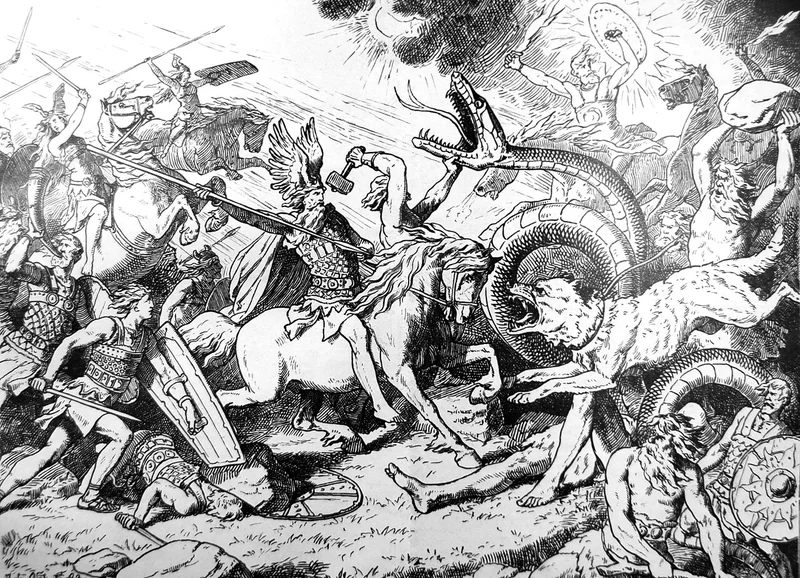
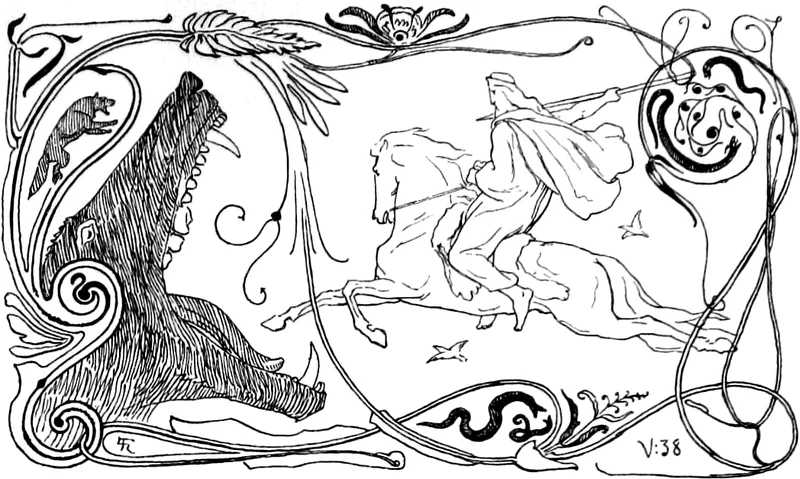
Ragnarök (Old Norse: Ragnarǫk, 'Fate of the Gods') is the prophesied catastrophic event in Norse mythology in which the cosmos is destroyed and then renewed. It will be heralded by the Fimbulwinter — three years of unending winter — followed by the breaking free of Fenrir and Jörmungandr, and the sailing of the ship Naglfar bearing the forces of chaos. Odin will be swallowed by Fenrir; Thor will slay Jörmungandr but die from its venom; Tyr and Garm will slay each other; Heimdall and Loki will slay each other. The world will sink into the sea, then rise anew. Ragnarök is described in detail by Snorri Sturluson (Gylfaginning 51–53) and the Poetic Edda (Völuspá).
Quick facts
- Pantheon
- Norse
- Figure type
- Event
- Period
- Prophesied future event in Norse cosmology; recorded in 13th-century literary sources
- Primary sources
- Snorri Sturluson Prose Edda: Gylfaginning 51–53; Poetic Edda: Völuspá 40–66; Poetic Edda: Vafþrúðnismál 51–55
- Related figures
- odin, thor, loki, fenrir, jormungandr, heimdall, tyr, baldr, yggdrasil
The sequence of Ragnarök
Snorri's Gylfaginning 51–52 narrates the sequence of Ragnarök. Three winters with no summer in between (Fimbulwinter) will precede it. Then: the rooster Gullinkambi will crow, waking the einherjar; Heimdall will blow Gjallarhorn; Yggdrasil will tremble. Fenrir breaks free and advances with his upper jaw against the sky and lower jaw on the earth; Jörmungandr rises from the sea and advances onto land, spitting venom. The ship Naglfar (built from the nails and toenails of the dead) will sail with the fire giant Surtr and Loki steering. The gods ride out from Valhalla to meet the attack on Vígríðr, the great battlefield.
Aftermath and renewal
The Poetic Edda (Völuspá 59–66) and Snorri (Gylfaginning 53) both describe the aftermath of Ragnarök. The earth sinks into the sea. Then it rises again, green and renewed, fields bearing crops unsown. Survivors among the gods include Víðarr and Váli (sons of Odin), Móðir and Magni (sons of Thor), Baldr and Höðr (who return from Hel), and Hœnir. Human survivors — one man and one woman, Líf ('Life') and Lífþrasir ('Life Yearner') — will have hidden in Hoddmímis forest and emerge to repopulate the world. A new sun, daughter of the old sun, will rise.
Sources & further reading (2)
- primary-source — accessed 2026-05-06
- encyclopedia — accessed 2026-05-06
Frequently asked questions
What is Fimbulwinter?
Fimbulwinter (Old Norse: Fimbulvetr, 'Mighty Winter') is the great winter that will immediately precede Ragnarök, as described in Snorri's Prose Edda (Gylfaginning 51). It consists of three consecutive winters with no summer in between — three years of unending cold, snow, and darkness that will cause crops to fail, alliances to break down, and warfare to spread across the world. Snorri writes: 'Then snow will drive from all directions; the frosts will be severe and the winds keen; there will be no joy in the sun. There will be three such winters in succession with no summer between.' It is a sign that Ragnarök is imminent.
Does the world end permanently at Ragnarök?
No. Both the Poetic Edda (Völuspá 59–66) and Snorri Sturluson's Prose Edda (Gylfaginning 53) describe the world being renewed after Ragnarök. After the earth sinks into the sea and the sky burns, the world rises again 'green and beautiful' from the waters. Surviving gods settle on the plain of Iðavöll, find the golden chessmen of the old gods in the grass, and begin a new age. Baldr and Höðr return from Hel. New humans (Líf and Lífþrasir) repopulate the earth. A new, unnamed god higher than all the old gods is implied in Völuspá 65. Ragnarök is destruction and renewal, not permanent annihilation.