God
Freyja
Vanir goddess of love, beauty, war, and magic in Norse mythology.
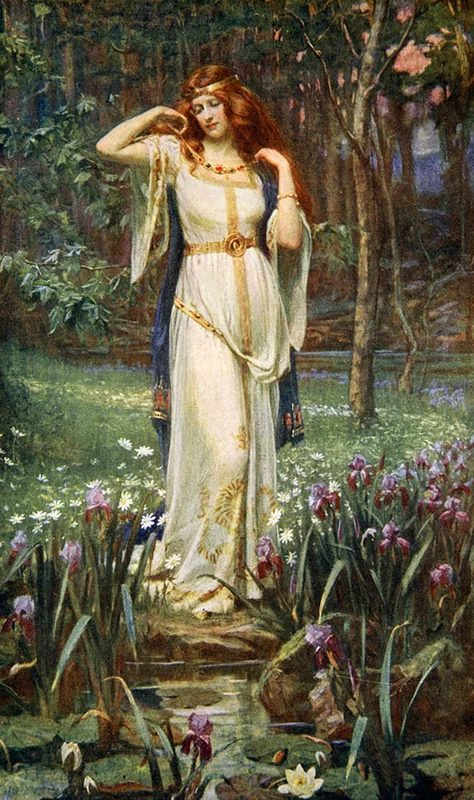
Freyja (Old Norse: Freyja, 'Lady') is a goddess of the Vanir tribe who lives among the Aesir, daughter of Njörðr and sister of Freyr. She is the pre-eminent goddess of love, beauty, gold, desire, fertility, magic (seiðr), war, and death. She rides a chariot drawn by two cats and possesses the falcon-feather cloak that enables flight between worlds. She receives half of those slain in battle — the other half go to Odin's Valhalla — taking them to her hall Fólkvangr. She is also the greatest practitioner of seiðr magic in the Norse world. Her necklace Brísingamen is her most prized possession.
Quick facts
- Pantheon
- Norse
- Figure type
- God
- Period
- Attested in Norse literary sources from the 13th century CE
- Primary sources
- Snorri Sturluson Prose Edda: Gylfaginning 24; Snorri Sturluson Prose Edda: Gylfaginning 35; Poetic Edda: Þrymskviða 13–14; Snorri Sturluson Prose Edda: Ynglinga Saga 4 (seiðr)
- Related figures
- freyr, njord, odin, thor, loki
Goddess of love and war
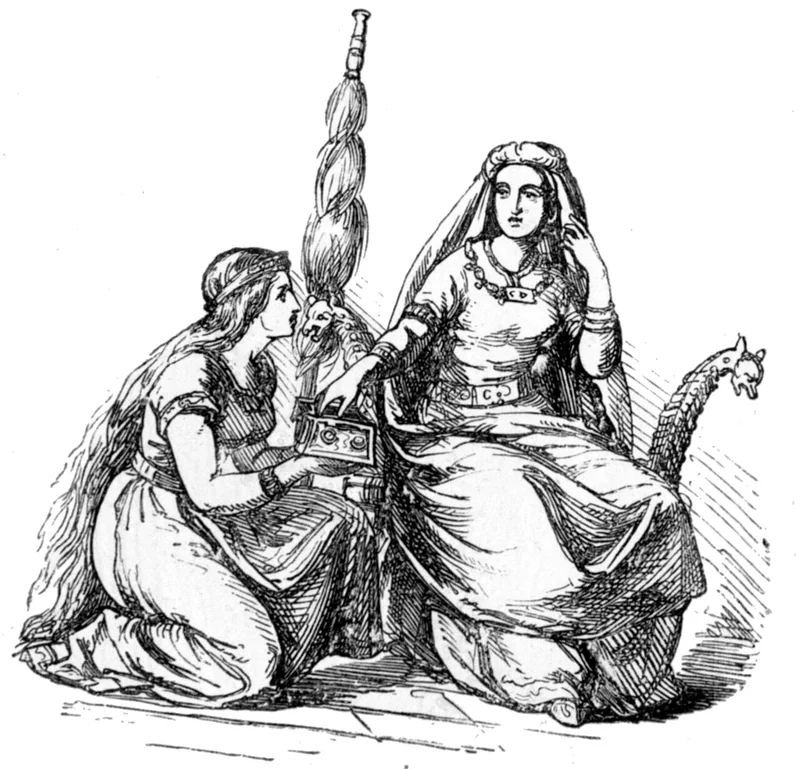
Snorri's Prose Edda (Gylfaginning 24) describes Freyja as the most eminent of the goddesses. She receives half the slain from every battle in her hall Fólkvangr ('People's Field'), while Odin takes the other half to Valhalla. She is the most skilled of all in seiðr (a form of Norse magic involving divination and manipulation of fate), and it was from her that Odin learned seiðr (Ynglinga Saga 4). Her necklace Brísingamen, fashioned by the four dwarves of Brisings, is her most treasured possession. She weeps tears of red gold when she is sorrowful, often due to the absence of her husband Óðr.
Freyja and the cats
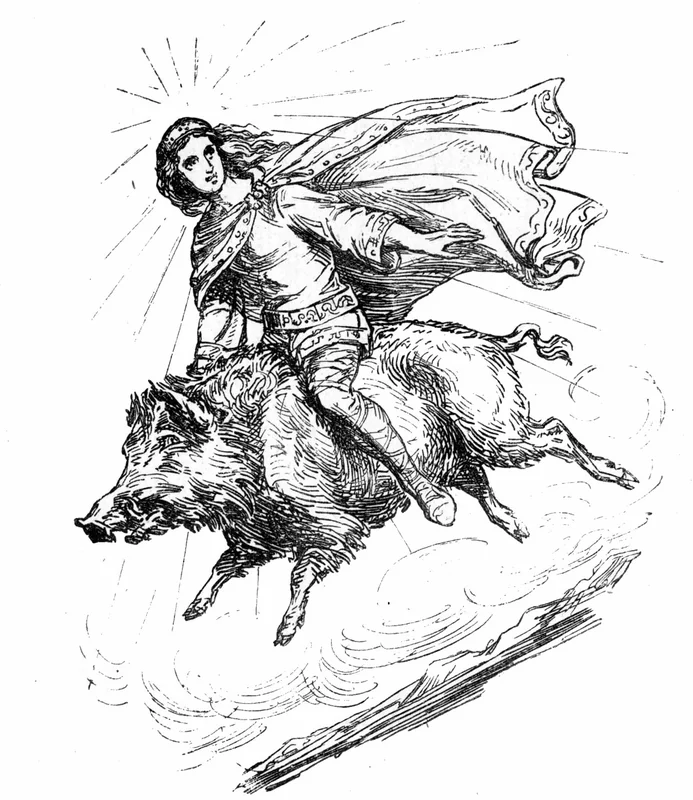
Freyja's chariot is drawn by two cats — a distinctive attribute among the Norse deities and one of the most frequently cited in modern popular culture. Snorri's Prose Edda (Gylfaginning 24) briefly mentions this chariot. The association of Freyja with cats reflected practical Norse society, where cats were valued as mousers on farms and ships. She is also associated with the boar Hildisvíni ('Battle Pig'), which her companion Óttar rides; Freyja is the practitioner of seiðr who transformed Óttar into a boar (Poetic Edda: Hyndluljóð 5).
Sources & further reading (2)
- primary-source — accessed 2026-05-06
- encyclopedia — accessed 2026-05-06
Frequently asked questions
What is seiðr magic?
Seiðr (Old Norse: seiðr) is a form of Norse magic associated primarily with Freyja and secondarily with Odin (who learned it from her). Snorri Sturluson (Ynglinga Saga 4) describes seiðr as magic by which Freyja could know the fates of people and affect events — bringing death, misfortune, or good luck. It involved entering a trance state, often with the aid of a specialist (völva), and was associated primarily with women. It was considered somewhat disreputable for men to practice seiðr, as Loki taunts Odin for in the Poetic Edda (Lokasenna 24).
What is the necklace Brísingamen?
Brísingamen is Freyja's golden necklace (or torc), her most prized possession, mentioned in Snorri's Prose Edda (Gylfaginning 35) and in a prose summary of the lost Þrymskviða tradition. Snorri recounts that when Þrymr the giant king stole Thor's hammer Mjölnir and demanded Freyja as his bride in exchange, the gods considered dressing Thor as Freyja and lending her Brísingamen as a disguise. The necklace is also mentioned in Beowulf (line 1199) as 'Brosinga mene,' which scholars have connected to the Norse Brísingamen tradition, suggesting it was a well-known mythological object across the Germanic world.