God
Njord
Vanir god of the sea, winds, and fishing in Norse mythology.
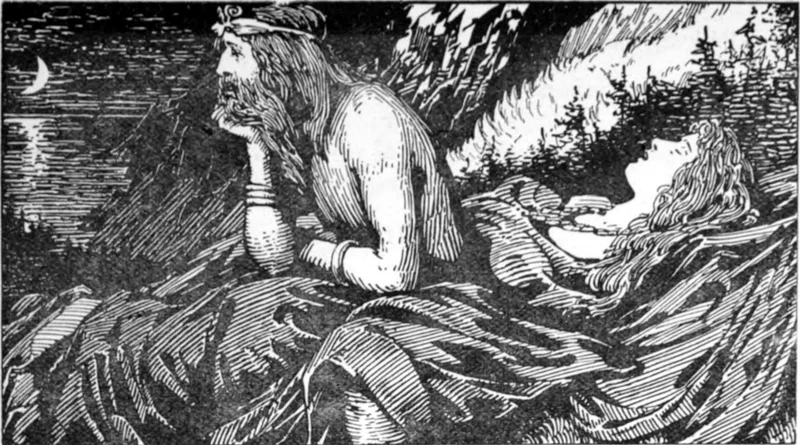
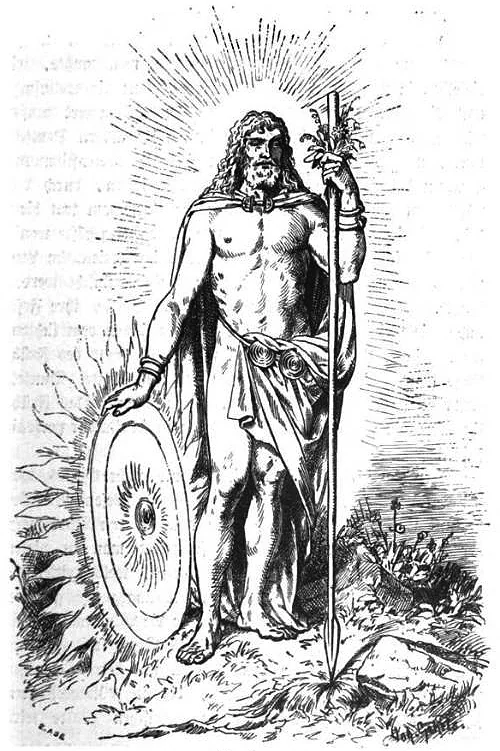
Njörðr (Old Norse: Njörðr; modern Njord) is a Vanir god who rules over sea winds, fishing, and seafaring. Father of Freyr and Freyja, he was one of the Vanir gods sent to Asgard as a hostage during the truce between the Aesir and Vanir — a mythological war between the two divine tribes of Norse mythology. Snorri Sturluson describes him as extremely wealthy and the divine patron of those who fish and sail. He married the giantess Skaði, but their union failed because each could not tolerate the other's preferred home: Njörðr was miserable in Skaði's mountain hall, and Skaði was miserable by Njörðr's sea.
Quick facts
- Pantheon
- Norse
- Figure type
- God
- Period
- Attested in Norse literary sources from the 13th century CE
- Primary sources
- Snorri Sturluson Prose Edda: Gylfaginning 23–24; Poetic Edda: Grímnismál 16; Snorri Sturluson Prose Edda: Gylfaginning 23 (Njörðr and Skaði)
- Related figures
- freyr, freyja, skadi, odin
Njörðr and Skaði
Snorri's Prose Edda (Gylfaginning 23) narrates the unusual marriage of Njörðr and the giantess Skaði. Skaði came to Asgard to avenge her father Þjazi, whom the gods had killed. The gods offered her compensation, including the right to choose a husband from among the gods — but she could see only their feet. She chose the finest pair, hoping for Baldr but getting Njörðr. The couple agreed to spend nine nights in each other's home. Njörðr was miserable in Skaði's mountain hall at Thrymheimr ('Crash-World'), surrounded by wolves and snow. Skaði was miserable at Njörðr's sea-hall Nóatún ('Ship-Enclosure'), troubled by the seabirds' cries. Their marriage did not last.
God of seafarers
Snorri Sturluson (Prose Edda: Gylfaginning 23) describes Njörðr as ruling the course of winds, calming both sea and fire, and governing the wealth of the sea. Fishermen and sailors invoke him. He lives in Nóatún by the sea. Njörðr's name may be linguistically related to the ancient Germanic goddess Nerthus described by Tacitus (Germania 40, c. 98 CE) — the 'Mother Earth' figure worshipped by Germanic peoples near the sea, whose wagon was ceremonially paraded and whose image was bathed in a secret lake.
Sources & further reading (2)
- primary-source — accessed 2026-05-06
- encyclopedia — accessed 2026-05-06
Frequently asked questions
What is the Aesir-Vanir War?
The Aesir-Vanir War is the mythological conflict between the two groups of Norse gods — the Aesir (warrior gods including Odin, Thor, and Tyr) and the Vanir (fertility gods including Njörðr, Freyr, and Freyja). The war ended in a truce: both sides exchanged hostages. Njörðr, Freyr, and Freyja joined the Aesir in Asgard; Hœnir and Mímir were sent to the Vanir. The myth is recorded in Snorri's Prose Edda (Gylfaginning 23) and Ynglinga Saga 4. Scholars view the Aesir-Vanir War as possibly reflecting a fusion of two distinct religious traditions in ancient Scandinavia.
Who is Skaði in Norse mythology?
Skaði (Old Norse: Skaði) is a Jötunn (giantess) and later a goddess of skiing, bowhunting, and mountains in Norse mythology. She is the daughter of the giant Þjazi, whom the gods killed when he stole the goddess Iðunn. Coming to Asgard for revenge, she instead accepted compensation including marriage to one of the gods — she chose Njörðr's feet, thinking them the finest (hoping for Baldr). Their marriage was a clash of habitats: Skaði preferred her mountain home, Njörðr the sea. She is also said to have later had a relationship with Odin, bearing him sons who founded Swedish dynasties according to Ynglinga Saga.