Monster
Jörmungandr
The Midgard Serpent of Norse mythology who encircles the world.
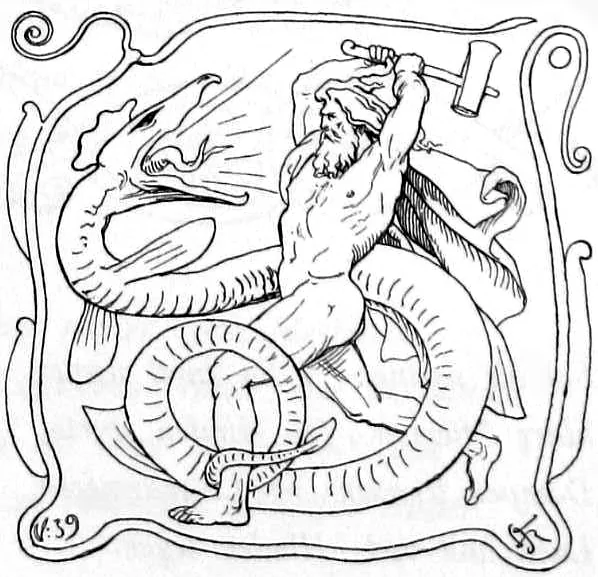
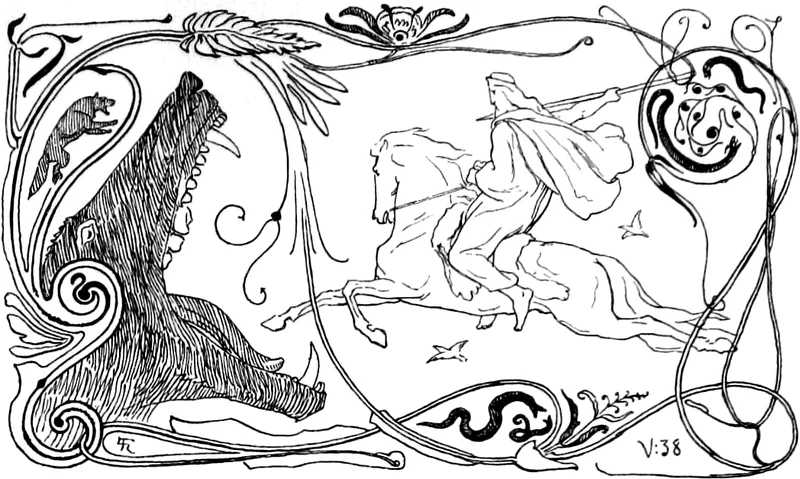
Jörmungandr (Old Norse: Jǫrmungandr, 'Huge Monster') is the World Serpent of Norse mythology, son of Loki and the giantess Angrboða and sibling of Fenrir and Hel. Cast by Odin into the ocean surrounding Midgard (the world of humans), the serpent grew so large that it encircles the entire world and bites its own tail — an image known as Ouroboros. Jörmungandr is the eternal enemy of Thor; their destined confrontation at Ragnarök ends with Thor slaying the serpent but then dying from its venom nine steps later. This relationship is explored in multiple passages of the Prose Edda and Poetic Edda.
Quick facts
- Pantheon
- Norse
- Figure type
- Monster
- Period
- Attested in Norse literary sources from the 13th century CE
- Primary sources
- Snorri Sturluson Prose Edda: Gylfaginning 34; Snorri Sturluson Prose Edda: Gylfaginning 51; Poetic Edda: Hymiskviða 22–24
- Related figures
- loki, thor, fenrir, hel, odin
- Constellation link
- Draco Constellation (Draco)
The fishing expedition
The Poetic Edda (Hymiskviða 22–24) narrates that Thor, rowing with the giant Hymir, baited his hook with an ox's head and cast it overboard. Jörmungandr took the bait. Thor hauled the serpent up until its head broke the surface — the two stared at each other, the sea boiling around them. Thor raised Mjölnir to deliver the killing blow. But Hymir, terrified, cut the fishing line. The serpent sank back into the ocean. This encounter is depicted on several Viking-age carved stones and is one of the most frequently illustrated Norse myths in the archaeological record.
Ragnarök
Snorri's Prose Edda (Gylfaginning 51) records the destined meeting of Thor and Jörmungandr at Ragnarök. The World Serpent will rise from the ocean, spitting poison, causing seas to flood. Thor will kill Jörmungandr with Mjölnir. He will then take nine steps before dying from the serpent's venom. The fateful number nine echoes throughout Norse mythology — Odin hung nine days on Yggdrasil; there are nine worlds in the cosmos. Thor's death from the serpent's venom immediately after slaying it is the classic heroic exchange: victor and vanquished die together.
Sources & further reading (2)
- primary-source — accessed 2026-05-06
- encyclopedia — accessed 2026-05-06
Frequently asked questions
Why does Jörmungandr bite its own tail?
According to Snorri Sturluson's Prose Edda (Gylfaginning 34), Odin cast the young Jörmungandr into the ocean surrounding Midgard. There the serpent grew so large that it encircles the entire world and bites its own tail. This creates the condition known as Ouroboros (from Greek, 'tail-eater'), a circular symbol of infinity, eternity, and cyclical existence. When Jörmungandr releases its tail — at Ragnarök — the world ends and the cycle is broken.
What is the relationship between Thor and Jörmungandr?
Thor and Jörmungandr are natural enemies — the god of thunder and the world serpent — destined to kill each other at Ragnarök. Their enmity pervades Norse mythology: the fishing expedition (Hymiskviða), the Ragnarök prophecy (Gylfaginning 51), and the imagery of Thor as the protector of the world against the encircling chaos-serpent. This god-versus-serpent conflict is a widespread Indo-European mythological motif (cf. Zeus vs. Typhon in Greek mythology, Indra vs. Vritra in Indian mythology).