God
Hel
Ruler of the realm of the dead in Norse mythology, daughter of Loki.
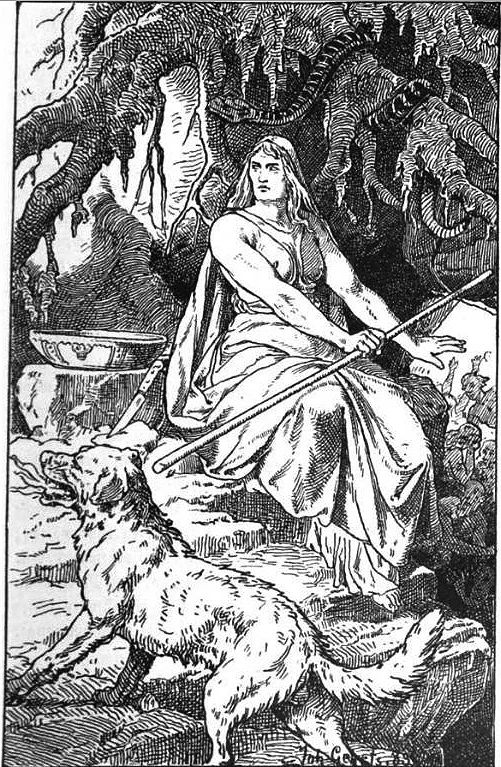
Hel is the ruler of the realm of the dead (also called Hel) in Norse mythology, daughter of Loki and the giantess Angrboða and sibling of Fenrir and Jörmungandr. Odin cast her down to the realm of Niflheim and gave her authority over all who die of sickness, old age, or any cause other than battle. Snorri Sturluson describes her as half living (the upper half of her body) and half corpse-blue or black (the lower half). She received Baldr after his death and refused to return him unless all things in the world wept. Her hall is called Éljúðnir ('Damp with Sleet').
Quick facts
- Pantheon
- Norse
- Figure type
- God
- Period
- Attested in Norse literary sources from the 13th century CE
- Primary sources
- Snorri Sturluson Prose Edda: Gylfaginning 34; Snorri Sturluson Prose Edda: Gylfaginning 49; Poetic Edda: Baldrs Draumar
- Related figures
- loki, odin, baldr, fenrir, jormungandr
Realm of Hel
Snorri's Prose Edda (Gylfaginning 34) describes Hel's realm in detail. It is located in Niflheim, the cold primordial world beneath the roots of Yggdrasil. Odin assigned Hel authority over all who die of illness, old age, accident, or any means other than combat — those who die in battle go to Valhalla. Her hall is called Éljúðnir ('Damp with Sleet'); her dish is Hunger; her knife is Famine; her threshold is a stumbling-block called Fallandaforað; her bed is Sick-bed; her curtains Glimmering Misfortune. The realm of Hel is described as a cold, grey shadow of the living world.
Hel and Baldr
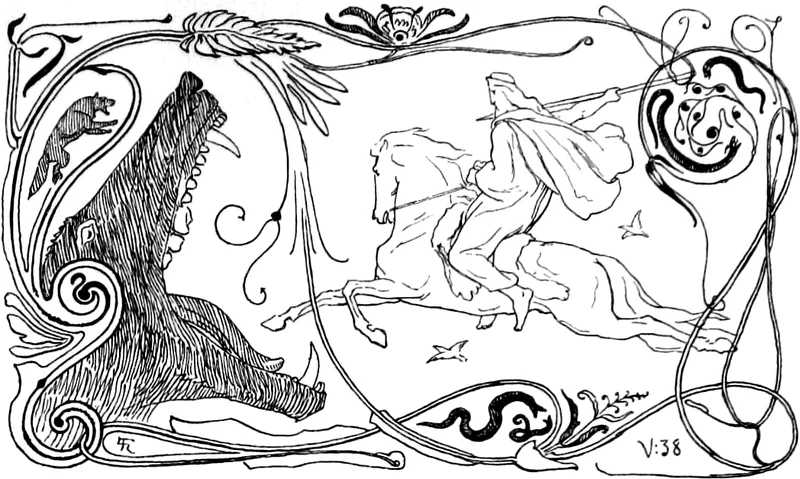
Snorri's Prose Edda (Gylfaginning 49) narrates that when Baldr died and his shade arrived in Hel's realm, the gods sent Hermóðr on Sleipnir to negotiate his release. Hel agreed to let Baldr go only if all things in the world — living and dead — wept for him. Every creature and object wept, except one giantess (thought to be Loki in disguise) who refused. Baldr remained in Hel's keeping. The myth establishes Hel as an impartial ruler who honours agreements: she made a genuine offer and honoured the terms of the gods' failure.
Sources & further reading (2)
- primary-source — accessed 2026-05-06
- encyclopedia — accessed 2026-05-06
Frequently asked questions
What is the difference between Hel and Valhalla?
In Norse mythology, Valhalla and Hel are distinct realms of the dead. Valhalla is Odin's great hall in Asgard, where warriors slain in battle are received by the Valkyries and live as einherjar preparing for Ragnarök. Hel is the cold, grey realm in Niflheim ruled by the goddess Hel, where all who die of sickness, old age, or non-combat causes go. Valhalla is heroic and bright; Hel is shadowy and cold. Together they cover all deaths: the battlefield-dead go to Odin, everyone else goes to Hel (or to Freyja's Fólkvangr, which receives half the battle-slain).
Is the word 'hell' derived from the Norse goddess Hel?
The English word 'hell' and the Norse goddess name Hel share a common Proto-Germanic root (reconstructed: halja, 'the underworld' or 'the concealed place'), as do Gothic halja, Old English hell, and similar forms across Germanic languages. The root means 'to cover or conceal' — a reference to burial or the hidden realm of the dead. The Norse goddess Hel is a personalisation of this concept. The Christian use of 'hell' as a place of punishment inherited the Germanic word, giving it theological content that differs significantly from the neutral, cold realm of the Norse Hel.