God
Frigg
Queen of Asgard and wife of Odin in Norse mythology.
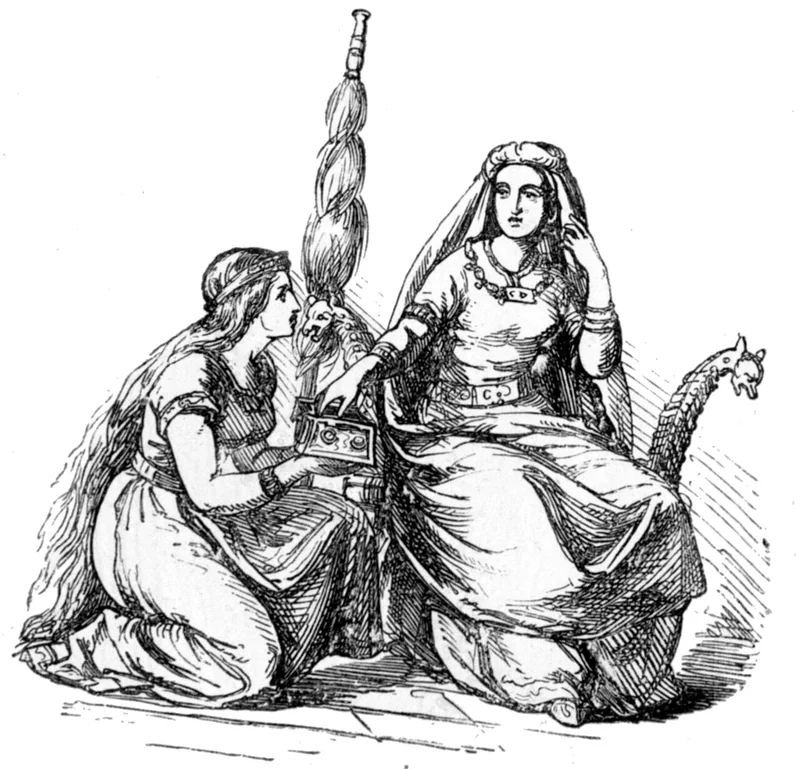
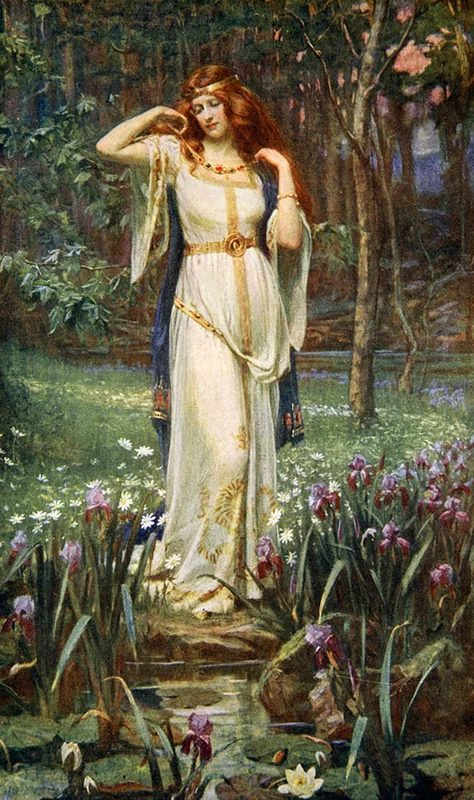
Frigg (Old Norse: Frigg) is the queen of the Aesir gods and wife of Odin in Norse mythology. She is the goddess of marriage, motherhood, foresight, and household management. According to Snorri Sturluson's Prose Edda (Gylfaginning 20), she is the most eminent of the goddesses and shares Odin's high seat Hliðskjálf, from which she can see all the worlds. She is best known in surviving mythology for her attempts to prevent the death of her beloved son Baldr, for whom she extracted oaths from all things in the world not to harm him, overlooking only the mistletoe. Friday is named after her.
Quick facts
- Pantheon
- Norse
- Figure type
- God
- Period
- Attested in Norse literary sources from the 13th century CE; Friday (Old English Frīgedæg) attests the cult from the early medieval period
- Primary sources
- Snorri Sturluson Prose Edda: Gylfaginning 20; Snorri Sturluson Prose Edda: Gylfaginning 49; Poetic Edda: Lokasenna 26–29
- Related figures
- odin, baldr, loki, thor, freyja
Frigg and Baldr
Frigg's most prominent myth in surviving sources concerns her attempt to protect her son Baldr. Snorri's Prose Edda (Gylfaginning 49) records that when Baldr began having ominous dreams of his death, Frigg extracted oaths from all substances — fire, water, iron, earth, trees, stones, animals, birds, snakes, and more — not to harm Baldr. She overlooked the mistletoe, thinking it too young and harmless to warrant an oath. Loki discovered this omission and fashioned a mistletoe dart with which the blind god Höðr killed Baldr. After Baldr's death, Frigg is described mourning him in the realm of the dead, unable to bring him back.
Attributes and Friday
Snorri Sturluson (Prose Edda: Gylfaginning 20) describes Frigg as living in Fensalir ('fen halls') and as the only other being besides Odin permitted to sit on the high seat Hliðskjálf. She is associated with knowledge of fate — it is said in several sources that she knows the fates of all beings but reveals nothing (Poetic Edda: Lokasenna 29). She is associated with the distaff (a tool for spinning thread) as a symbol of her domestic authority. Friday (Old English: Frīgedæg) is named after Frigg, the Norse equivalent of Venus's day in the Roman calendar.
Sources & further reading (2)
- primary-source — accessed 2026-05-06
- encyclopedia — accessed 2026-05-06
Frequently asked questions
Is Frigg the same as Freyja?
Frigg and Freyja are distinct goddesses in the Norse literary tradition as recorded by Snorri Sturluson, though some scholars propose they may share a common proto-Germanic origin. Frigg is the wife of Odin and queen of Asgard, associated with marriage, motherhood, and fate. Freyja is the Vanir goddess of love, beauty, sex, magic, and war. They are differentiated clearly in Snorri's Prose Edda. Both have given their names to Friday: Old English Frīgedæg (Frigg's day) and Old High German Frīatag (Frigg or Freyja's day).
Why is Friday named after Frigg?
Friday (Old English: Frīgedæg) is named after the Norse goddess Frigg, who was identified as the Germanic equivalent of Venus in the Roman calendar system. The Roman dies Veneris (Venus's day) was translated into Germanic as Frigg's day or Freyja's day. The identification of Frigg/Freyja with Venus was based on their shared association with love, marriage, and feminine qualities. The Old English form Frīgedæg, attested from the early medieval period, directly preserves Frigg's name in the modern English weekday.