Tradescantia Nanouk
Tradescantia Nanouk (Nanouk) Care Guide
 Featured phototradescantia-nanouk.jpg
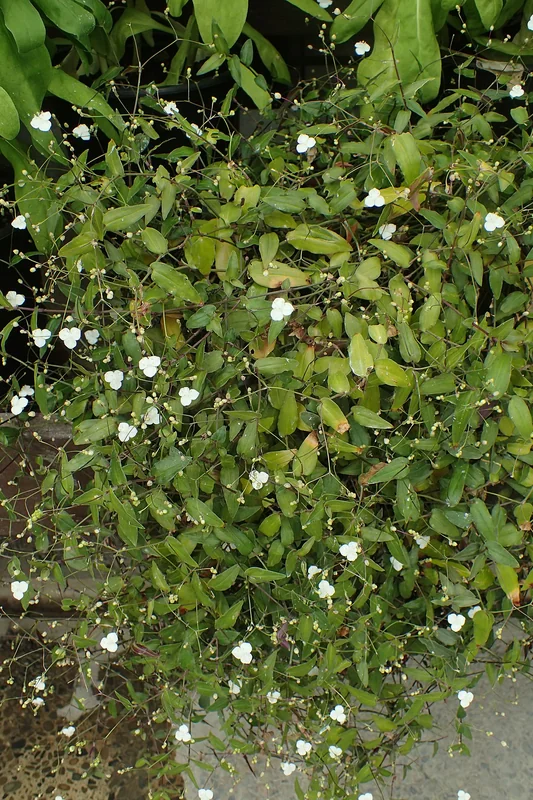
Tradescantia Nanouk, sold as Nanouk, is a member of *Tradescantia*, a Commelinaceae genus of about 75 species across the Americas. A patented modern cultivar of Tradescantia with broad fleshy pink, lilac, and green striped leaves on stout stems, much more compact and colourful than the typical T. fluminensis it descends from. Like most cultivated Tradescantia it grows fast, propagates almost trivially from stem cuttings, and produces three-petalled flowers in white, pink, or violet on mature plants.
Care facts at a glance
- Light
- Bright indirect
- Water
- Water when the top 2 cm of mix has dried.
- Humidity
- 40–60 %
- Temperature
- 15–27 °C
- Soil
- Free-draining houseplant mix with extra perlite.
- Origin
- Tropical Americas, with Tradescantia spreading across the Americas from Canada to Argentina.
- Mature size
- Trailing stems to 60 cm or more.
Overview
Tradescantia Nanouk sits in Tradescantia, a fast-growing Commelinaceae genus famous for vivid foliage and three-petalled flowers. A patented modern cultivar of Tradescantia with broad fleshy pink, lilac, and green striped leaves on stout stems, much more compact and colourful than the typical T. fluminensis it descends from. Most cultivated Tradescantia tolerate considerable neglect, root readily from broken pieces, and stay reliably colourful in bright filtered light.
Care Priorities
- Bright filtered light keeps colour vivid.
- Pinch growing tips regularly to encourage branching.
- Water when the top of the mix dries; tolerates drought briefly.
- Refresh from cuttings every two years — old plants tend to bare at the base.
Common Problems
Pale or fading colour signals insufficient light. Bare leggy stems are normal in old plants — restart from cuttings. Aphids cluster on growing tips and dislodge with a strong water spray.
Sources & further reading (2)
- encyclopedia — accessed 2026-04-29
- botanical-garden — accessed 2026-04-29
Frequently asked questions
Is 'Nanouk' a real species?
'Nanouk' is a patented cultivar developed in the Netherlands in the 2010s — it is not a botanical species but a selected hybrid in the Tradescantia albiflora group. The patent restricts authorised propagation, which is why retail prices are higher than for unpatented Tradescantia.
How do I keep Tradescantia bushy?
Pinch growing tips every few weeks to encourage branching, and root every shoot you remove. Bushy Tradescantia is the result of constant tip pruning rather than any inherent compactness in the plant.
Can I root Tradescantia in water?
Yes — Tradescantia is one of the fastest plants to root in water. Cut a healthy stem section with at least two nodes and stand it in a glass of water. Roots typically emerge within a week.