Spathiphyllum wallisii
Spathiphyllum wallisii (Peace Lily) Care Guide
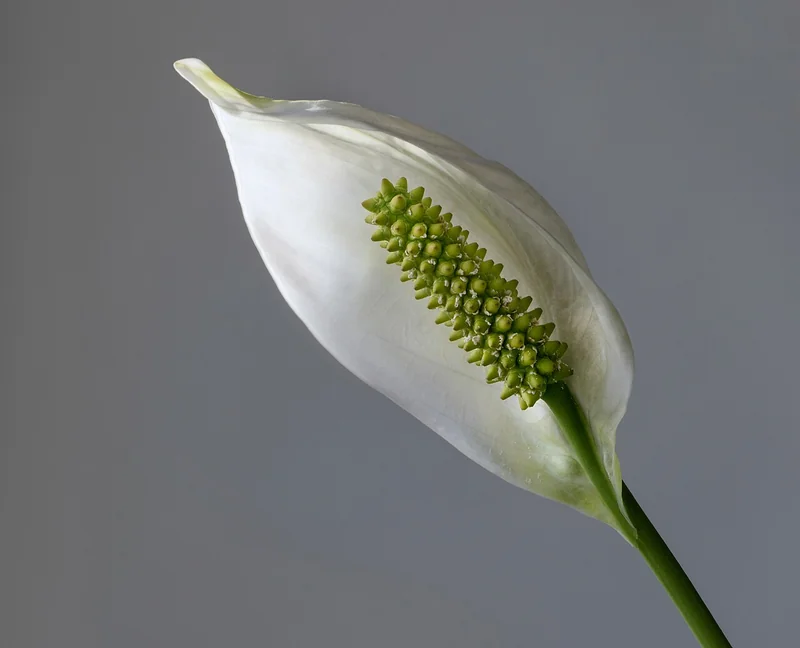 Featured photospathiphyllum-wallisii.jpg
Spathiphyllum wallisii is the species behind most compact peace lilies sold as houseplants. It is a Central American forest aroid that produces white spathes on slim stalks several times a year, with broad arching dark-green leaves. It tolerates lower light better than almost any flowering houseplant and gives clear watering cues by drooping when thirsty.
Care facts at a glance
- Light
- Medium light
- Water
- Water when the top 2 cm of mix has dried, or when the leaves begin to droop slightly.
- Humidity
- 40–60 %
- Temperature
- 18–27 °C
- Soil
- Standard well-draining houseplant mix with extra perlite.
- Origin
- Forests of Colombia and Venezuela.
- Mature size
- 30 to 60 cm tall, similar spread.
Overview
Spathiphyllum wallisii is one of the most-grown flowering houseplants worldwide, valued for its tolerance of medium light and its self-explanatory drooping water cue. Many trade cultivars are larger hybrids; wallisii itself is the compact original species.
Care Priorities
- Medium to bright filtered light; direct sun bleaches the leaves.
- Water when leaves droop slightly — do not wait until they are limp.
- Wipe leaves every few weeks; they are dust magnets.
- Trim spent flower stalks at the base to encourage repeat blooming.
Common Problems
Brown leaf tips are tap-water minerals; switch to filtered or rainwater. No flowers usually means too little light. Yellow leaves throughout the plant point to overwatering or stale mix.
Sources & further reading (2)
- encyclopedia — accessed 2026-04-28
- botanical-garden — accessed 2026-04-28
Frequently asked questions
Why does my peace lily refuse to flower?
The most common cause is too little light. Peace lilies tolerate low light but only flower in medium to bright filtered light.
Are the white spathes the flowers?
The spathe is a modified leaf that wraps the small true flowers on the central spadix. The spathe is what most people call the flower.
How can I tell if I am over or under watering?
Yellow leaves with soggy soil is over; drooping leaves with dry soil is under. The plant tells you with its posture.