Aglaonema commutatum
Aglaonema commutatum (Silver Queen) Care Guide
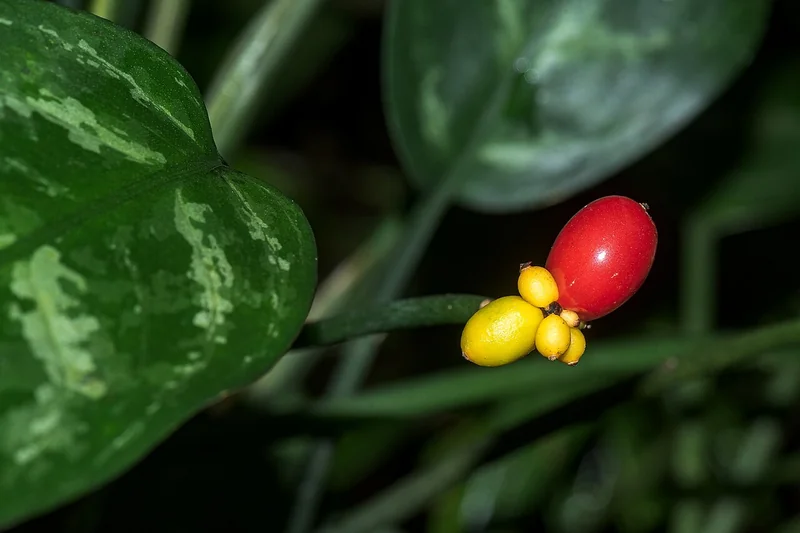 Featured photoaglaonema-commutatum.jpg
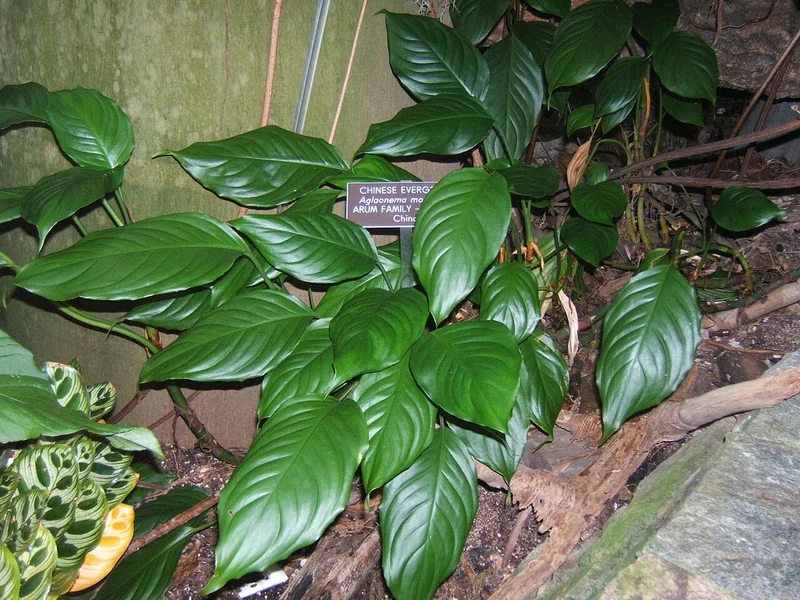
Aglaonema commutatum is one of the parent species behind dozens of modern Chinese evergreen cultivars. The trade form most often sold as Silver Queen has broad lance-shaped leaves marked in silver-green over deep green and tolerates very low light. Like other aglaonemas it is one of the most reliable indoor foliage plants for offices, low-light corners, and beginner growers.
Care facts at a glance
- Light
- Medium light
- Water
- Water when the top 2 to 3 cm of mix has dried.
- Humidity
- 40–60 %
- Temperature
- 18–27 °C
- Soil
- Standard well-draining houseplant mix with perlite.
- Origin
- Forests of the Philippines and surrounding Southeast Asia.
- Mature size
- 30 to 90 cm tall, similar spread.
Overview
Aglaonema commutatum was described in the 1800s from Filipino material and is one of the parent species of modern Chinese evergreen hybrids. Many trade cultivars sold as Silver Queen, Silver Bay, or Maria are commutatum hybrids.
Care Priorities
- Medium to bright filtered light is the sweet spot.
- Water restraint — commutatum tolerates dryness much better than wet feet.
- Wipe leaves regularly to keep them efficient at light capture.
- Keep above 16 °C; cold draughts cause leaf damage.
Common Problems
Yellow leaves with mushy bases is overwatering. Brown leaf tips are dry air or tap-water minerals. Leaning growth toward the window is normal — rotate the pot every few weeks.
Sources & further reading (2)
- encyclopedia — accessed 2026-04-28
- botanical-garden — accessed 2026-04-28
Frequently asked questions
Silver Queen vs Silver Bay — same plant?
Both are commutatum-derived hybrids. Silver Queen has narrower leaves with more silver; Silver Bay has broader, more fully silver leaves.
Will it tolerate office light?
Yes — Aglaonema commutatum is one of the most low-light-tolerant houseplant species. It survives well under fluorescent ceiling lighting alone.
Why do new leaves come in pale?
New leaves often emerge pale and harden off to full colour over a few weeks. Persistent pale new growth points to insufficient light or feed.