Sedum palmeri
Sedum palmeri (Palmer's sedum) Care Guide
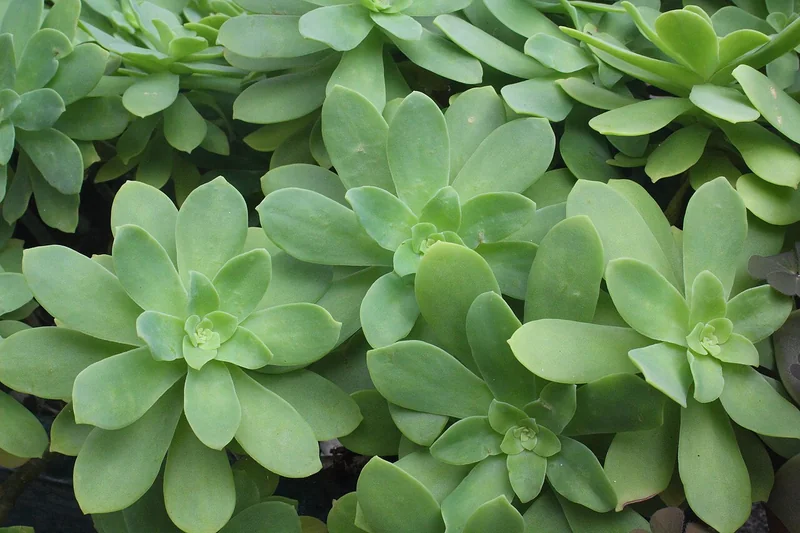 Featured photosedum-palmeri.jpg
Sedum palmeri, sold as Palmer's sedum, is a member of *Sedum*, a global genus of about 600 succulent stonecrops in the family Crassulaceae. A Mexican cliff-dwelling species with rosettes of pale-blue spoon-shaped leaves on short branching stems, hanging from rock faces in habitat. Mature plants produce dense clusters of yellow star-shaped flowers in late winter. Like most Sedum it tolerates long dry spells, full sun to bright filtered light, and propagates almost trivially from stem or leaf cuttings — broken pieces root readily on dry succulent mix.
Care facts at a glance
- Light
- Full sun
- Water
- Water deeply when the mix is fully dry, then let it drain completely.
- Humidity
- 20–50 %
- Temperature
- 5–27 °C
- Soil
- Free-draining gritty succulent mix with at least 30 percent perlite, pumice, or coarse sand.
- Origin
- Temperate and subtropical regions across the northern hemisphere, with diversity centres in Mexico and the Mediterranean.
- Mature size
- 5 to 30 cm tall depending on species, often spreading widely.
Overview
Sedum palmeri sits in Sedum, the largest succulent genus in Crassulaceae. A Mexican cliff-dwelling species with rosettes of pale-blue spoon-shaped leaves on short branching stems, hanging from rock faces in habitat. Mature plants produce dense clusters of yellow star-shaped flowers in late winter. The thick fleshy leaves store enough water that mature plants tolerate weeks of neglect, and most species also tolerate cool conditions far better than tender succulents like Echeveria.
Care Priorities
- Full sun or very bright filtered light keeps growth compact and pigmented.
- Gritty, fast-draining mix; sustained moisture is the leading killer.
- Water rarely; the leaves store ample reserves.
- Pinch back leggy stems and root the cuttings — Sedum propagates almost trivially.
Common Problems
Stretched, pale stems are insufficient light. Mushy base is overwatering. Leaf drop with no other symptoms is normal in winter rest. Aphids cluster at growing tips on weakened plants.
Sources & further reading (2)
- encyclopedia — accessed 2026-04-29
- botanical-garden — accessed 2026-04-29
Frequently asked questions
Will Sedum palmeri tolerate a frost?
S. palmeri is one of the more cold-tolerant Mexican Sedum and tolerates brief light frosts in well-drained soil. Sustained sub-zero temperatures damage the rosettes — overwinter cold but frost-free.
Will Sedum survive a cold windowsill?
Most cultivated Sedum tolerate cool windowsills well — many species are genuinely cold-hardy outdoors and a slightly cool indoor winter actually deepens leaf colour. Avoid sustained temperatures below freezing for the tender Mexican species.
Can I plant Sedum cuttings straight into soil?
Yes — Sedum is the easiest of the common succulents to propagate. Snap a healthy stem, let the cut callus for a day or two, and push it into dry succulent mix. Roots usually appear within two to three weeks.