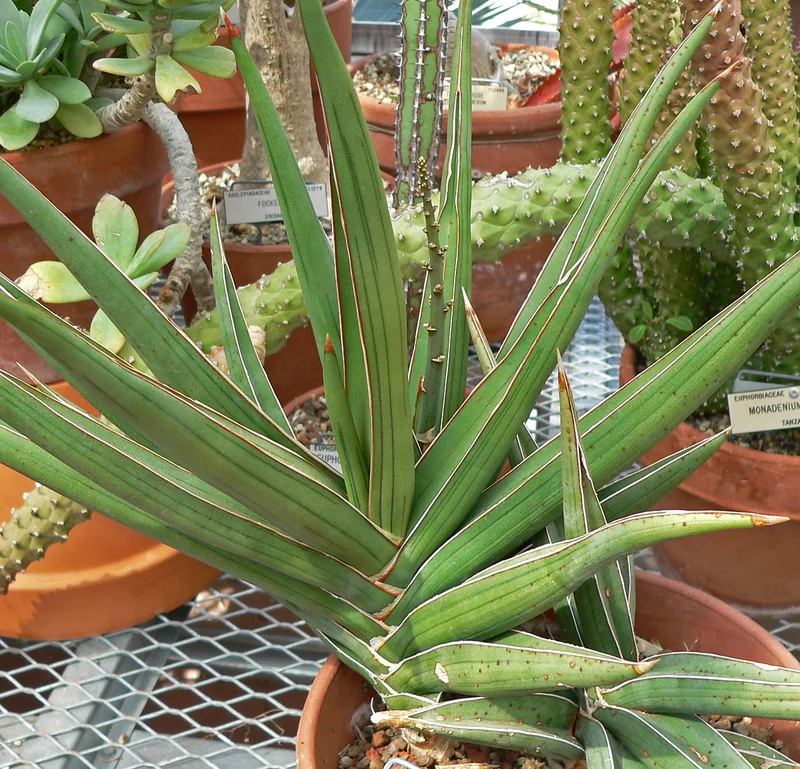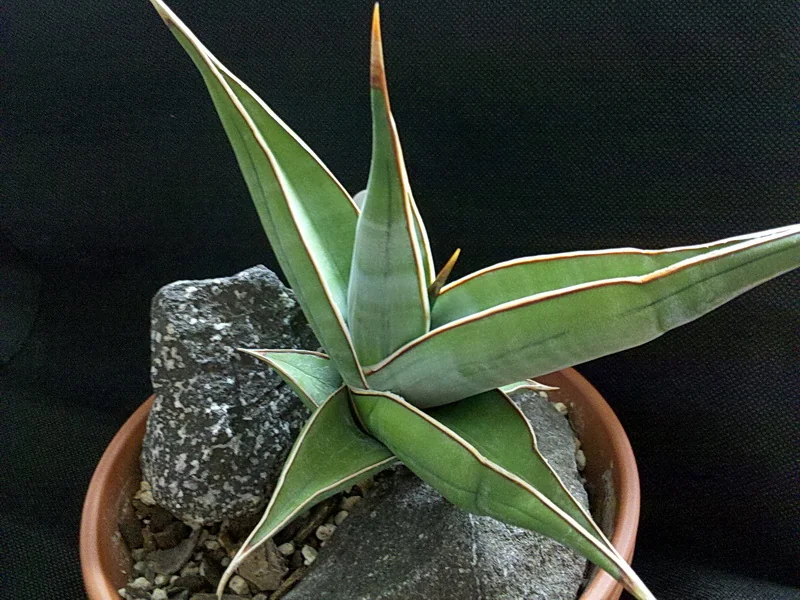
Sansevieria pinguicula, sold as Walking Sansevieria, is a Sansevieria (now technically *Dracaena*) from tropical Africa, with stiff leaves rising directly from a creeping underground rhizome. A Kenyan Sansevieria with thick fleshy lance-shaped leaves on short stoloniferous runners. The runners arch upward and root where they touch substrate, allowing the plant to walk slowly across the ground in habitat. Like most Sansevieria it tolerates long dry spells, low light, and irregular watering, which is why the group remains a staple of office and beginner-friendly plant lists.
Care facts at a glance
- Light
- Bright indirect
- Water
- Water deeply when the mix is fully dry, typically every 3 to 4 weeks.
- Humidity
- 20–50 %
- Temperature
- 15–27 °C
- Soil
- Free-draining cactus or succulent mix with extra perlite.
- Origin
- Tropical Africa, Madagascar, and southern Asia — most cultivated species are West or East African.
- Mature size
- 30 to 120 cm tall depending on species.
Overview
Sansevieria pinguicula was placed in Sansevieria until molecular studies in 2017 folded the genus into Dracaena. A Kenyan Sansevieria with thick fleshy lance-shaped leaves on short stoloniferous runners. The runners arch upward and root where they touch substrate, allowing the plant to walk slowly across the ground in habitat. Plants are still widely sold under the older Sansevieria names at retail, and growers tend to use both names interchangeably. The species spreads by stout creeping rhizomes that push new leaf clusters at intervals.
Care Priorities
- Bright filtered light to medium light; tolerates lower light than most cultivated foliage.
- Free-draining cactus mix.
- Water deeply, then let the mix dry fully — overwatering is the leading killer.
- Tolerates very irregular care; almost impossible to under-water.
Common Problems
Soft mushy base is overwatering and is usually fatal once it spreads to the rhizome. Wrinkled leaves on a dry plant recover slowly — water deeply once the mix is fully dry. Brown leaf tips are usually old age and harmless.
Sources & further reading (2)
- encyclopedia — accessed 2026-04-29
- botanical-garden — accessed 2026-04-29
Frequently asked questions
Why is it called walking?
S. pinguicula spreads by stoloniferous runners that arch upward and root where the tip touches substrate. Successive generations of runners walk the plant slowly across the ground in habitat, giving the trade name. Indoor specimens behave the same way and quickly fill a wide pot.
Is this Sansevieria or Dracaena?
Modern taxonomy folded *Sansevieria* into *Dracaena* based on molecular phylogenetic studies published in 2017. Plants are still very widely sold under the older Sansevieria names; both names refer to the same plants. The trade has been slow to migrate to the new names because the older ones are so well established.
Can I propagate from a leaf cutting?
Yes — most Sansevieria root readily from leaf segments. Cut a healthy leaf into 5 cm sections, let each section callus for a day or two, and push the bottom cut-edge into dry succulent mix. Roots typically appear within a month and a small leaf cluster follows.