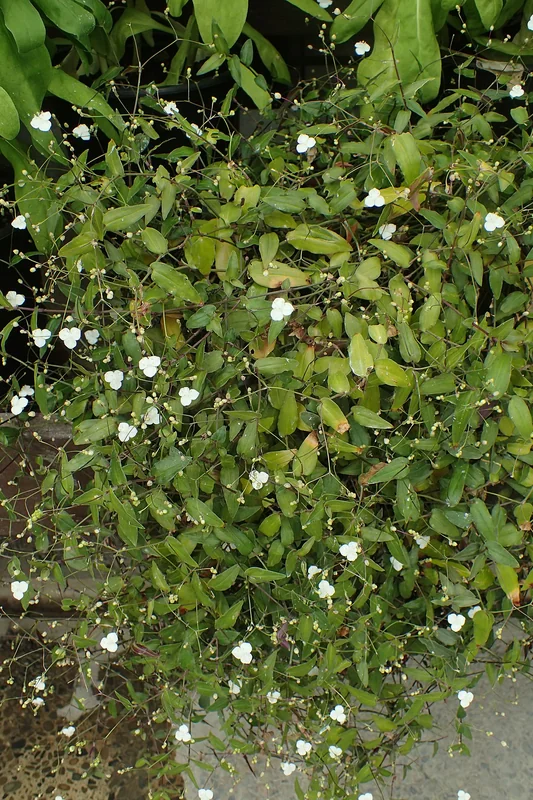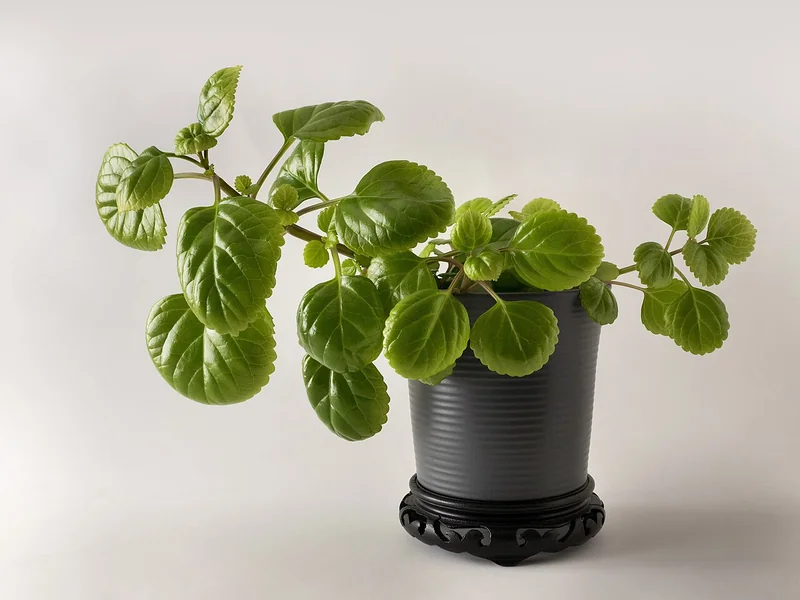
Plectranthus verticillatus, sold as Swedish Ivy, is a fast-growing colourful foliage plant. A southern African Lamiaceae trailing plant with thick rounded glossy green leaves on slender pendulous stems. Despite the trade name it is not an ivy — Plectranthus is a mint relative — and the 'Swedish' label refers to its popularity in Scandinavian houseplant collections. Like most members of the cultivated colourful-foliage group it grows fast, propagates readily from cuttings, and stays vivid in bright filtered light.
Care facts at a glance
- Light
- Bright indirect
- Water
- Water when the top 2 cm of mix has dried.
- Humidity
- 40–60 %
- Temperature
- 16–27 °C
- Soil
- Free-draining houseplant mix with peat or coir and perlite.
- Origin
- Specific origins vary by species — Cordyline from south-east Asia / Pacific, Plectranthus and Coleus from Africa and Asia, Iresine from the Americas.
- Mature size
- 30 to 100 cm tall depending on species.
Overview
Plectranthus verticillatus is grown for its colourful foliage rather than for flowers. A southern African Lamiaceae trailing plant with thick rounded glossy green leaves on slender pendulous stems. Despite the trade name it is not an ivy — Plectranthus is a mint relative — and the 'Swedish' label refers to its popularity in Scandinavian houseplant collections. Most colourful-foliage indoor plants tolerate considerable neglect, root rapidly from cuttings, and stay vivid in bright filtered light.
Care Priorities
- Bright filtered light keeps colour vivid.
- Pinch growing tips regularly to encourage branching.
- Water when the top of the mix dries; tolerates brief drought.
- Refresh from cuttings every two years — older plants tend to bare at the base.
Common Problems
Pale washed-out colour signals insufficient light. Bare leggy stems are normal in old plants — restart from cuttings. Aphids cluster on growing tips and dislodge with a strong water spray.
Sources & further reading (2)
- encyclopedia — accessed 2026-04-29
- botanical-garden — accessed 2026-04-29
Frequently asked questions
Why is it called Swedish Ivy when it's African?
P. verticillatus picked up the trade name 'Swedish Ivy' from its widespread popularity in Sweden as an indoor plant during the 20th century. The species itself is South African and unrelated to true ivies (Hedera) — it sits in Lamiaceae, the mint family, which is why crushed leaves smell mildly aromatic.
Why is the colour fading?
Loss of leaf colour signals insufficient light — most colourful foliage plants need bright filtered light to keep pigmentation vivid. Move to a sunnier spot and the new growth comes back colourful within a few weeks.
Can I root cuttings in water?
Yes — cuttings of most colourful-foliage plants root readily in water. Cut a healthy stem section with at least two nodes and stand it in a glass of water. Roots typically emerge within 1 to 2 weeks.