Monstera spruceana
Monstera spruceana (Spruce's Monstera) Care Guide
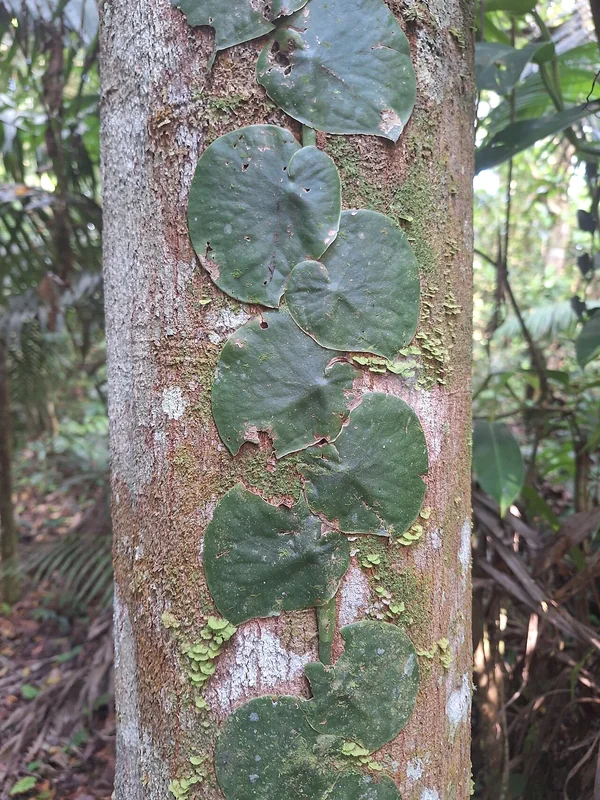 Featured photomonstera-spruceana.jpg
Monstera spruceana, sold as Spruce's Monstera, is a hemi-epiphytic aroid in *Monstera*, a Neotropical genus of about 50 climbing species. An Amazonian climbing Monstera named for the British botanist Richard Spruce, with elongated heart-shaped leaves that develop narrow midrib fenestrations on mature climbing stems. Like all Monstera it benefits from a moss pole indoors and develops mature fenestrations only on climbing stems.
Care facts at a glance
- Light
- Bright indirect
- Water
- Water when the top 3 to 4 cm of mix has dried.
- Humidity
- 50–80 %
- Temperature
- 18–27 °C
- Soil
- Chunky aroid mix of orchid bark, perlite, and coco coir for excellent aeration.
- Origin
- Neotropical rainforests of Central and South America.
- Mature size
- Climbs 1 to 3 m on a moss pole indoors.
Overview
Monstera spruceana sits in Monstera, a Neotropical climbing aroid genus. An Amazonian climbing Monstera named for the British botanist Richard Spruce, with elongated heart-shaped leaves that develop narrow midrib fenestrations on mature climbing stems. The famous fenestrations and perforations develop on mature leaves only after the plant has a stable climbing structure with a moss pole or trellis.
Care Priorities
- Bright filtered light, never direct midday sun.
- Chunky aroid mix with orchid bark and perlite.
- Moss pole — Monstera produces its largest leaves when climbing.
- Wipe leaves monthly to keep stomata clear.
Common Problems
Yellow leaves with mushy stems are overwatering. No fenestrations means insufficient light or no climbing support. Brown crispy edges signal dry air.
Sources & further reading (2)
- encyclopedia — accessed 2026-04-29
- botanical-garden — accessed 2026-04-29
Frequently asked questions
How is M. spruceana different from M. deliciosa?
M. spruceana has narrower leaves with midrib-only fenestrations, while M. deliciosa develops both lobed margins and through-leaf holes. M. spruceana also stays smaller in cultivation, reaching 1.5 m on a moss pole rather than the 2 to 3 m typical of M. deliciosa.
Why does my Monstera lack fenestrations?
Fenestrations appear on mature leaves only after the plant has a moss pole to climb plus consistent bright indirect light. Juvenile leaves are typically entire — patience and a totem are the answer.
How do I propagate from a stem cutting?
Cut a stem section with at least one node and one aerial root. Root in moist sphagnum, perlite, or water; transfer to potting mix once roots reach 3 to 5 cm long.