Monstera pinnatipartita
Monstera pinnatipartita Care Guide
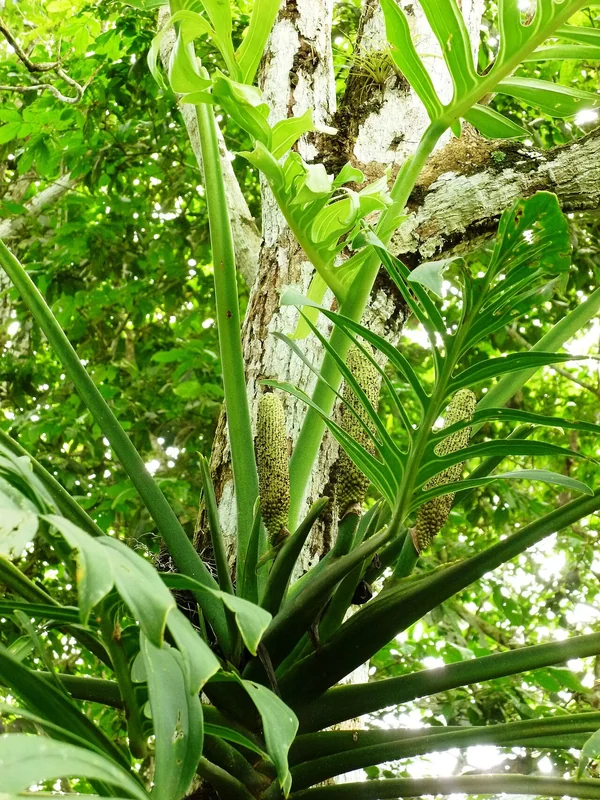 Featured photomonstera-pinnatipartita.jpg
Monstera pinnatipartita is a South American climber that goes through a striking juvenile-to-adult shift: glossy, undivided heart-shaped leaves on young plants give way to large, pinnately divided adult leaves once the vine starts climbing. Indoor plants on a tall moss pole can reach the adult form within a few years, with mature leaves over 50 cm long.
Care facts at a glance
- Light
- Bright indirect
- Water
- Water when the top 2 to 3 cm of mix has dried.
- Humidity
- 60–80 %
- Temperature
- 18–29 °C
- Soil
- Chunky aroid mix dominated by orchid bark and perlite.
- Origin
- Rainforests of Colombia, Ecuador, Peru, and Panama.
- Mature size
- Vines to 3 metres or more indoors with support; adult leaves to 60 cm long.
Overview
Monstera pinnatipartita is one of the few houseplant monsteras that visibly changes leaf form as it matures. Juveniles look unrelated to the adult form, which is why young plants are often misidentified.
Care Priorities
- A tall moss pole is essential to trigger the adult leaf form.
- Bright filtered light; full sun bleaches the glossy leaf surface.
- Steady warmth above 18 °C and humidity above 60 percent.
- Water more often once mature pinnate leaves form — they transpire much more than juvenile leaves.
Common Problems
Stalling at the juvenile heart-leaf stage almost always means the plant has nothing tall enough to climb. Yellowing lower leaves is normal turnover unless the rate increases. Crispy edges signal dry air.
Sources & further reading (2)
- encyclopedia — accessed 2026-04-28
- botanical-garden — accessed 2026-04-28
Frequently asked questions
How tall a pole do I need?
A 1.5 to 2 metre moss pole gives the plant room to mature. Shorter poles tend to keep the juvenile form.
Pinnatipartita vs subpinnata — same plant?
Different species, often confused. Pinnatipartita has more deeply cut adult leaves and a thicker climbing stem.
How long until adult leaves appear?
Two to four years from a juvenile cutting on a tall support, faster with bright light and steady humidity.