Microsorum punctatum
Microsorum punctatum (Climbing Bird's-Nest Fern) Care Guide
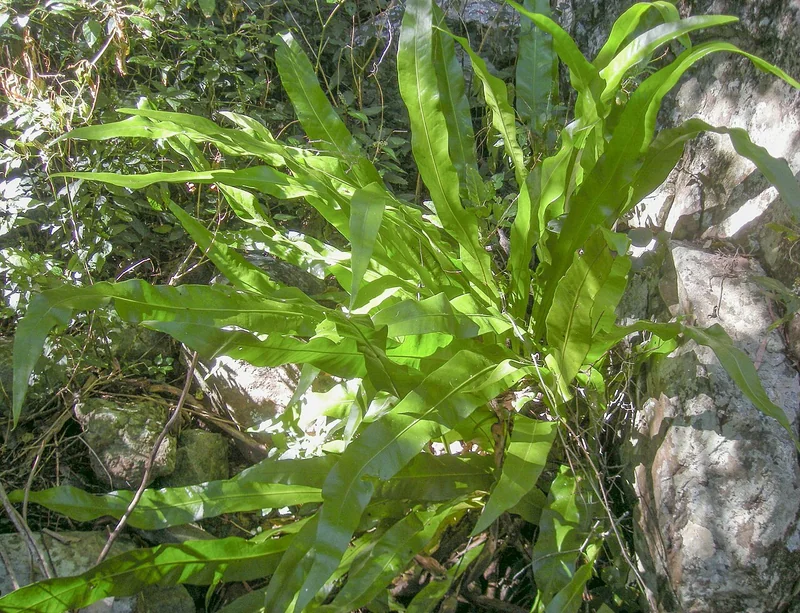 Featured photomicrosorum-punctatum.jpg
Microsorum punctatum, sold as Climbing Bird's-Nest Fern, is a fern in the order Polypodiales, the largest fern order. A pantropical fern with strap-like undivided fronds rising from a stout creeping rhizome. The wavy-edged 'Grandiceps' cultivar with crested frond tips is a popular indoor form. Like most cultivated ferns it tolerates lower light than flowering plants, prefers humid conditions, and propagates either by clump division or by spores from the underside of mature fronds.
Care facts at a glance
- Light
- Bright indirect
- Water
- Water when the top 1 to 2 cm of mix has dried; ferns prefer evenly moist soil.
- Humidity
- 50–80 %
- Temperature
- 15–24 °C
- Soil
- Free-draining humus-rich mix with peat or coir, perlite, and a small fraction of bark.
- Origin
- Tropical and temperate forests worldwide; specific origins vary by species.
- Mature size
- 20 to 80 cm tall and wide depending on species.
Overview
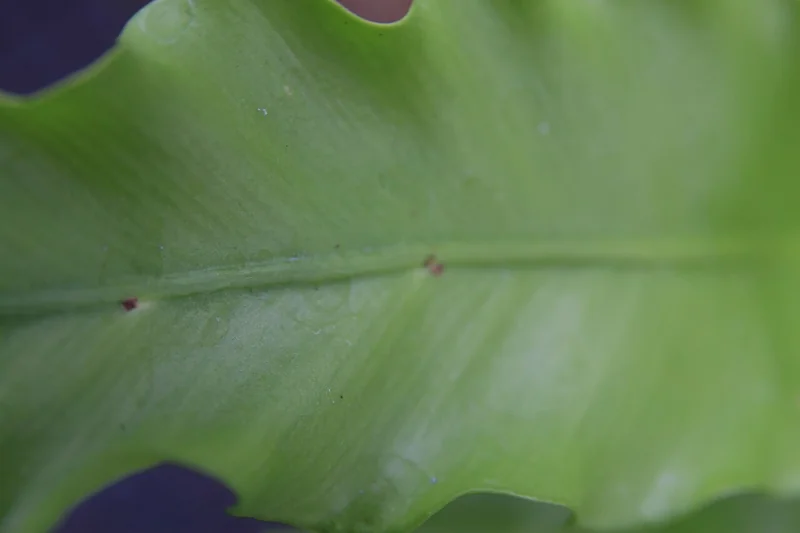
Microsorum punctatum sits in the fern order Polypodiales, which contains the great majority of modern ferns. A pantropical fern with strap-like undivided fronds rising from a stout creeping rhizome. The wavy-edged 'Grandiceps' cultivar with crested frond tips is a popular indoor form. Ferns reproduce by spores rather than seeds, and the small brown patches that form on the underside of mature fronds (sori) are the spore-producing structures.
Care Priorities
- Bright filtered light, never direct midday sun.
- Keep the mix evenly moist, never sodden.
- Steady humidity above 50 percent prevents frond crisping.
- Trim spent fronds at the base to keep the plant tidy.
Common Problems
Brown crispy frond edges signal dry air or under-watering. Pale fronds suggest too much direct light. Sustained wet feet cause root rot — let the surface dry slightly between deep waterings.
Sources & further reading (2)
- encyclopedia — accessed 2026-04-29
- botanical-garden — accessed 2026-04-29
Frequently asked questions
Is this related to the bird's-nest fern Asplenium nidus?
Both have similar undivided strap-like fronds and the trade names overlap, but they belong to different fern families: *Microsorum punctatum* is in Polypodiaceae while *Asplenium nidus* is in Aspleniaceae. The resemblance is convergent rather than ancestral.
Why are the fronds turning brown?
Brown frond tips on most cultivated ferns trace back to dry air, fluoride or chlorine in tap water, or under-watering. Move the plant to a more humid spot, switch to filtered or rainwater, and keep the mix evenly moist.
Should I cut off old fronds?
Yes — trim spent or damaged fronds at the base with clean scissors. New fronds (croziers) push from the rhizome regardless, and removing old foliage tidies the plant and redirects energy into new growth.