Lepismium cruciforme
Lepismium cruciforme (Cross Cactus) Care Guide
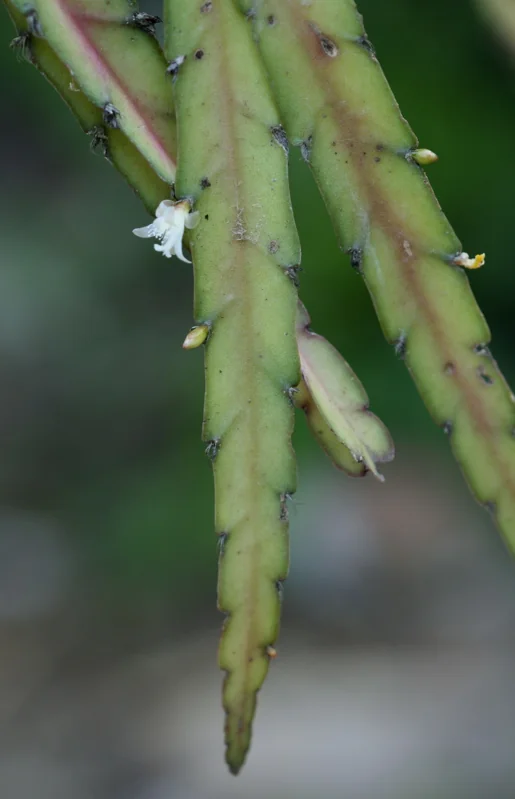 Featured photolepismium-cruciforme.jpg
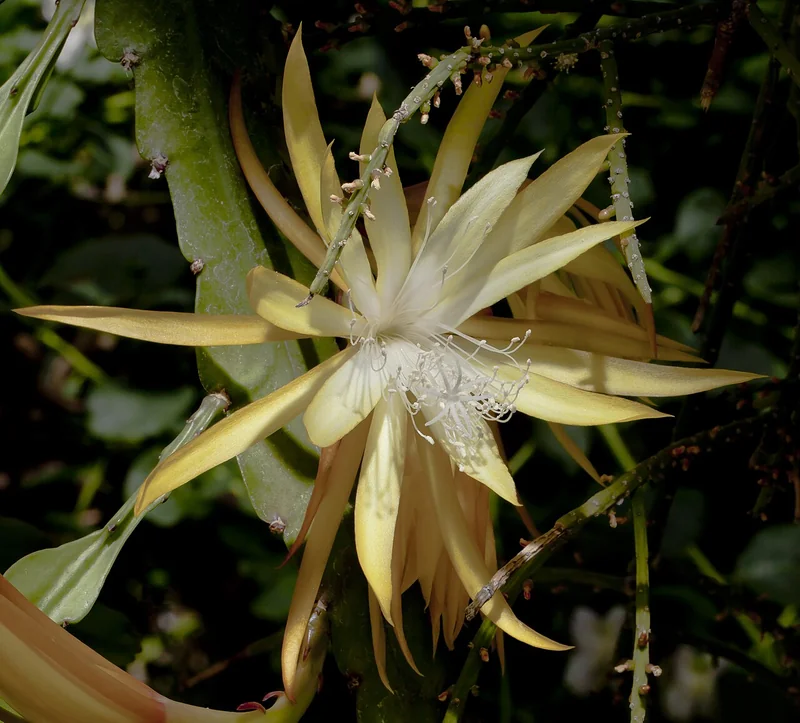
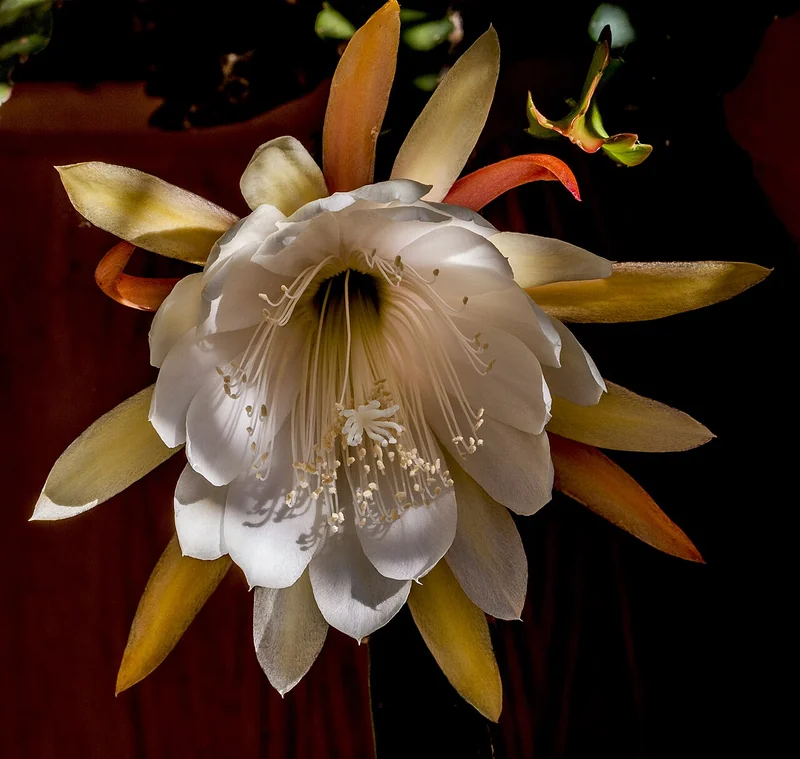
Lepismium cruciforme, sold as Cross Cactus, is an epiphytic cactus from Brazilian forest canopies. A Brazilian epiphytic cactus with three- or four-angled jointed segments arranged in a cross-section silhouette, the segments hanging in long pendulous chains. Produces small white flowers along the segment edges in spring. Unlike desert cacti, Lepismium and Hatiora tolerate higher humidity and more frequent watering, which is why they suit indoor cultivation.
Care facts at a glance
- Light
- Bright indirect
- Water
- Water when the top 2 cm of mix has dried.
- Humidity
- 50–70 %
- Temperature
- 15–27 °C
- Soil
- Free-draining epiphyte mix of orchid bark, perlite, and small fraction of coir.
- Origin
- Tropical and subtropical forests of Brazil and adjacent South America.
- Mature size
- Pendulous stems to 60 cm.
Overview
Lepismium cruciforme is a Cactaceae epiphyte that grows on tree trunks and branches in humid Brazilian forests. A Brazilian epiphytic cactus with three- or four-angled jointed segments arranged in a cross-section silhouette, the segments hanging in long pendulous chains. Produces small white flowers along the segment edges in spring. The pendulous segmented stems do the work of leaves — true leaves are absent.
Care Priorities
- Bright filtered light, never direct midday sun.
- Free-draining epiphytic mix.
- Water more freely than desert cacti.
- Tolerates light feeding during active growth.
Common Problems
Soft mushy stems are overwatering. Yellowing or red-flushed segments signal too much direct sun. Mealybugs cluster between segments.
Sources & further reading (2)
- encyclopedia — accessed 2026-04-29
- botanical-garden — accessed 2026-04-29
Frequently asked questions
Why are the segments cross-shaped?
L. cruciforme stems carry three or four longitudinal ribs that give a cross-shaped cross-section, hence the species name (*cruciforme* meaning 'cross-shaped'). The geometry is genetically fixed and stays consistent across mature plants.
How is this different from a desert cactus?
Lepismium and Hatiora are tropical epiphytes that grow on tree branches in humid forests, so they tolerate higher humidity, lower light, and more frequent watering than the spiny desert cacti most growers picture.
Can I root broken segments?
Yes — break off a healthy two- or three-segment piece, callus the cut for a few days, and push into moist epiphytic mix. Roots typically appear within two to three weeks.