Goeppertia zebrina
Goeppertia zebrina (Zebra Plant) Care Guide
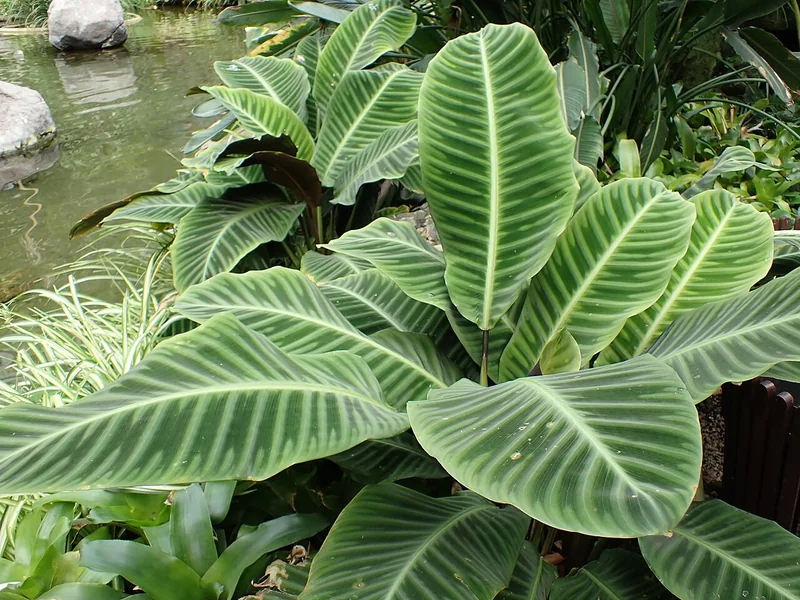 Featured photogoeppertia-zebrina.jpg
Goeppertia zebrina, formerly Calathea zebrina, is a Brazilian prayer plant with broad, velvety leaves striped boldly in alternating light and dark green. It is a forest-floor species that tolerates lower light better than most calatheas but still demands steady humidity and clean water. Mature plants form clumps 60 to 90 cm tall.
Care facts at a glance
- Light
- Bright indirect
- Water
- Water when the top 1 to 2 cm of mix has dried; never let the rest of the pot dry out.
- Humidity
- 60–80 %
- Temperature
- 18–27 °C
- Soil
- Peat-rich, well-draining mix with perlite.
- Origin
- Coastal forests of southeastern Brazil.
- Mature size
- 60 to 90 cm tall, similar spread.
Overview
Goeppertia zebrina was one of the earliest calatheas in European cultivation, dating back to the 1820s. The velvety striped leaves and full clumping habit make it one of the more substantial prayer plants for floor pots.
Care Priorities
- Filtered light, no direct sun on the velvet leaves.
- Filtered or rain water only.
- Keep evenly moist; calatheas hate going dry.
- Wipe leaves gently with a dry cloth — leaf-shine sprays mat the velvet.
Common Problems
Brown crispy edges are dry air or tap-water salts. Yellow leaves are overwatering or compacted mix. Leaves losing the velvet sheen are usually old leaves naturally aging.
Sources & further reading (2)
- encyclopedia — accessed 2026-04-28
- botanical-garden — accessed 2026-04-28
Frequently asked questions
Is this the same as the Aphelandra zebra plant?
No. Aphelandra squarrosa is also called zebra plant but is a different family with yellow flowers and yellow-veined dark green leaves.
Why does my zebra plant crisp every winter?
Heating systems drop room humidity below 30 percent. Run a humidifier or move the plant to a humid bathroom for the heating season.
Can I divide a clumping zebra plant?
Yes. In spring, slide the rootball out and gently separate clumps with their own roots. Pot up immediately and water in lightly.