Columnea gloriosa
Columnea gloriosa (Goldfish Plant) Care Guide
 Featured photocolumnea-gloriosa.jpg
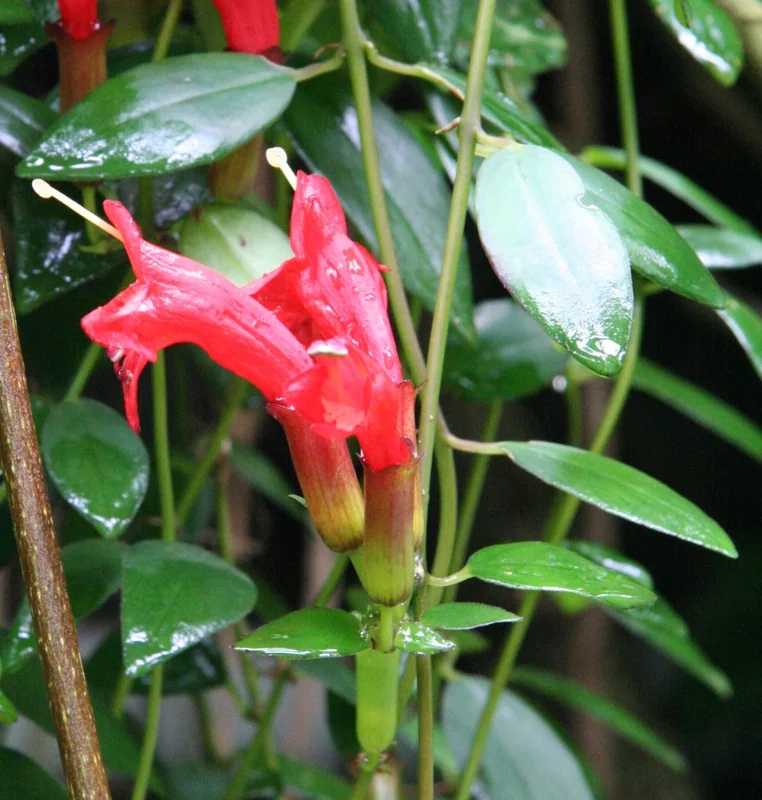
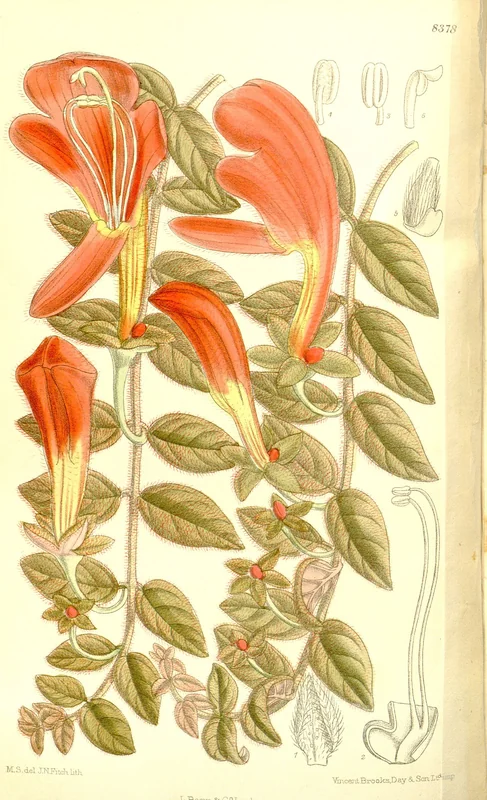
Columnea gloriosa, sold as the goldfish plant, is a Costa Rican epiphytic gesneriad with small fuzzy green leaves on trailing stems and bright orange tubular flowers shaped uncannily like swimming goldfish. Forms graceful cascades when grown in hanging pots.
Care facts at a glance
- Light
- Bright indirect
- Water
- Water when the top 2 cm of mix has dried.
- Humidity
- 60–80 %
- Temperature
- 18–24 °C
- Soil
- Free-draining epiphytic mix of orchid bark, perlite, and peat or coir.
- Origin
- Cloud forests of Costa Rica and Panama.
- Mature size
- Trailing stems to 1 m or more.
Overview
Columnea gloriosa belongs to Columnea, a Neotropical gesneriad genus of about 200 species, almost all of them epiphytes from cloud forest canopies. The flowers are bird-pollinated in habitat — the bright orange colour and tubular shape match the colour vision and bill profile of hummingbirds.
Care Priorities
- Bright filtered light, never direct midday sun.
- Steady moisture during active growth — never let the mix dry completely.
- High humidity above 60 percent supports flowering.
- Pinch growing tips to encourage branching.
Common Problems
Crispy stem tips signal dry air or under-watering. Yellow leaves are overwatering or low light. Failure to flower indoors is usually insufficient bright light combined with too-dry air.
Sources & further reading (2)
- encyclopedia — accessed 2026-04-29
- botanical-garden — accessed 2026-04-29
Frequently asked questions
Why do the flowers look like goldfish?
C. gloriosa flowers have a tubular orange corolla with two upper petal lobes folded back like fins and a lower lobe extended like a tail, giving the unmistakable goldfish silhouette. The species name (*gloriosa* meaning 'glorious') and the trade name both reference the showy bloom.
Is this related to the lipstick plant?
Yes — both belong to Gesneriaceae and share the trailing epiphytic habit and tubular bird-pollinated flowers. Aeschynanthus is south-east Asian while Columnea is Neotropical, and the genera diverged early in the family's history.
How do I encourage flowering?
Bright filtered light combined with high humidity and a slight cool rest in autumn (around 16 °C and reduced watering) triggers flowering in late winter or early spring.