Begonia listada
Begonia listada (Striped Begonia) Care Guide
 Featured photobegonia-listada.jpg
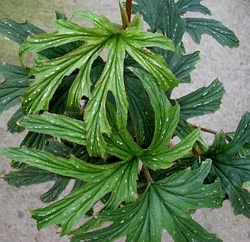
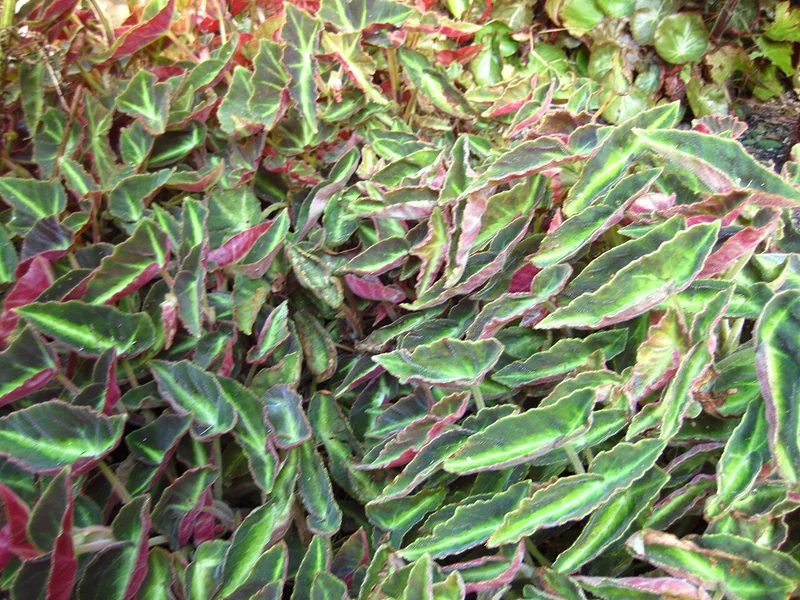
Begonia listada is a Brazilian shrub begonia with elongated, velvety, dark-green leaves marked with a sharp lime-green stripe along the central vein and red undersides. It produces small white flowers in winter and stays compact, making it a striking shelf or table specimen for high-humidity rooms.
Care facts at a glance
- Light
- Bright indirect
- Water
- Water when the top 2 cm of mix has dried.
- Humidity
- 60–80 %
- Temperature
- 18–24 °C
- Soil
- Airy peat or coir mix with perlite; slightly acidic.
- Origin
- Southeastern Brazil.
- Mature size
- 30 to 45 cm tall.
Overview
Begonia listada was described in the 1970s from Brazilian material. The combination of velvet texture and bold central stripe makes it one of the more distinctive shrub begonias in cultivation.
Care Priorities
- Bright filtered light keeps the stripe vivid.
- High humidity is non-negotiable — listada crisps below 60 percent.
- Water at the soil only.
- Avoid moving the plant once settled; it sulks at sudden changes.
Common Problems
Crispy edges are dry air. Powdery mildew is the most common disease. Loss of central stripe is too little light or aging leaves.
Sources & further reading (2)
- encyclopedia — accessed 2026-04-28
- botanical-garden — accessed 2026-04-28
Frequently asked questions
Is listada the same as masoniana?
No. Both are dramatic foliage begonias but listada has a single lime stripe down each leaf and velvet texture, while masoniana has a brown cross and reptile-skin pucker.
Can it grow in a terrarium?
Yes — high humidity and steady warmth in a terrarium suit it well. Allow space for the upright growth.
Why does it dry out so fast?
The narrow leaves and small root system relative to leaf area transpire quickly. Higher humidity and a lightly moist mix are the fix.