Asplenium nidus
Asplenium nidus (Bird's Nest Fern) Care Guide
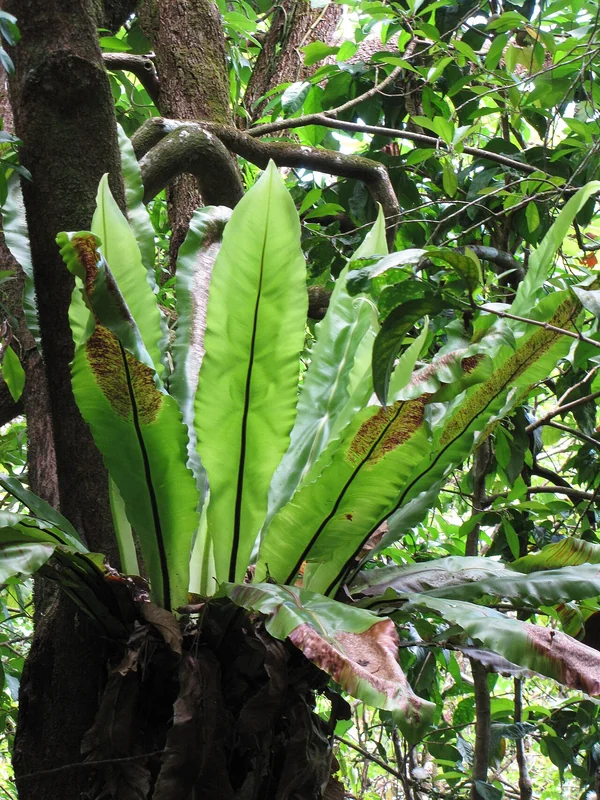 Featured photoasplenium-nidus.jpg
Asplenium nidus is the bird's nest fern, an Asian-Australian epiphytic fern that grows as a rosette of broad, apple-green, lance-shaped fronds — the rosette catches falling leaf litter in the wild like a bird's nest. It is one of the easier indoor ferns because it has thicker, less brittle fronds than Boston fern and tolerates ordinary indoor humidity.
Care facts at a glance
- Light
- Medium light
- Water
- Water when the top 2 cm of mix has dried.
- Humidity
- 50–70 %
- Temperature
- 15–27 °C
- Soil
- Light, airy mix of bark, perlite, and a little coir; epiphytic-style blend.
- Origin
- Tropical forests from East Africa through Southeast Asia to Australia and Polynesia.
- Mature size
- 60 to 90 cm tall and wide.
Overview
Asplenium nidus grows as an epiphyte on tree branches in tropical forests, with the rosette acting as a basket for falling leaf litter that breaks down to feed the fern. The Crissie and Osaka cultivars have ruffled and crested frond tips.
Care Priorities
- Medium to bright filtered light; deep shade slows growth, direct sun bleaches fronds.
- Pour water at the soil only — wet rosettes rot at the crown.
- Use a chunky, airy mix; bird's nest ferns hate compacted soil.
- Wipe fronds gently to remove dust.
Common Problems
Black centre of the rosette is crown rot from water in the cup. Brown crispy edges are dry air or hard water. Pale, washed-out fronds are too little light or too much sun.
Sources & further reading (2)
- encyclopedia — accessed 2026-04-28
- botanical-garden — accessed 2026-04-28
Frequently asked questions
Why is the centre of my bird's nest turning black?
Crown rot from water sitting in the rosette. Pour water at the soil only and improve airflow around the plant.
Can I propagate from a frond?
No — bird's nest ferns reproduce only by spores or by dividing mature plants with multiple crowns.
Best for bathrooms?
Yes — naturally higher humidity suits it well. Just make sure it has filtered window light, not just artificial light.