Alocasia baginda
Alocasia baginda (Dragon Scale) Care Guide
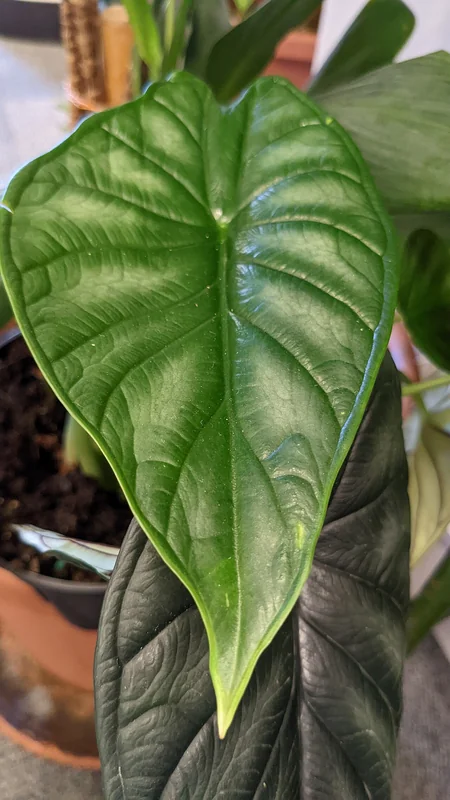 Featured photoalocasia-baginda.jpg
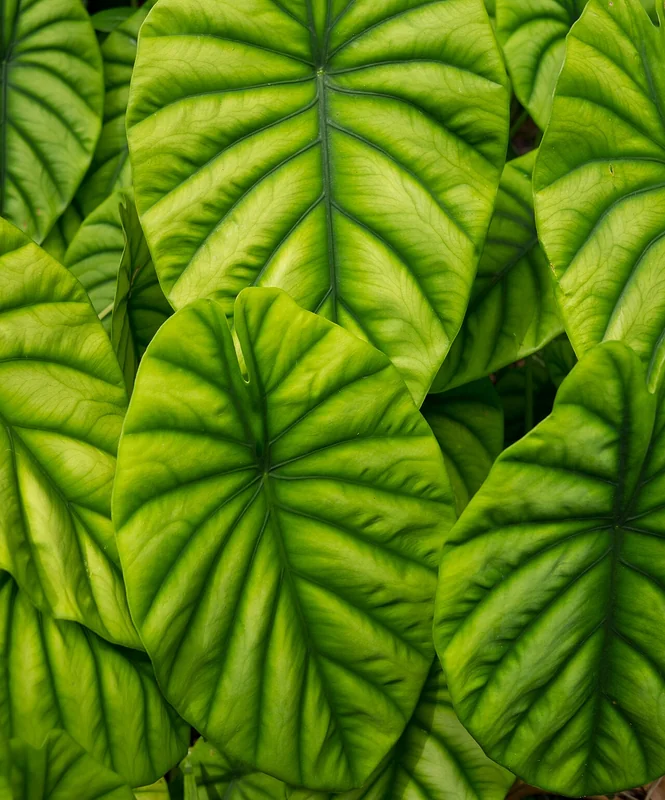
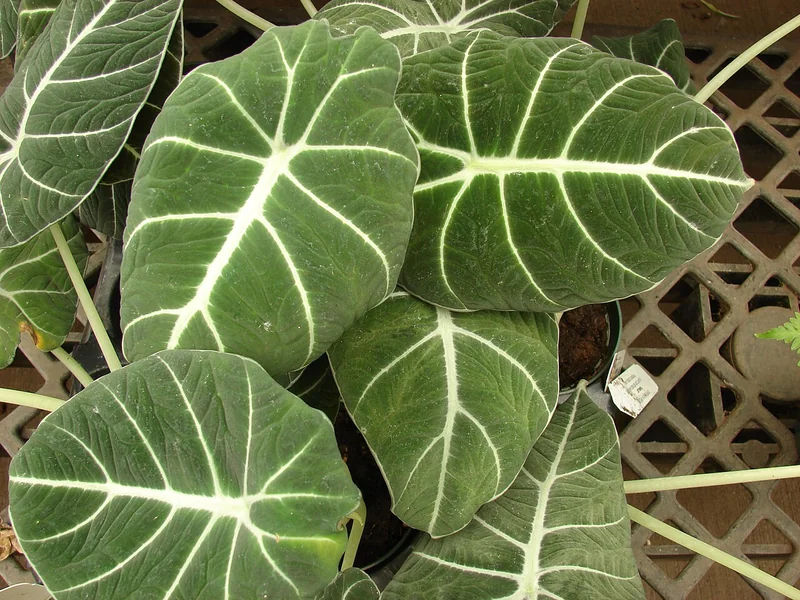
Alocasia baginda is a Bornean species with thick, almost stiff leaves marked in heavily textured veins that look like dragon scales. The two best-known cultivars — Dragon Scale (deep green) and Silver Dragon (pale silver-green) — keep the same texture but contrast differently. It is a slower, smaller alocasia and one of the most rewarding for collectors.
Care facts at a glance
- Light
- Bright indirect
- Water
- Water when the top third of the mix has dried.
- Humidity
- 60–80 %
- Temperature
- 18–27 °C
- Soil
- Very chunky aroid mix dominated by pumice, perlite, and bark with a small fraction of coir.
- Origin
- Limestone forests of Borneo.
- Mature size
- 30 to 60 cm tall, leaves to 30 cm long.
Overview
Alocasia baginda comes from limestone outcrops on Borneo, which is why the plant tolerates a less-rich, faster-draining mix than many alocasias. Dragon Scale is the standard cultivar; Silver Dragon is a paler clone.
Care Priorities
- Use a very chunky, mineral-heavy mix; dense potting soil is fatal.
- Bright filtered light brings out the scale texture.
- Water on the dry side of moist.
- Hold humidity above 60 percent for thick, well-formed leaves.
Common Problems
Yellow leaves with soft petiole bases is overwatering. Pale, thin new leaves point to low humidity at the unfurling stage. Dragon-scale texture loss usually means too little light.
Sources & further reading (2)
- encyclopedia — accessed 2026-04-28
- botanical-garden — accessed 2026-04-28
Frequently asked questions
Dragon Scale vs Silver Dragon — care difference?
None. They are different cultivars of the same species and share care requirements.
Why is my baginda so slow?
Slow is normal. Two to four leaves a year indoors is healthy. If you want faster, raise temperatures and brighten the light.
Can I grow it in semi-hydroponics?
Yes. LECA setups suit it well because of its preference for airy roots and steady moisture.