Cricetulus barabensis
Striped Dwarf Hamster (Cricetulus barabensis)
 Featured photostriped-dwarf-hamster.jpg
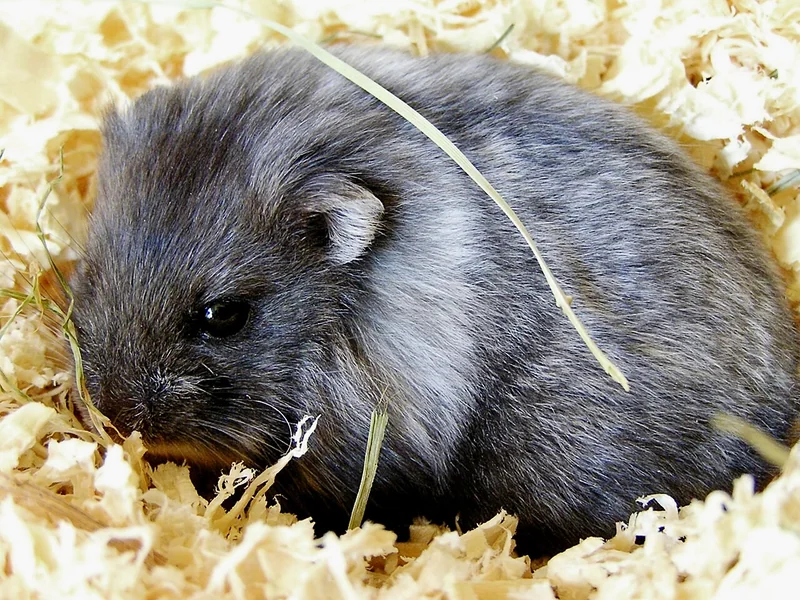
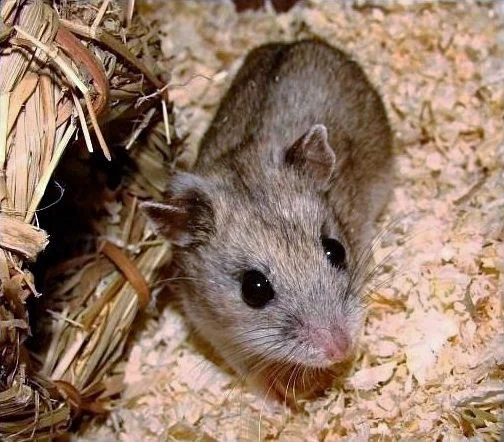
Cricetulus barabensis, the striped dwarf or Daurian hamster, is a small Cricetulus species native to the steppe and forest-steppe ecotones of northeast China, Mongolia, the Russian far east, and the Korean peninsula. Adults reach 8 to 12 cm with a short tail. A pronounced dark dorsal stripe distinguishes the species from the closely related C. griseus, with which it has historically been confused. The IUCN Red List assesses the species as Least Concern.
Quick facts
- Lifespan
- 1.5–2 years
Overview
The dorsal coat is grey-brown with a sharply defined dark dorsal stripe extending from the back of the neck to the base of the tail. The underside is grey-white. Cheek pouches are well developed and used in autumn caching of cereal grain. Adults rarely exceed 30 g.
Distribution
The wild range covers the Barabin steppe of southwestern Siberia (whence the species name), Mongolia, northeastern China, the Russian Primorye and Amur basins, and the Korean peninsula. Habitat is open steppe and grain-field margin between sea level and 1500 m elevation.
Behaviour
Crepuscular and partly nocturnal. Burrows are shallow with multiple entrances. The species hibernates for short periods in the colder northern parts of the range but remains active year-round across most of its distribution. Autumn caching of cereal grain drives a perception as a minor agricultural pest.
Taxonomy
Cricetulus barabensis was described by Pallas in 1773. The taxon has been variously lumped with C. griseus by twentieth-century authors; modern karyotype and molecular work confirms them as separate species. The two ranges overlap narrowly in north-central China.
Sources & further reading (2)
- iucn-red-list — accessed 2026-04-29
- encyclopedia — accessed 2026-04-29
Frequently asked questions
How is the striped dwarf hamster different from the Chinese hamster?
Cricetulus barabensis has a more sharply defined dark dorsal stripe and a shorter tail than C. griseus. Karyotype and molecular phylogenies confirm the two as distinct species despite their narrow range overlap in north-central China.
Where is the species name from?
Pallas named the species barabensis in 1773 after the Barabin steppe of southwestern Siberia, where his expedition collected the type specimen.
Is the species solitary?
Yes — adults occupy individual burrows outside the breeding season. Home-range overlap is limited and direct social contact between adjacent adults is uncommon.