Cricetulus longicaudatus
Long-tailed Dwarf Hamster (Cricetulus longicaudatus)
 Featured photolong-tailed-dwarf-hamster.jpg
Cricetulus longicaudatus, the long-tailed dwarf hamster, is a small Cricetulus species widespread across the rocky steppe and montane talus zones of southern Siberia, Mongolia, and northern China. Adults reach 8 to 13 cm with a tail of 3 to 5 cm — the proportionally longest tail of the genus apart from the disputed C. lama. The IUCN Red List assesses the species as Least Concern.
Quick facts
- Lifespan
- 1.5–2.5 years
Overview
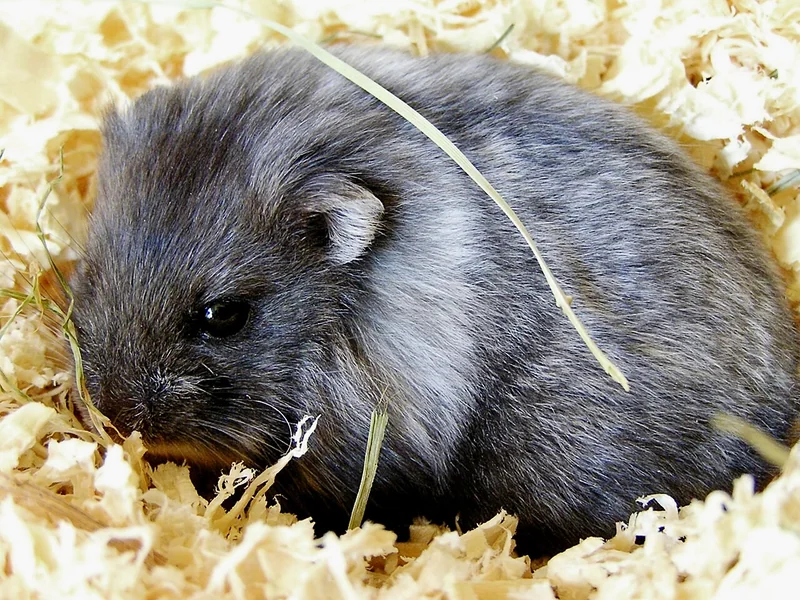
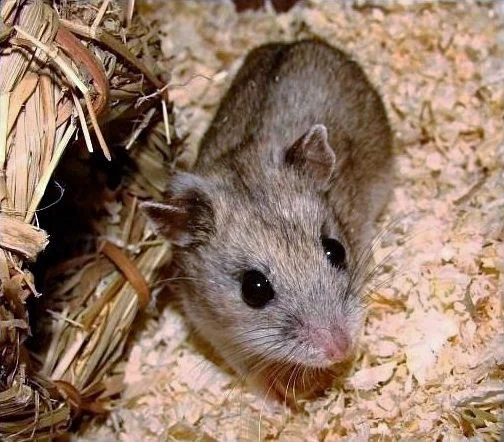
The dorsal coat is grey-brown with a faint dark dorsal stripe; the underside is grey-white rather than the contrasting white of some other Cricetulus. The proportionally long tail (about 40 percent of body length) is the easiest field mark separating the species from the more familiar Chinese hamster (C. griseus).
Distribution
The wild range extends from the Altai and Sayan mountains across Mongolia to north-central China, including Inner Mongolia, Shanxi, and Qinghai. Habitat is rocky steppe and the lower portion of montane talus slopes between 500 and 3500 m elevation.
Behaviour
Crepuscular and partly diurnal at higher elevations. The species nests in rock crevices and shallow burrows rather than the deep burrow systems of Mesocricetus. Activity ranges across a comparatively large home range — up to one hectare for adult males.
Taxonomy
Cricetulus longicaudatus was described by Milne-Edwards in 1867 from a specimen collected in northern China. The taxon has been variously split into eastern and western populations; current treatments retain it as a single species pending wider molecular sampling.
Sources & further reading (2)
- iucn-red-list — accessed 2026-04-29
- encyclopedia — accessed 2026-04-29
Frequently asked questions
How is the long-tailed dwarf hamster distinguished from the Chinese hamster?
Cricetulus longicaudatus has a proportionally longer tail (about 40 percent of body length vs. about 30 percent in C. griseus) and a less prominent dorsal stripe. The two species also occupy partially separated ranges, with longicaudatus more western and montane.
Where does the species live?
Across the rocky steppe and montane talus belt of southern Siberia, Mongolia, and northern China. The wild range extends from sea level into talus slopes above 3000 m elevation.
Is the long-tailed dwarf hamster solitary?
Yes — adults are solitary outside the breeding season, occupying individual burrows or rock-crevice nests. Home-range overlap between adjacent adults is low and direct contact is uncommon.