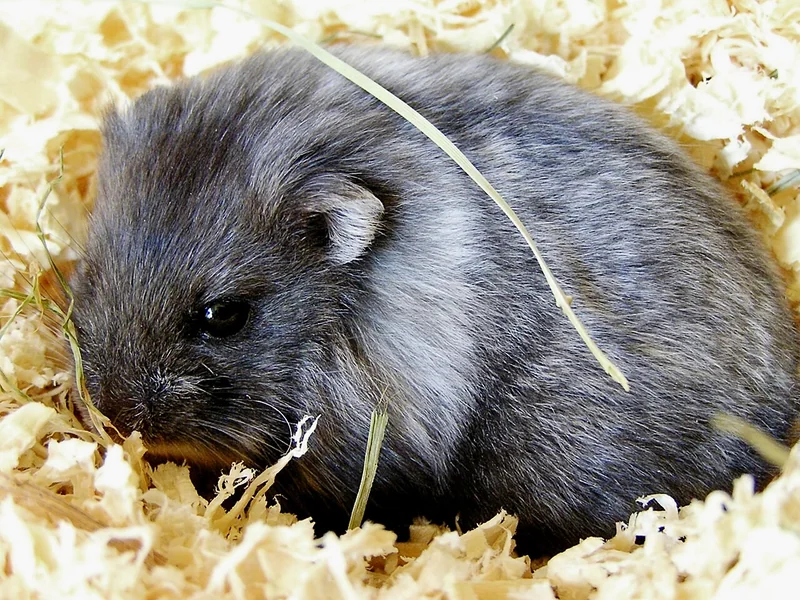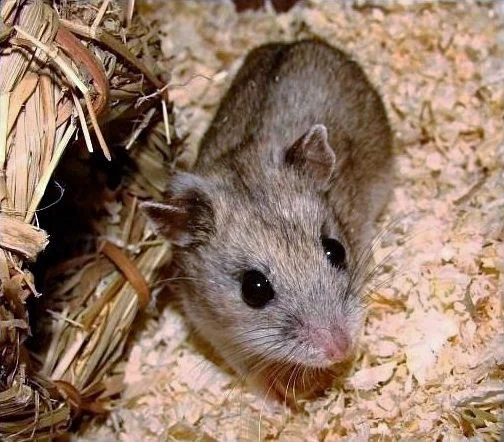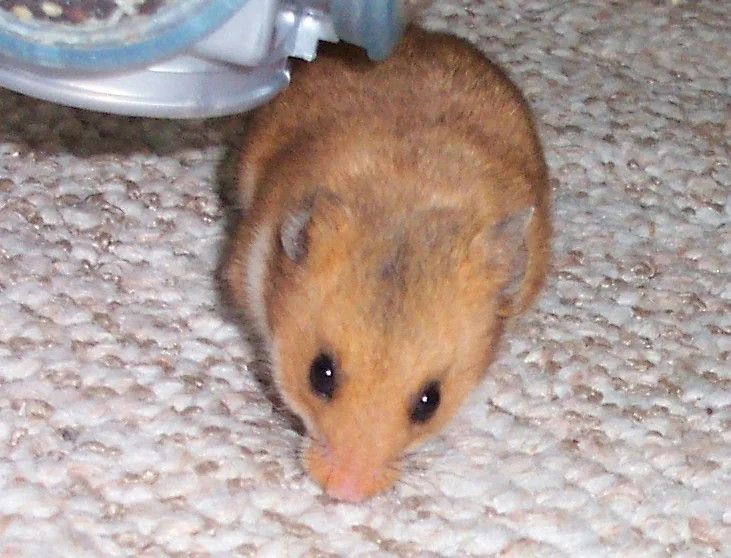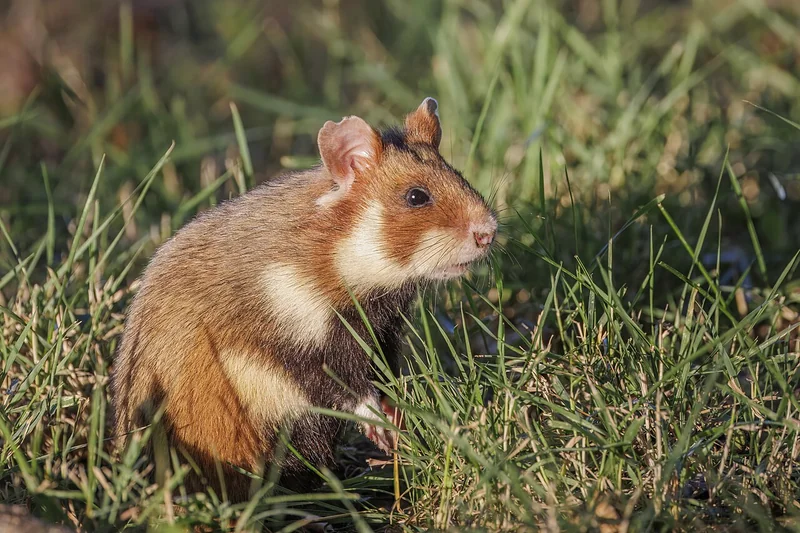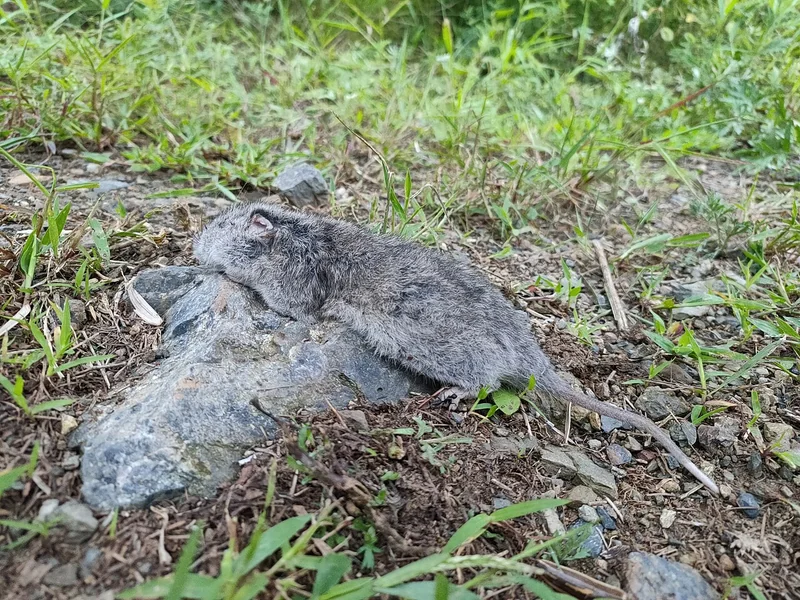
Tscherskia triton, the greater long-tailed or Korean grey hamster, is a medium-large Cricetinae rodent of northeastern China, the Russian Primorye, and the Korean peninsula. Adults reach 15 to 25 cm with a tail of 7 to 11 cm — proportionally the longest-tailed hamster, giving the species a distinctly rat-like silhouette. The species is the only member of the genus Tscherskia. The IUCN Red List assesses the species as Least Concern.
Quick facts
- Lifespan
- 2–3 years
Overview
The dorsal coat is dark grey-brown above with a sharply contrasting white belly. The tail is long and partly furred, accounting for about 45 percent of head-and-body length — the longest tail of any hamster. The build is distinctly rat-like, and the species was historically placed in Cricetulus before being separated into its own genus.
Distribution
The wild range covers northeastern China (Heilongjiang, Jilin, Liaoning, Shandong, Hebei), the Russian Primorye and southern Khabarovsk, and the Korean peninsula. Habitat is forest-edge, agricultural land, and grain-field margin from sea level to about 1500 m elevation.
Behaviour
Crepuscular and partly nocturnal. The species digs deep burrows and stores substantial cereal-grain caches; in heavily farmed parts of the range Tscherskia triton is sometimes regarded as a minor crop pest. Adults are solitary outside the breeding season.
Taxonomy
Tscherskia was raised to genus rank by Ognev in 1914 to accommodate this species, separated from Cricetulus on cranial, dental, and karyotypic grounds. Modern molecular work supports the genus as distinct and places it as sister to Cansumys.
Sources & further reading (2)
- iucn-red-list — accessed 2026-04-29
- encyclopedia — accessed 2026-04-29
Frequently asked questions
Why is the species placed in its own genus?
Sergei Ognev raised Tscherskia to genus rank in 1914 on the basis of cranial, dental, and karyotypic differences from Cricetulus. Modern molecular phylogenies confirm the genus as distinct and sister to the Gansu hamster (Cansumys).
How long is the tail?
The tail is 7 to 11 cm long, about 45 percent of head-and-body length — proportionally the longest tail of any hamster and a key field mark separating Tscherskia from Cricetulus and Cricetus.
Where does the species live?
Northeastern China, the Russian Primorye and southern Khabarovsk, and the Korean peninsula. Habitat is forest-edge, agricultural land, and grain-field margin between sea level and about 1500 m elevation.