silicate
Zircon
Zirconium silicate with high refractive index and dispersion; tetragonal, Mohs 7.5.
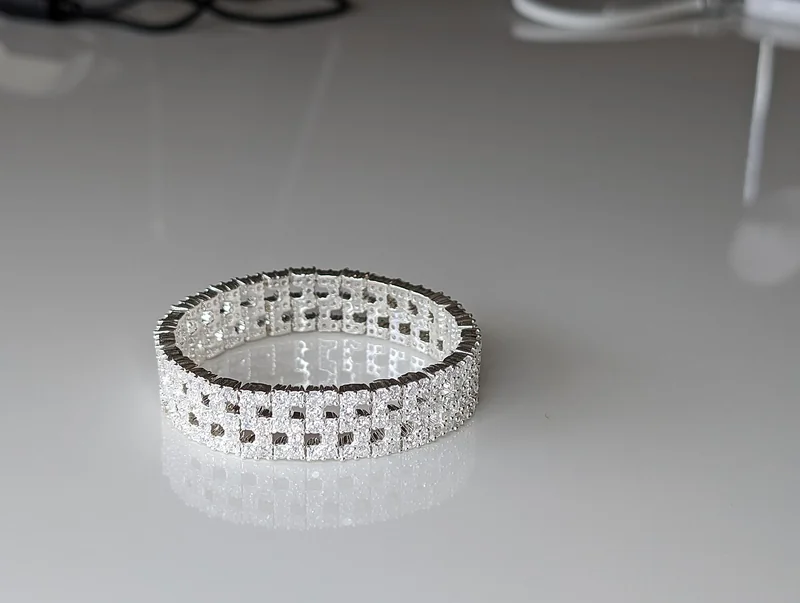
Zircon is a zirconium silicate mineral, ZrSiO4, crystallising in the tetragonal system and rating 7.5 on the Mohs scale. It has a remarkably high refractive index (1.92–1.96) and strong dispersion (0.039), comparable to diamond, which gives cut zircon exceptional brilliance and fire. Colours range from colourless to yellow, orange, red, green, and blue; many blue stones in the market are heat-treated to produce the vivid blue. Zircon is of major geological importance because it is the oldest known mineral on Earth — detrital zircon grains from the Jack Hills of Western Australia have been dated by U-Pb isotope methods to 4.4 billion years ago. Zircon often contains trace uranium and thorium, causing radiation damage (metamictisation) over geological time.
Quick facts
- Item type
- Mineral
- Mineral class
- silicate
- Mohs hardness
- 7.5
- Crystal system
- tetragonal
- Chemical formula
- ZrSiO4
- Color range
- colorless, blue, yellow, orange, red, green, brown
- Notable localities
- Ratnapura district, Sri Lanka (gem gravels; historic source); Pailin, Cambodia (heat-treated blue zircon); Central Highlands, Myanmar; Australia (Jack Hills, WA — geological importance for ancient detrital grains); Nigeria (orange and brown zircon)
Optical Properties: Brilliance and Doubling
Zircon has the highest refractive index of any common gem mineral after diamond and very few synthetics: 1.92 to 1.96 (ordinary ray: 1.929; extraordinary ray: 1.987 for high-type). Dispersion (0.039) is slightly lower than diamond (0.044) but significantly higher than most coloured gems. This combination produces exceptional brilliance and fire in faceted stones, particularly in colourless and blue varieties. Zircon is strongly doubly refractive (birefringence 0.059), which causes visible doubling of back facets when viewed through the table — a diagnostic feature easy to see at 10x magnification and distinguishing it from diamond (singly refractive) and cubic zirconia (also singly refractive).
Metamictisation and Zircon Types
Zircon commonly contains trace amounts of uranium (U) and thorium (Th), which substitute for Zr4+. Alpha particles emitted by U and Th decay produce radiation damage in the crystal lattice over geological time, gradually destroying long-range crystalline order. Three types are recognised by their crystallinity: 'High' (fresh, undamaged, full crystal structure), 'Medium' (intermediate damage), and 'Low' or metamict (amorphous, heavily damaged). Metamict zircon has lower density, refractive index, and birefringence than fresh zircon. Heating can partially restore crystal order in metamict stones, shifting them toward the high type. Most gem-quality zircon used in jewellery is high-type material from Cambodia (Pailin) and Sri Lanka's gem gravels.
Geological Importance: Earth's Oldest Mineral
Zircon's geological significance far exceeds its gem use. Because it incorporates uranium but excludes lead at crystallisation, and because U decays to Pb at known rates, zircon is the primary target for U-Pb radiometric dating of igneous and metamorphic rocks. Detrital zircon grains eroded from ancient source rocks are particularly valuable; the Jack Hills metaconglomerate in Western Australia contains detrital zircon grains dated to 4.404 billion years — the oldest known materials on Earth, formed only 150 million years after Solar System formation. These grains provide evidence that liquid water existed at Earth's surface in the Hadean eon. Modern SHRIMP (Sensitive High Resolution Ion Micro Probe) analysis of single zircon grains revolutionised understanding of early Earth history.
Sources & further reading (3)
- gemological-institute — accessed 2026-05-08
- encyclopedia — accessed 2026-05-08
- mineral-database — accessed 2026-05-08
Frequently asked questions
Is zircon the same as cubic zirconia?
No. Zircon (ZrSiO4) is a natural mineral; cubic zirconia (CZ, ZrO2 stabilised with yttrium) is a synthetic material with no natural equivalent (naturally occurring ZrO2 is baddeleyite, not cubic). Despite the similar name, they are completely different in chemistry, crystal structure, and properties. Both have high refractive indices, which creates visual similarity in cut stones, but zircon is doubly refractive (showing doubling under magnification) while CZ is singly refractive. Zircon was used as a diamond simulant before CZ was developed; today CZ has largely replaced zircon for that purpose.
How is blue zircon produced?
Most blue zircon on the market is heat-treated natural zircon from Cambodia (Pailin) and Myanmar. Brown or reddish zircon from these localities is heated to approximately 900°C in a reducing atmosphere (limited oxygen), which converts brownish iron-related colour centres to a vivid blue. The treatment is standard in the trade and permanent under normal conditions, though some stones may revert to brownish if re-heated in oxidising conditions. Natural blue zircon without heat treatment exists but is uncommon; laboratory distinction is not routinely made for commercial stones.
Why is zircon important in geology?
Zircon is the most important mineral for geochronology — dating of rocks and Earth history. When zircon crystallises from magma or metamorphic fluid, it incorporates uranium and thorium (which substitute for Zr4+) but excludes lead almost completely. Since uranium decays to lead at precisely known rates (U-238 to Pb-206 with half-life of 4.47 billion years; U-235 to Pb-207 with half-life of 703 million years), the ratio of U to Pb in a zircon grain records its formation age. Zircon is also highly resistant to chemical alteration (durable enough to survive in sedimentary gravels), making detrital zircon grains useful time capsules of ancient geological events.