oxide
Spinel
Magnesium aluminium oxide; cubic system, Mohs 8, wide colour range including red and pink.
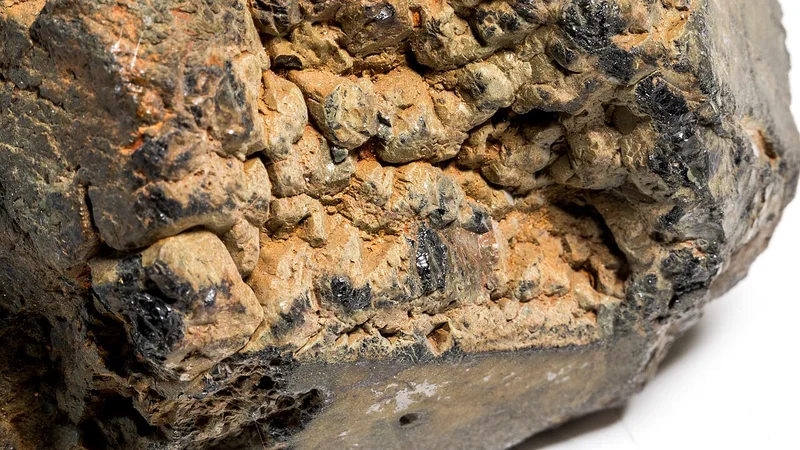
Spinel is a magnesium aluminium oxide mineral, MgAl2O4, that crystallises in the cubic (isometric) system and rates 8 on the Mohs scale. It forms a solid solution with several other spinel-group minerals. Red spinel coloured by chromium (Cr3+) and pink to orange spinel coloured by chromium and iron were historically confused with ruby and are among the most historically significant gemstones: the Black Prince's Ruby in the British Imperial State Crown and the Timur Ruby in the British Royal Collection are, in fact, large red spinels. Other colours include blue, violet, green, orange, pink, and colourless. Major gem sources are Myanmar (Mogok), Sri Lanka, and Vietnam.
Quick facts
- Item type
- Mineral
- Mineral class
- oxide
- Mohs hardness
- 8
- Crystal system
- cubic
- Chemical formula
- MgAl2O4
- Color range
- red, pink, orange, blue, violet, green, colorless, black
- Notable localities
- Mogok Valley, Myanmar (historic red and pink spinel in marble); Luc Yen, Vietnam (red, pink, blue spinel); Mahenge, Tanzania (hot-pink to red spinel); Sri Lanka (alluvial gem gravels, various colours); Tajikistan (Kuh-i-Lal, historic red spinel — 'Balas ruby')
Crystal Structure and Colour Origins
Spinel has the A2+B3+2O4 structure type, with Mg2+ occupying tetrahedral sites and Al3+ occupying octahedral sites in a cubic close-packed oxygen framework. Colour arises from trace element substitutions: Cr3+ for Al3+ produces red; Cr3+ + Fe2+ or Fe3+ produces pink, orange, or blue; Co2+ for Mg2+ produces intense blue; Fe2+ and Fe3+ produce black (pleonaste variety). The cubic structure gives spinel singly refractive optics (unlike tourmaline or corundum), which can be used as a diagnostic property. Spinel has no cleavage (unlike topaz), making it very resistant to fracture. Its combination of high hardness (8), no cleavage, and a wide colour range makes it an excellent gem material.
Historic Confusion with Ruby
Before modern mineralogy, red spinel and ruby were indistinguishable to the naked eye and were collectively called 'carbuncle' or 'balas ruby'. The confusion extended into medieval European courts: the 'Black Prince's Ruby' (a 170 ct red octahedral spinel) has been set in England's Imperial State Crown since 1367; the 'Timur Ruby' (352.5 ct red spinel) was inscribed with the names of successive Mughal emperors before coming to Queen Victoria in 1851. Medieval Islamic gem texts distinguish 'lal' (spinel, considered finest red) from 'yakut' (ruby, corundum). The distinction between spinel and corundum as separate mineral species was established by French chemist Jean-Baptiste Louis Rome de l'Isle in 1783. Many historic 'rubies' in European crown jewels and reliquaries are spinel.
Mahenge and Modern Market
The Mahenge area of Tanzania's Morogoro region emerged as a major spinel source in the late 1990s–2000s. Mahenge spinel is known for an exceptional hot-pink to neon-pink to red colour that is intensely fluorescent under UV light (due to chromium content and very low iron). The fluorescence — vivid red under UV — intensifies the apparent colour in daylight. Myanmar's Mogok Valley has historically produced the finest red spinel in a marble metamorphic setting geologically analogous to its ruby deposits. Vietnam's Luc Yen produces high-quality red and pink spinel with bright fluorescence. Spinel has gained recognition in its own right since the 1990s rather than as a ruby substitute; the GIA and major labs issue detailed origin and quality reports.
Sources & further reading (3)
- gemological-institute — accessed 2026-05-08
- encyclopedia — accessed 2026-05-08
- mineral-database — accessed 2026-05-08
Frequently asked questions
Is the Black Prince's Ruby actually a ruby?
No. The 'Black Prince's Ruby' in the British Imperial State Crown is a large (approximately 170 ct) uncut red spinel of octahedral form. It was acquired by Edward of Woodstock (the 'Black Prince') in 1367 from Pedro the Cruel of Castile, who had in turn received it from King Abu Said of Granada. At the time, red spinel and ruby were indistinguishable — both were called 'carbuncle' or 'balas ruby'. The gem was identified as spinel in the 19th century through mineralogical analysis. It is drilled through from an earlier period of ownership; the hole was filled with a small ruby when the stone was set into the Imperial State Crown.
How does spinel differ from ruby?
Both red spinel and ruby can appear similar to the naked eye, but they are completely different minerals. Spinel (MgAl2O4) is cubic/isometric and singly refractive; ruby (Al2O3 corundum) is trigonal and doubly refractive — this difference is detectable with a polariscope. Spinel has a slightly lower refractive index (1.71–1.73) than ruby (1.76–1.77). Specific gravity: spinel 3.54–3.63; ruby ~4.00. Under UV light, red spinel from Mogok and Mahenge shows strong red fluorescence; Mozambican ruby shows minimal fluorescence. A refractometer provides immediate distinction.
What causes the neon-pink colour of Mahenge spinel?
Mahenge spinel's characteristic intense, neon-pink colour results from chromium (Cr3+) as the primary colourant combined with very low iron content. Chromium produces both the pink-red colour absorption and strong red fluorescence under UV. Because Mahenge stones have exceptionally low iron, the iron does not suppress the fluorescence — unlike some other spinel sources where iron reduces fluorescence intensity. In daylight, which contains UV, the fluorescence contributes to the perceived colour intensity, producing a 'hot pink' glow that exceeds what the pure absorption colour would produce alone.