Rose Cut
Flat base with domed top covered by triangular facets; originated in 16th-century Netherlands.
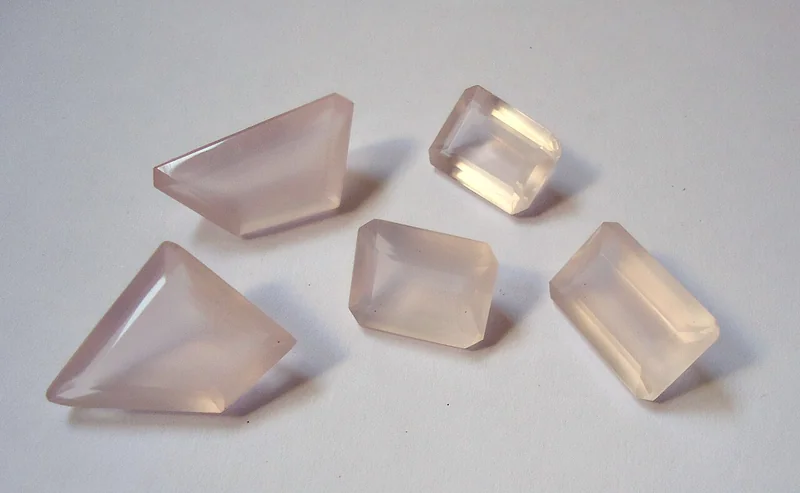
The rose cut is a faceted gem cut characterised by a flat base (no pavilion below the girdle) and a domed crown covered by triangular facets that converge at a central apex. The number of facets is typically 6, 12, or 24 depending on the style. The flat base distinguishes rose cuts from all pavilion-bearing cuts. Rose cuts originated in the gem-cutting workshops of Antwerp and Amsterdam in the 16th century, reaching their greatest popularity in the 17th and 18th centuries for diamond use in European jewellery. They remained dominant until the transition to the old mine cut and subsequently modern brilliants. The rose cut produces a low, transparent dome profile that shows colour and inclusions clearly, with soft, flat sparkle rather than the deep internal reflection of brilliant cuts.
Quick facts
- Item type
- Cut
Geometry and Crown Styles
A rose cut has a perfectly flat base — equivalent to the girdle line — with all facets above this plane on the domed crown. The simplest form is the 'Dutch rose cut' with 6 triangular facets arranged in two rows of three (3 lower, 3 upper). The 'full rose cut' or 'double dutch rose' has 24 facets in three tiers. The 'Antwerp rose cut' has 12 facets. All variants converge to a single apex at the top. Because there is no pavilion, rose cuts have no depth below the girdle; they appear thin and are typically set in closed-back settings (collet or bezel) that reflect light upward through the flat base, adding brilliance. In modern use, rose cuts are typically set face-up in open settings, allowing the flat base to be seen from the reverse.
History in European Jewellery
The rose cut emerged in the Low Countries (Antwerp and Amsterdam were the pre-eminent gem-cutting centres of the 16th–17th centuries) when polished gemstones were in demand for portrait miniatures, hair jewellery, and decorative settings. The flat profile of rose-cut diamonds was particularly suited to setting in pendant jewels and miniature frames where depth was limited. By the 17th century, rose-cut diamonds set in silver or gold appeared throughout European court jewellery. The development of the table cut (with both table and pavilion) and subsequently the old mine cut gradually displaced the rose cut for large diamonds; however, rose cuts remained popular for small stones (rose-cut garnet in Victorian jewellery; rose-cut diamond pavé settings). A significant revival of rose-cut diamond use in contemporary designer jewellery began in the early 2000s.
Contemporary Use and Revival
Rose cuts have experienced a strong revival in contemporary fine jewellery since approximately 2000, driven by demand for antique aesthetic, distinctive stone profile, and the appeal of the cut's flat, transparent quality — through which a rose-cut diamond or coloured gem appears almost translucent, revealing depth of colour and inclusions as part of its character. Rose-cut diamonds are used in engagement rings, earrings, and fashion pieces where the low profile suits particular designs. Indian gem-cutting centres (Surat, Jaipur) produce large quantities of small rose-cut diamonds used in pavé settings as an alternative to round brilliants. Rose cuts are also produced in salt-and-pepper (included) diamonds, where the inclusions become visible and decorative through the transparent flat facets.
Sources & further reading (2)
- gemological-institute — accessed 2026-05-08
- encyclopedia — accessed 2026-05-08
Frequently asked questions
Why does a rose-cut diamond look different from a brilliant?
A rose cut has no pavilion — the bottom is flat. Without a deep pavilion to reflect light back up through the crown, rose cuts cannot achieve the total internal reflection that gives brilliant cuts their characteristic sparkle. Instead, light that enters the crown passes through the stone and exits the flat base, creating a softer, more translucent quality. The domed crown facets produce a gentle, flat sparkle at the surface level. Rose cuts appear more transparent, show colour and inclusions more clearly, and produce a soft glow rather than the sharp scintillation of a round brilliant. In person, rose cuts are often described as appearing 'alive' in a different, subtler way than brilliants.
Are rose-cut diamonds found in antique jewellery?
Yes. Rose-cut diamonds are the most common faceted diamond form in antique European jewellery from approximately 1580 to 1750. They appear in 17th-century Dutch portrait paintings (including works by Vermeer and Rembrandt) on the fingers, necks, and ears of subjects. High-value Stuart, Baroque, and Rococo jewellery from English, French, and Iberian courts used rose-cut diamonds extensively. By the 18th century the old mine cut began to replace the rose cut for large stones, but rose cuts remained used for small pavé work and less expensive pieces through the 19th century. Estate jewellers and auction houses frequently encounter rose-cut diamonds in antique pieces.
How are rose cuts set in jewellery?
Historically, rose cuts were typically set in closed collet settings — a metal collar surrounding the girdle with a metal back below — because the flat base benefited from the metal reflecting light upward through the stone, improving apparent brilliance. Open claw or prong settings work as well but the flat base is visible. Contemporary rose-cut jewellery often uses bezel settings that showcase the stone's profile from the side, or prong settings that allow the flat underside to be visible (intentionally displaying the stone's transparency). Pavé use of small rose-cut diamonds employs shared-prong or bead settings with the flat base down, lying flush or close to the metal surface.