carbonate
Pearl
Organic gemstone composed of aragonite nacre layers secreted by mollusks; Mohs 2.5–4.5.
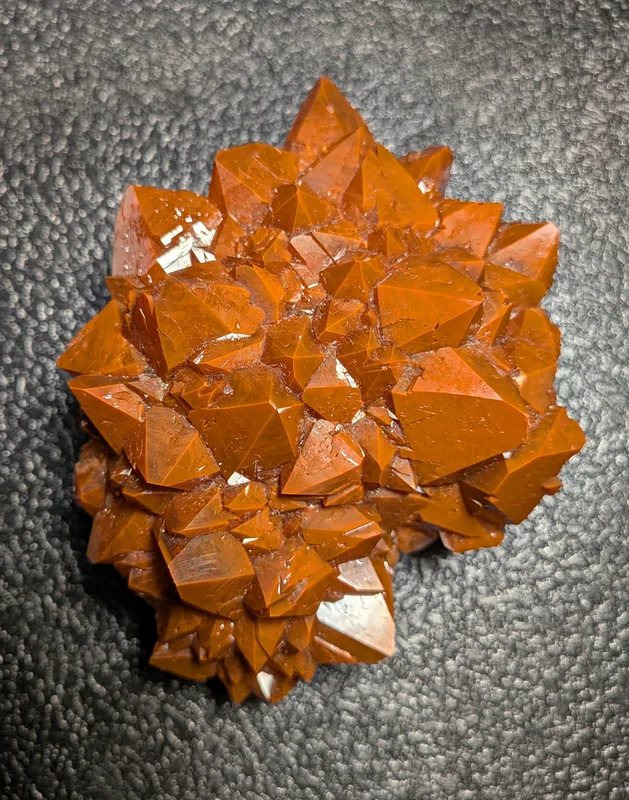
Pearl is an organic gemstone produced by mollusks (primarily bivalves and some gastropods) when a foreign particle becomes lodged in the mantle tissue, triggering the secretion of nacre — alternating layers of aragonite (CaCO3) platelets and organic conchiolin protein. The aragonite platelets (0.2–0.9 micrometers thick) create the characteristic iridescent lustre called orient through thin-film interference. Pearls rate 2.5–4.5 on Mohs and are relatively soft compared to mineral gems. Natural pearls occur without human intervention; cultured pearls are produced by surgically implanting a nucleus and mantle tissue. Major types include Akoya (Japan/China, seawater), South Sea (Australia/Philippines), Tahitian (French Polynesia), and freshwater (China).
Quick facts
- Item type
- Mineral
- Mineral class
- carbonate
- Mohs hardness
- 3.5
- Crystal system
- orthorhombic
- Chemical formula
- CaCO3
- Color range
- white, cream, pink, gold, silver, black, blue-grey
- Notable localities
- Persian Gulf and Gulf of Mannar (historic natural pearl sources); Mikimoto pearl farms, Mie Prefecture, Japan (Akoya cultured); Broome and Western Australia coast (South Sea cultured); French Polynesia (Tahitian cultured black pearl); Hyriopsis cumingii freshwater mussel farms, China
Nacre Structure and Lustre
Nacre (mother-of-pearl) consists of alternating layers of aragonite platelets (hexagonal tablets, ~10 micrometers wide, ~0.5 micrometers thick) and organic conchiolin biopolymer. The layered structure creates thin-film optical interference: light reflecting from successive aragonite layers partially cancels and reinforces different wavelengths depending on layer thickness and angle, producing the characteristic orient (iridescence) and deep lustre. Nacre thickness determines pearl quality: Akoya cultured pearls have nacre 0.4–0.8 mm thick over a bead nucleus; high-quality South Sea cultured pearls can reach 2–4 mm. Nacre thickness is assessed by X-ray or by drilling into a small drilled section. Pearls with very thin nacre show a 'blink' effect — the white nucleus shows through the translucent nacre coat — and are less durable.
Natural vs Cultured Pearls
Natural pearls form entirely within the mollusk without human intervention, typically around a parasite or irritant. They are rare and typically composed of solid nacre throughout or with only a small organic centre. Cultured pearls are produced by nucleation: technicians insert a polished bead nucleus (from freshwater mussel shell) plus a small piece of donor mantle tissue into the host mollusk's gonad (seawater species) or mantle (freshwater species). The tissue donor creates an epithelial sac that secretes nacre around the nucleus. Freshwater pearls produced by the Chinese mussel Hyriopsis cumingii are tissue-nucleated (no bead), producing solid nacre pearls. Distinguishing natural from cultured requires X-ray examination; a drilled pearl is examined to detect the bead nucleus.
Pearl Types: Akoya, South Sea, Tahitian, Freshwater
Akoya pearls (Pinctada fucata, farmed in Japan and China) are typically 5–9 mm, white to cream with pink or silver overtones; they have the thinnest nacre and most uniform round shape of commercial cultured pearls. South Sea pearls (Pinctada maxima, western Australia and Philippines) are 9–20 mm, white to cream or gold, with thick nacre and soft silky lustre. Tahitian pearls (Pinctada margaritifera, French Polynesia) are 8–18 mm, naturally dark (black, grey, green, blue) due to black-lipped oyster pigmentation; they are the only naturally dark-coloured significant pearl type. Freshwater pearls (Hyriopsis cumingii, China) are produced without a bead nucleus; modern Chinese freshwater pearls are predominantly round and can rival Akoya quality at lower production cost.
Sources & further reading (3)
- gemological-institute — accessed 2026-05-08
- encyclopedia — accessed 2026-05-08
- mineral-database — accessed 2026-05-08
Frequently asked questions
How do you tell a real pearl from an imitation?
The traditional 'tooth test' — rubbing a pearl against a tooth to feel a slight gritty texture from the nacre platelets — distinguishes real nacre from smooth glass or plastic imitations. Imitation pearls (glass beads dipped in a fish-scale lacquer) feel slippery. A more reliable test is visual inspection under 10x magnification: real pearl nacre shows a fine scaly texture; glass imitations show a smooth surface; plastic beads may show mould seams. X-ray examination distinguishes natural from cultured by detecting the bead nucleus.
Why are Tahitian pearls naturally dark?
Tahitian pearls are produced by the black-lipped oyster Pinctada margaritifera, which deposits dark organic pigments (porphyrins and conchiolin) throughout its shell and nacre. The dark mantle tissue of the donor oyster passes this pigmentation capacity to the pearl sac, resulting in nacre that contains both aragonite and dark pigmented conchiolin, producing the characteristic dark body colour — black, grey, green, blue, peacock green, or aubergine. Unlike other pearl types that are bleached or dyed to achieve dark colours, Tahitian pearl colour is natural. The specific shade depends on the oyster's individual genetics and environmental conditions.
What gives pearls their lustre (orient)?
Pearl lustre results from two simultaneous optical effects: specular reflection from the smooth outer nacre surface, and thin-film interference from the stacked aragonite platelet layers. The thin-film effect causes different wavelengths to reinforce or cancel depending on the thickness of the nacre layer and the angle of light entry. The combination produces a bright, deep reflective glow (lustre) combined with an iridescent rainbow shimmer (orient). Nacre thickness and aragonite platelet regularity determine quality: thicker nacre with well-organised, uniform platelets gives the deepest, most iridescent lustre.