March Birthstone
Aquamarine — pale blue-green beryl of the sea; clarity and courage for early spring.
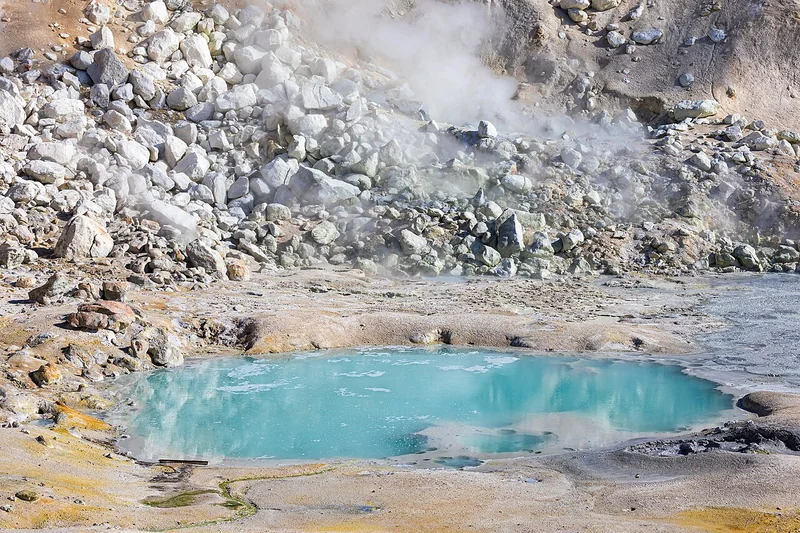
March's birthstone is aquamarine, the pale blue to blue-green variety of beryl (Be₃Al₂Si₆O₁₈) coloured by iron (Fe²⁺) impurities. The name derives from the Latin 'aqua marina' (sea water), reflecting its sea-blue colour. Aquamarine typically occurs in granitic pegmatites and grows as large, transparent hexagonal prisms — one of the few gemstones routinely available in very large sizes (crystals of 10–50+ carats are not unusual). Major sources include Brazil (Minas Gerais, Bahia), Pakistan (Karakoram), Mozambique, and Nigeria. Aquamarine rates 7.5–8 on Mohs — the same as emerald, which is beryl coloured by chromium rather than iron. March's secondary traditional birthstone is bloodstone (heliotrope), a dark green chalcedony with red spots.
Quick facts
- Item type
- Birthstone month
- Color range
- pale blue, blue-green, medium blue, greenish blue
- Birthstone month
- March (traditional)
Colour and Chemistry
Aquamarine's colour is produced by Fe²⁺ ions in the channel sites of the beryl crystal structure, absorbing yellow wavelengths and transmitting blue-green. The ideal aquamarine colour is a medium blue — often described as 'Santa Maria' blue after the famous Santa Maria de Itabira mine in Brazil — with no greenish modifier. Most natural aquamarine has some yellow-green component from Fe³⁺ (which produces yellow); heating at approximately 400–450°C reduces Fe³⁺ to Fe²⁺, eliminating the yellow component and producing a purer blue. This heat treatment is universal in the trade, permanent, and undetectable by laboratory testing — treated and untreated aquamarines are traded interchangeably. The presence of both Fe²⁺ and Fe³⁺ in the same crystal produces the characteristic blue-green colour of unheated aquamarine; pure blue is always heat-treated unless naturally very rare.
Famous Aquamarines and Sources
Aquamarine is one of the few gem minerals that commonly grows in crystals large enough for very large faceted stones — several famous aquamarines exceed 100 carats. The Maxixe aquamarine (named for a Brazilian mine) was notable for a deep blue colour that fades on light exposure — Maxixe-type colour is produced by radiation-induced colour centres in nitrate groups rather than iron, making it light-sensitive and unstable. The 110,000-carat Marta Rocha aquamarine (Brazil) is one of the largest gem crystals ever found. Brazil's Minas Gerais state remains the world's largest producer; the Karakoram range in Pakistan (particularly the Gilgit-Baltistan area) produces fine blue specimens from high-altitude pegmatite veins; Mozambique and Nigeria contribute significant commercial production. Sri Lankan aquamarines from alluvial gem gravels tend toward smaller but well-coloured stones.
Zodiac Connection: Pisces
March birthstones align with Pisces (the fish), governing approximately February 19 to March 20. Pisces is the final sign of the zodiac, associated with empathy, intuition, and a deep connection to water and the unconscious. Aquamarine's sea-water colour and its traditional associations with sailors, safe passage across water, and emotional clarity make it an exceptionally coherent match for Pisces. Ancient Roman sailors carried aquamarine as a protective amulet, believing it was the treasure of mermaids and guaranteed safe return. Pisces is a water sign ruled by Neptune (god of the sea), directly echoing aquamarine's 'sea water' etymology. The gem's pale translucent clarity also resonates with Pisces' associations with vision, depth, and the subtle perception underlying the watery realm.
Sources & further reading (2)
- gemological-institute — accessed 2026-05-08
- encyclopedia — accessed 2026-05-08
Frequently asked questions
How does aquamarine differ from blue topaz?
Aquamarine and blue topaz are distinct minerals that both produce blue gems but differ in chemistry, crystal system, density, and optical properties. Aquamarine is beryl (Be₃Al₂Si₆O₁₈, hexagonal, SG ~2.72, RI 1.577–1.583), while blue topaz is Al₂SiO₄(F,OH)₂, orthorhombic, SG ~3.56, RI 1.619–1.627. Topaz is denser and more brilliant (higher RI); aquamarine is softer in appearance and more subtle. Blue topaz is almost universally irradiation- and heat-treated (natural blue topaz is rare; the Swiss Blue, Sky Blue, and London Blue trade colours are all treated), while aquamarine's colour is natural iron (often heat-stabilised). In jewellery, aquamarine's delicate sea blue is considered more refined and rare than the more common blue topaz varieties; a fine large aquamarine commands significantly higher prices.
What is the most valuable colour of aquamarine?
The most valuable aquamarine colour is a medium to medium-dark, pure blue with no greenish modifier — often called 'Santa Maria' blue after the Brazilian mine that produced the type specimens. This saturated, pure blue is rare in nature; most aquamarine is lighter and has some greenish or grayish modifier. The 'Santa Maria Africana' designation is used for similar-coloured stones from Mozambique. Brazilian trade and GIA evaluations identify Santa Maria, Espirito Santo, and other colour grades with Santa Maria being the most prestigious. Darker specimens that become inky or gray-blue are valued less than the bright medium blue. The absence of greenish tone is the key quality factor; any yellowish or brownish modifier significantly reduces value.
Is aquamarine a good choice for everyday jewellery?
At Mohs 7.5–8, aquamarine is more durable than garnet or amethyst but softer than sapphire or diamond. It is suitable for earrings, pendants, and occasional rings without significant risk of surface abrasion in typical use. For everyday rings that see constant contact with surfaces and abrasives, aquamarine surfaces will show scratching over years, and protective settings (bezel or semi-bezel) extend wearable life. Aquamarine has no strong cleavage tendency (unlike topaz, which has perfect basal cleavage) and no internal stress issues that would make it prone to cracking. It is generally considered a reliable gemstone for jewellery use, with heat treatment not affecting durability. Exposure to strong chemicals (household cleaners, bleach) should be avoided as with most coloured gems.