Faceting Basics
The art and science of grinding flat polished faces onto gemstones to control light interaction.
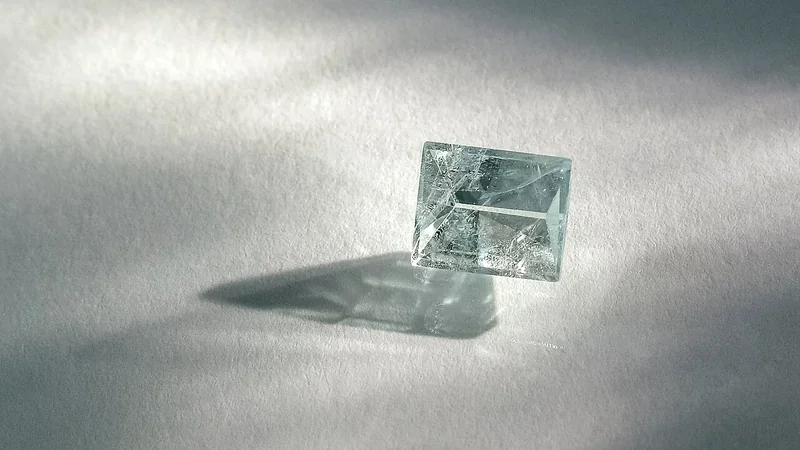
Faceting is the process of grinding and polishing flat faces (facets) onto a gemstone to create controlled surfaces that interact with light through reflection and refraction. Each facet is a precisely angled flat plane; the arrangement of facets — their angles, sizes, and positions — determines how a gem handles light and whether it achieves brilliance (white light return), fire (spectral colour dispersion), and scintillation (sparkle from movement). Faceting requires a lap (rotating flat grinding wheel), abrasive compounds, a faceting head that holds the stone at a precise angle, and an index gear that controls rotation. The gem cutter chooses angles based on the gem's refractive index, the desired cut style, and the shape of the rough.
Quick facts
- Item type
- Cut
Optical Principles: Reflection, Refraction, and Total Internal Reflection
The purpose of faceting is to control light paths through the gem. When light enters a faceted stone through the table or crown facets, it is refracted (bent) according to Snell's Law — the greater the gem's refractive index (RI), the more light bends. The pavilion facets are angled so that light striking them from inside the gem at a shallow angle undergoes total internal reflection (TIR) — reflecting entirely back toward the crown rather than passing through. TIR occurs when the angle of incidence exceeds the critical angle, which is determined by the gem's RI. Diamond's RI of 2.417 gives a critical angle of approximately 24.4°; sapphire's RI of ~1.77 gives a critical angle of approximately 34°. A well-cut gem achieves TIR from most pavilion facets, returning light through the crown as brilliance. Fire (dispersion of white light into spectral colours) is produced by the gem's dispersion value — diamond's high dispersion (0.044) produces strong spectral colour.
The Faceting Process
Modern faceting uses a motorised rotating lap — a horizontal metal or composite disc — charged with abrasive compounds (from coarse diamond abrasive for initial shaping to fine cerium oxide or diamond powder for polishing). The gemstone is mounted ('dopped') on a dop stick with wax or adhesive and held in a faceting head — a precision mechanism with a protractor-like angle adjustment and a 64- or 96-division index gear for rotation positioning. The cutter sets the angle (typically 0–90° from horizontal) and index position (specifying the rotation angle around the stone's axis) precisely before grinding each facet. The sequence of operations typically follows: preforming the girdle outline, cutting and polishing the pavilion facets, cutting and polishing the crown facets, and finally polishing the table. For complex cuts (brilliant, checkerboard, fantasy), multiple sequences of angles are required, each using a separate index gear position.
From Rough to Finished Stone: Orientation and Yield
Before faceting begins, the cutter must orient the rough gem crystal to place the table facet at the optimal orientation — avoiding inclusion concentrations, positioning asterism or chatoyancy axes correctly, and orienting colour zonation for best face-up colour appearance. For diamond, the table is typically cut parallel to the octahedral face of the rough crystal to maximise yield and exploit existing flat surfaces. For corundum (ruby and sapphire), the cutter must orient the c-axis to control colour (sapphire viewed perpendicular to the c-axis shows maximum blue; along the c-axis it shows purple-blue). Yield — the percentage of rough weight retained as the finished polished gem — varies widely: round brilliants from octahedral diamond rough retain approximately 48–54%; princess cuts approximately 80–84%; calibrated commercial rounds from alluvial rough may lose 50–60% of material. Maximising yield within quality constraints is central to the economics of gem cutting.
Sources & further reading (2)
- gemological-institute — accessed 2026-05-08
- encyclopedia — accessed 2026-05-08
Frequently asked questions
What is the difference between brilliance, fire, and scintillation in a cut gem?
These three optical effects are distinct phenomena produced by faceted gems. Brilliance is the return of white light from inside the gem back to the viewer through the crown — it is the overall brightness and 'life' of a well-cut stone. Brilliance depends on TIR from the pavilion facets; a shallow stone 'windows' (light passes straight through) and loses brilliance. Fire is the dispersion of white light into spectral colours (flashes of red, orange, yellow, green, blue, violet) produced as light passes through the gem at angles that separate different wavelengths. Diamond's high dispersion value makes it the most fiery of major gems. Scintillation is the flashing, twinkling sparkle produced when either the gem or the light source moves — produced by light flashing on and off individual small facets. A well-cut brilliant cut maximises all three properties in balance; vintage old mine cuts had more fire and scintillation in candlelight; modern brilliants are optimised for electric lighting.
Can any mineral be faceted?
In principle, any transparent to translucent mineral can be faceted, though some are more practical than others. Minimum Mohs hardness of approximately 5.5 is generally considered the practical lower limit for gems that will be worn as jewellery — below this, surface scratching from everyday dust (quartz, Mohs 7) is too rapid. Fluorite (Mohs 4) and apatite (Mohs 5) are faceted as collector gems but too soft for rings. Perfect cleavage creates a different challenge: diamonds cleave perfectly in four directions yet are routinely faceted because the lapidary follows the cleavage directions with the facet angles. Calcite (Mohs 3, perfect rhombohedral cleavage) is fragile to facet. Organic materials like amber and jet can be faceted and polished but require very gentle technique. Some collectors have faceted ice, glass, and unusual minerals as demonstration pieces.
What is a 'fantasy cut' in gemstones?
Fantasy cuts (also called free-form or sculptural cuts) are faceted gem styles that do not follow standard brilliant, step, or standard geometric patterns. They may include concave facets (curving inward rather than flat), three-dimensional sculptural surface forms, irregular outlines, or combinations of polished and raw surfaces. Notable fantasy cut practitioners include Bernd Munsteiner (Germany), credited with popularising concave faceting in the 1960s–70s; his designs use large curved facets cut into the stone's interior rather than on the surface, creating light-interaction effects impossible with flat facets. Fantasy cuts are predominantly used for large collector-quality single gems (tourmaline, quartz, citrine, smoky quartz) where the stone's visual character allows the cutter to design a form that complements the natural characteristics of the rough. Fantasy-cut gems are evaluated by the quality of the cutter's design and execution rather than against standardised proportion criteria.