oxide
Cat's Eye Chrysoberyl
Chatoyant chrysoberyl with a single reflective band; trade name cymophane; Sri Lanka primary source.
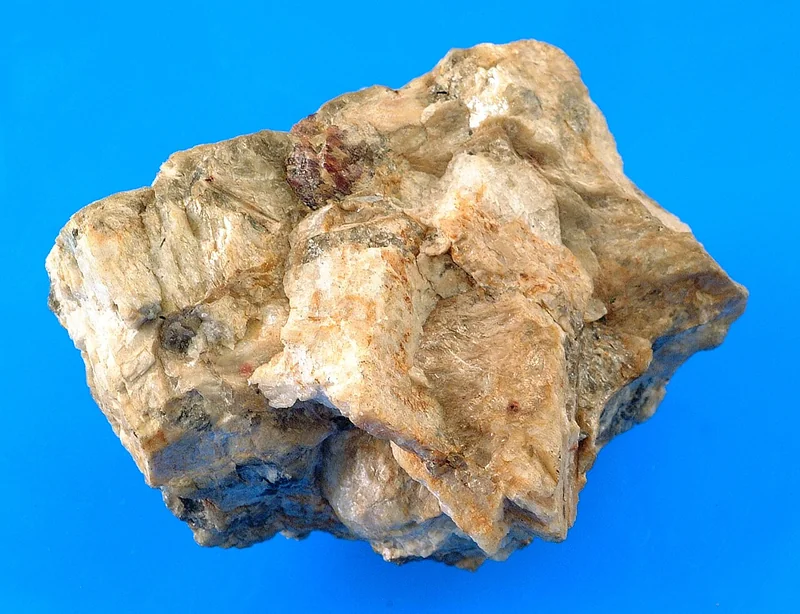
Cat's eye chrysoberyl (trade name: cymophane) is the variety of chrysoberyl (BeAl2O4) exhibiting chatoyancy — a single, sharp, luminous band resembling a feline pupil that moves across the cabochon as the stone is rotated under a single light source. The effect results from dense, parallel inclusions of rutile or hollow tubes oriented perpendicular to the crystal's c-axis, focusing reflected light into a bright band. Chrysoberyl cat's eye is the standard against which all other cat's eye gems are compared; in the gem trade, 'cat's eye' without a mineral qualifier means chrysoberyl. Sri Lanka (Ratnapura, Matura) is the primary and most historically significant source. The finest stones show the 'milk and honey' effect: the eye band divides the stone into two halves of different colour.
Quick facts
- Item type
- Variety
- Mineral class
- oxide
- Mohs hardness
- 8.5
- Crystal system
- orthorhombic
- Chemical formula
- BeAl2O4
- Color range
- honey-yellow, golden-green, brownish-yellow, grey-green
- Notable localities
- Ratnapura and Matara, Sri Lanka (primary; finest honey-green stones); Itabira, Minas Gerais, Brazil; Andhra Pradesh and Orissa, India
Chatoyancy: Rutile Needle Mechanism
Chatoyancy in chrysoberyl arises from two possible inclusion types: oriented rutile needles (exsolved TiO2 in fine parallel rods) or hollow channels (fluid inclusion tubes) aligned along the crystal's a-axis direction. When cut as a cabochon with the inclusions perpendicular to the stone's base and the c-axis parallel to the base, reflected light from a single overhead source concentrates into a single bright line perpendicular to the inclusion direction. The narrower and more closely packed the inclusions, the sharper the band. The eye moves across the dome as the stone rotates under the light. Chrysoberyl's transparency and high refractive index (1.745–1.763) enhance the brilliance of the eye band relative to cat's eye in other minerals.
Milk and Honey Effect
The highest-quality cat's eye chrysoberyl exhibits the 'milk and honey' effect: when illuminated from the side, one half of the domed cabochon appears milky white (the side toward the light) and the other half appears honey-gold (the side away from the light). Moving the light source or the stone switches the positions of the milk and honey zones. This effect arises from selective scattering and reflection by the parallel inclusions: light hitting the inclusions nearly parallel to their length scatters diffusely (milky white), while light hitting them from the opposite side is predominantly reflected as the sharp eye band (honey gold). The Sri Lankan term 'sudupassagala' ('white-half stone') describes this quality.
Trade Convention: Why 'Cat's Eye' Means Chrysoberyl
In the international gem trade, the term 'cat's eye' (or 'cymophane') without a mineral qualifier conventionally and exclusively refers to chrysoberyl showing chatoyancy. This convention dates to the 19th century when chrysoberyl cat's eye from Sri Lanka was the predominant chatoyant gem in European and American markets. Any other chatoyant gem must specify the mineral: 'cat's eye tourmaline', 'cat's eye aquamarine', 'cat's eye quartz'. Quartz cat's eye (tiger's eye and hawk's eye) is far more common and less valuable; the chatoyancy mechanism in quartz involves fibrous crocidolite replacement rather than discrete needle inclusions. The chrysoberyl convention reflects the historical primacy of Sri Lankan cymophane in the fine gem market.
Sources & further reading (3)
- gemological-institute — accessed 2026-05-08
- encyclopedia — accessed 2026-05-08
- mineral-database — accessed 2026-05-08
Frequently asked questions
What is the 'milk and honey' effect in cat's eye chrysoberyl?
When a cat's eye chrysoberyl is held under a single directional light source, the dome divides into two halves: one appears bright and milky white, the other appears golden-brown or honey-coloured. When you move the light or tilt the stone, the two halves exchange colours. The milky zone is caused by diffuse scattering of light hitting the parallel inclusions from the illuminated side; the honey zone on the shadow side shows the characteristic cat's eye line clearly. This effect requires a high density of fine, well-aligned inclusions and a transparent to semi-transparent host material — conditions most reliably found in fine Sri Lankan chrysoberyl.
Why must a cat's eye stone be cut as a cabochon?
The chatoyancy effect requires the inclusions to be arranged in a plane parallel to the base of the stone, with the dome presenting the c-axis direction perpendicular to the line of inclusions upward. A flat-based cabochon with a rounded dome places all the inclusion fibres in the correct orientation to focus reflected light into a single band across the dome. If the stone were faceted, the multiple flat facet reflections would break up the eye into many small points rather than a continuous band. The orientation of the inclusion plane relative to the cabochon base determines whether the eye appears centred (best) or off-centre.
How sharp should a cat's eye line be in a top-quality specimen?
In top-quality chrysoberyl cat's eye, the eye line should be a single, sharp, well-defined band of bright reflected light that moves clearly across the dome as the stone is rotated under a single overhead light source. The line should be narrow — not a broad, diffuse glow — and should bisect the stone symmetrically from side to side. Broadness or fuzziness of the eye indicates fewer or more widely spaced inclusions. The eye should stay centred on the dome at all viewing angles; an off-centre eye indicates incorrect cutting orientation. Colour should be clear honey-green to golden-yellow for premium stones.