Canis lupus familiaris
Tibetan Spaniel
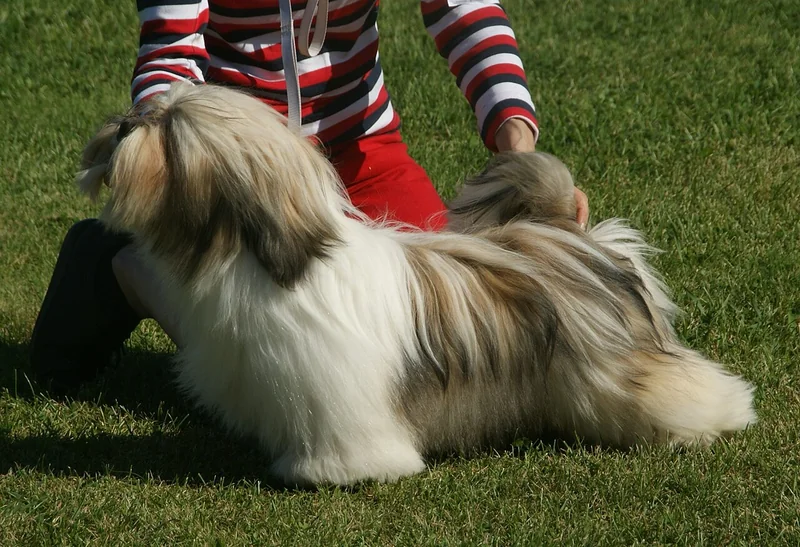
 Featured phototibetan-spaniel.jpg
The Tibetan Spaniel is a ancient Tibetan-monastery 'little lion dog' — wall-top sentinel of the lamaseries. The Tibetan Spaniel (despite the name, not a true spaniel — the breed is unrelated to the European spaniels and is more accurately classified as a small Spitz-type) was kept for centuries as an indoor companion and watchdog by Tibetan monks at the lamaseries of Tibet, where the dogs would sit on the high walls as 'little lion dogs' and bark to alert the monks to approaching strangers.
Quick facts
- AKC group
- Non-Sporting
- Origin country
- Tibet
- Origin period
- Antiquity (formalized 1898)
- Coat type
- Medium
- Coat colors
- Any colour or combination — gold, sable, red, black, white, black-and-tan, parti-colour
- Average lifespan
- 13-15 years
- Recognition
- AKC 1983 · FCI 1961 · UKC 1948 · Group 9 — Companion and Toy Dogs (Section 5: Tibetan breeds)
Origin
The Tibetan Spaniel (despite the name, not a true spaniel — the breed is unrelated to the European spaniels and is more accurately classified as a small Spitz-type, descended from the same Asian landrace that gave rise to the Pekingese, Shih Tzu, and Lhasa Apso) was kept for centuries as an indoor companion and watchdog by Tibetan monks at the lamaseries of Tibet, where the dogs would sit on the high monastery walls as 'little lion dogs' (a comparison to the lion of Buddhist symbolism) and bark to alert the monks to approaching strangers — relaying the alarm down to the larger Tibetan Mastiffs at the gates. The modern Western breed descends from a handful of dogs imported between 1898 (the first to England) and 1947 (the last before the 1950 Chinese annexation of Tibet effectively closed the country to dog exports). The AKC admitted the breed in 1983.
Recognition
The American Kennel Club admitted the breed in 1983, the United Kennel Club followed in 1948, and the Federation Cynologique Internationale published the international standard (FCI No. 231) in 1961. The FCI assigns the breed to Group 9 — Companion and Toy Dogs (Section 5: Tibetan breeds).
Standard
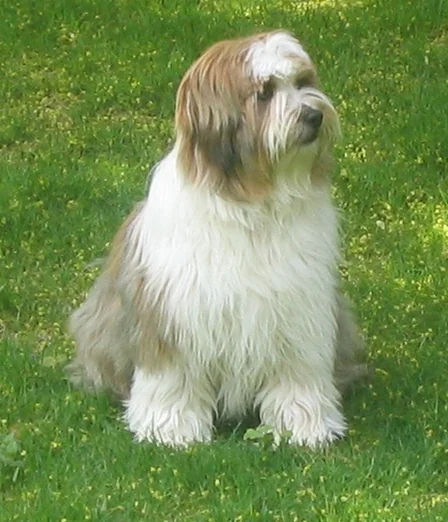
The AKC and FCI standards describe a small, active and alert dog, well-balanced and slightly longer than tall, with a slightly longer coat than the closely-related Tibetan Terrier and a flatter face. The defining features are the small, oval, dark eyes set well apart, the medium-sized pendant ears, the slight under-shot bite, and the flowing double coat — soft, silky, with a pronounced mane on the neck and shoulders, especially in adult males. Any colour or combination of colours is acceptable.
Sources & further reading (3)
- kennel-club-registry — accessed 2026-04-30
- encyclopedia — accessed 2026-04-30
- fci-standard — accessed 2026-04-30
Frequently asked questions
What is the Tibetan Spaniel's AKC group?
The American Kennel Club places the Tibetan Spaniel in the Non-Sporting Group. The Non-Sporting Group is the AKC's residual category for breeds whose modern role does not fit the older Sporting / Hound / Working / Terrier / Toy / Herding rubrics; the Bulldog, Dalmatian, and Poodle sit here. The breed's foundation working role was as a ancient Tibetan-monastery 'little lion dog' — wall-top sentinel of the lamaseries.
When was the Tibetan Spaniel officially recognized?
The American Kennel Club admitted the breed in 1983; the United Kennel Club followed in 1948; the Federation Cynologique Internationale published the international standard (FCI No. 231) in 1961.
What is the average lifespan of a Tibetan Spaniel?
Kennel-club longevity surveys place the Tibetan Spaniel's average lifespan in the 13-15 years range. The figure here represents the spread reported by the major parent-club studies and the Kennel Club (UK) purebred-dog health surveys.