Canis lupus familiaris
Spinone Italiano
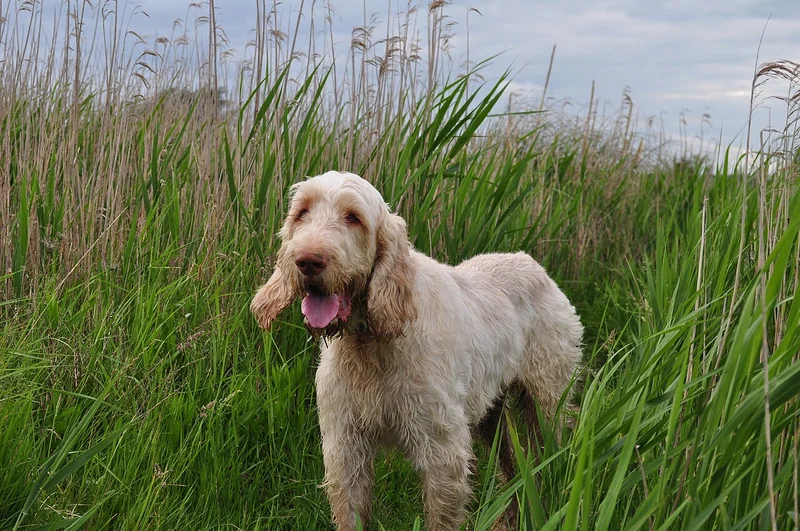 Featured photospinone-italiano.jpg
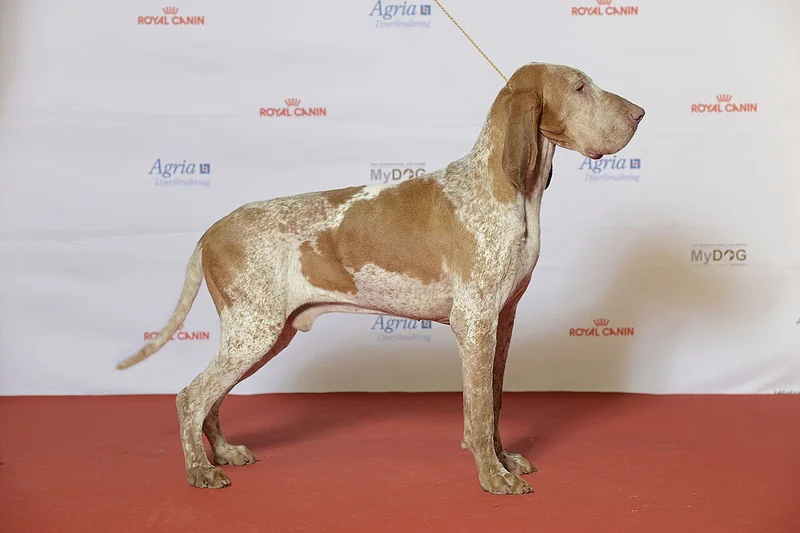
The Spinone Italiano is one of Italy's oldest hunting breeds and one of the most ancient wire-coated pointing dogs in Europe. Originating in the Piedmont region of northwestern Italy, the breed has been used for centuries as a versatile all-purpose gundog that can point, flush, and retrieve on land and water. Its distinguishing features are a coarse, wiry, thick-skinned coat, a long, square muzzle with prominent eyebrows and a thick beard, and an expression of great gentleness and intelligence. The AKC admitted the breed in 2000. Males stand 60–70 cm and weigh 29–39 kg.
Quick facts
- AKC group
- Sporting
- Origin country
- Italy
- Origin period
- Ancient, documented from 15th century
- Coat type
- Wirehaired
- Coat colors
- White, White and Orange, White and Chestnut, Chestnut Roan
- Average lifespan
- 10-12 years
- Recognition
- AKC 2000 · FCI 1954 · UKC 1995 · Group 7 — Pointing Dogs (Section 1.2: Continental Pointing Dogs, Wire-haired)
Origin
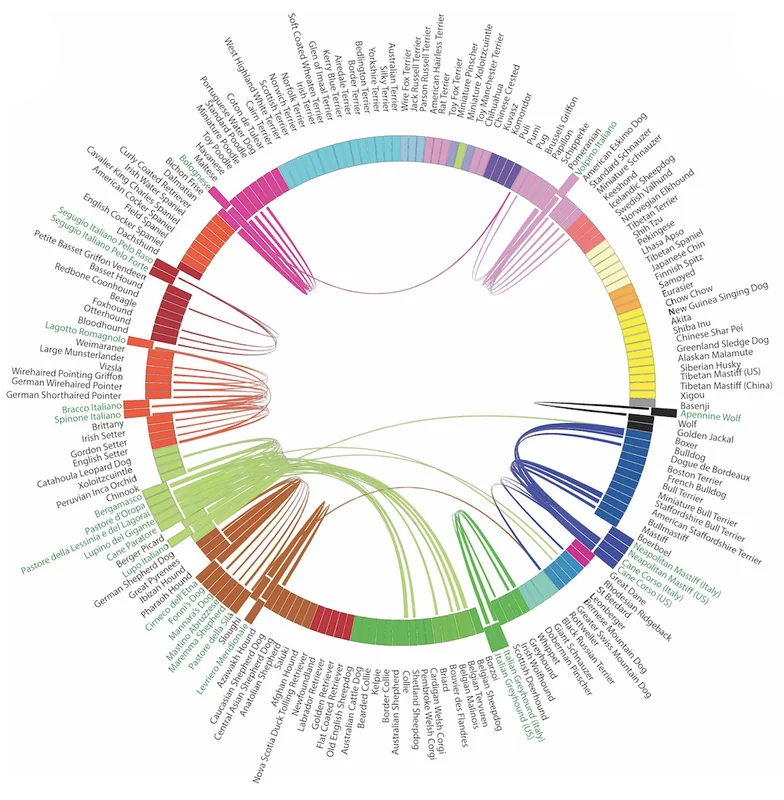
The Spinone Italiano's precise ancestry is debated, but the breed is consistently traced to the Piedmont region of northwestern Italy. Hunting dogs with the Spinone's characteristic coarse wire coat and square muzzle appear in Andrea Mantegna's frescoes (1474) in the Palazzo Ducale, Mantua, and in several 15th-century Italian paintings. A Greek or Celtic wire-coated foundation, subsequently modified by crosses with French and Russian Griffon types during the 19th century, is the most widely accepted historical interpretation. The name 'Spinone' may derive from the Italian 'spino' (thorny briar), referring to the breed's ability to work in dense thorn-covered cover.
Recognition
The Ente Nazionale della Cinofilia Italiana (ENCI) published the first breed standard in 1897. The FCI (FCI No. 165) recognised the breed in 1954, placing it in Group 7, Section 1.2 (Continental pointing dogs, wire-haired) with Italy as the patron country. The AKC entered the Spinone in its Miscellaneous Class in 1997 and granted full recognition in 2000, placing it in the Sporting Group.
Standard
The FCI and AKC standards describe a large, robust, solidly built dog with a long, almost rectangular head and a square, deep muzzle with a prominent beard, mustache, and long eyebrows. The single-layered coat is coarse, stiff, and dense — 4–6 cm long on the body, shorter on the head, ears, muzzle, and legs — and provides waterproof protection without a soft undercoat. Recognised colours are white, white with orange, white with chestnut, and brown roan with or without orange or chestnut patches. Males stand 60–70 cm; females 58–65 cm.
Sources & further reading (3)
- kennel-club-registry — accessed 2026-05-07
- encyclopedia — accessed 2026-05-07
- fci-standard — accessed 2026-05-07
Frequently asked questions
What AKC group does the Spinone Italiano belong to?
The AKC places the Spinone Italiano in the Sporting Group as a pointing dog — a type that locates game birds by scent and then freezes in a pointing posture to indicate the bird's location to the hunter. Unlike faster-moving pointer breeds, the Spinone works at a ground-covering trot that allows hunters to follow on foot, making it practical for the varied terrain of northern Italy.
What makes the Spinone Italiano's coat distinctive?
The Spinone has a coarse, thick, stiff wire coat approximately 4–6 cm long on the body that is naturally waterproof and protective against thorns and brush. Unlike other wire-coated breeds that have a denser undercoat, the Spinone's coat is a single layer. The prominent thick beard, mustache, and long eyebrows give the breed its characteristic gentle and human expression.
When was the Spinone Italiano recognised by the AKC?
The AKC granted full recognition to the Spinone Italiano in 2000, placing it in the Sporting Group. The breed had entered the AKC Miscellaneous Class in 1997. The FCI had recognised the breed since 1954 (FCI No. 165) with Italy as the patron country, and the breed standard traces back to the ENCI standardisation of 1897.