Canis lupus familiaris
Lagotto Romagnolo
 Featured photolagotto-romagnolo.jpg
The Lagotto Romagnolo is an ancient Italian water-retriever breed originating from the marshlands of Romagna in northeastern Italy. Once used to retrieve waterfowl from the wetlands along the Adriatic coast, the breed transitioned to truffle hunting after the Romagna marshes were drained in the 19th century. Its curly, woolly double coat is waterproof and naturally non-shedding. Today the Lagotto is the only breed officially recognised by kennel clubs worldwide as a specialist truffle-hunting dog. The AKC admitted the breed in 2015.
Quick facts
- AKC group
- Sporting
- Origin country
- Italy
- Origin period
- Ancient, documented from 16th century
- Coat type
- Curly
- Coat colors
- Off White, White with Brown Patches, Brown, Orange, Roan
- Average lifespan
- 15-17 years
- Recognition
- AKC 2015 · FCI 1995 · UKC 2006 · Group 8 — Retrievers, Flushing Dogs, Water Dogs (Section 3: Water Dogs)
Origin
The Lagotto Romagnolo takes its name from the Romagna region of northeastern Italy and the Italian word 'lago' (lake). Paintings by Bartolomeo Passarotti (16th century) and Andrea Mantegna depict curly-coated water dogs closely resembling the modern Lagotto in the marshes of the Po Delta. For centuries the breed retrieved waterfowl from the marshy wetlands around Comacchio. As land-reclamation projects drained these wetlands during the 18th–19th centuries, the breed's acute olfactory ability and strong desire to search the ground were redirected to finding the prized underground truffle fungi.
Recognition
The Club Italiano Lagotto standardised the breed after a revival effort beginning in the 1970s, when the Lagotto's population had declined severely. The Kennel Club Italiano recognised the breed in 1995, and the FCI (FCI No. 298) followed in the same year, assigning the Lagotto to Group 8, Section 3 (Water Dogs) — the first formal registration of the breed on the international level. The AKC admitted the Lagotto to the Miscellaneous Class in 2013 and granted full Sporting Group recognition in 2015.
Standard
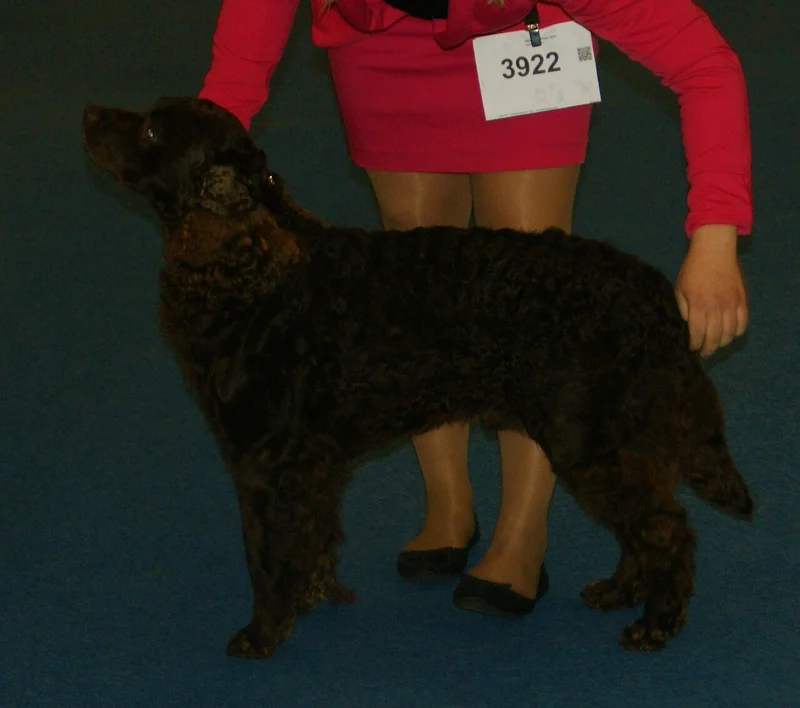
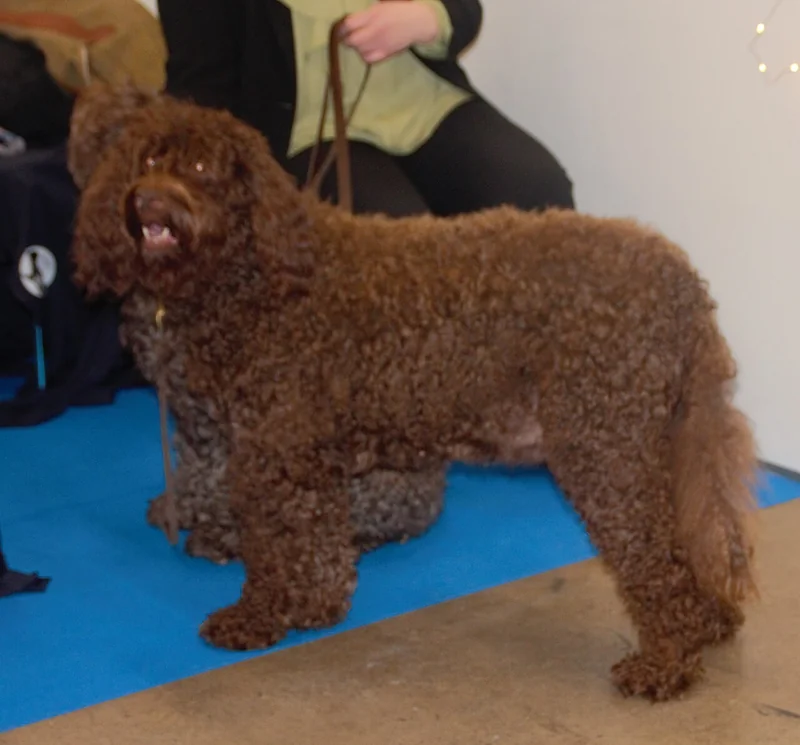
The FCI and AKC standards describe a medium-small, strongly built, robust dog, slightly longer than tall, with a large, blunt-muzzled head and a thick curly coat that covers the whole body except the muzzle. The coat's tight, ring-shaped curls are woolly in texture and form a dense, waterproof layer; they must not be corded. Recognised colours include off-white, white with brown patches, roan, brown, and orange. Males stand 43–48 cm and weigh 13–16 kg; females 41–46 cm.
Sources & further reading (3)
- kennel-club-registry — accessed 2026-05-07
- encyclopedia — accessed 2026-05-07
- fci-standard — accessed 2026-05-07
Frequently asked questions
Why is the Lagotto Romagnolo used for truffle hunting?
The Lagotto Romagnolo has an exceptionally keen sense of smell, a strong instinct to search the ground, and a soft mouth suited to retrieving without damaging found objects. When the Romagna marshes were drained in the 19th century, hunters redirected these natural abilities toward locating underground truffles — the same nose that found downed waterfowl in reeds was equally effective at detecting the chemical compounds emitted by buried fungi. The Lagotto is the only breed officially recognised as a specialist truffle hunter.
When was the Lagotto Romagnolo recognised by the AKC?
The AKC granted the Lagotto Romagnolo full recognition in 2015, placing it in the Sporting Group. The breed entered the AKC Miscellaneous Class in 2013. The FCI had recognised the Lagotto in 1995 (FCI No. 298), and the Kennel Club Italiano standardised the breed following a revival effort in the 1970s.
What does 'Lagotto Romagnolo' mean?
The name combines the Italian root 'lago' (lake) with 'Romagnolo', the adjective for the Romagna region of northeastern Italy. A loose translation is 'lake dog of Romagna', which accurately describes the breed's original role as a water retriever in the wetlands along the Adriatic coast of that region.