Canis lupus familiaris
Sloughi
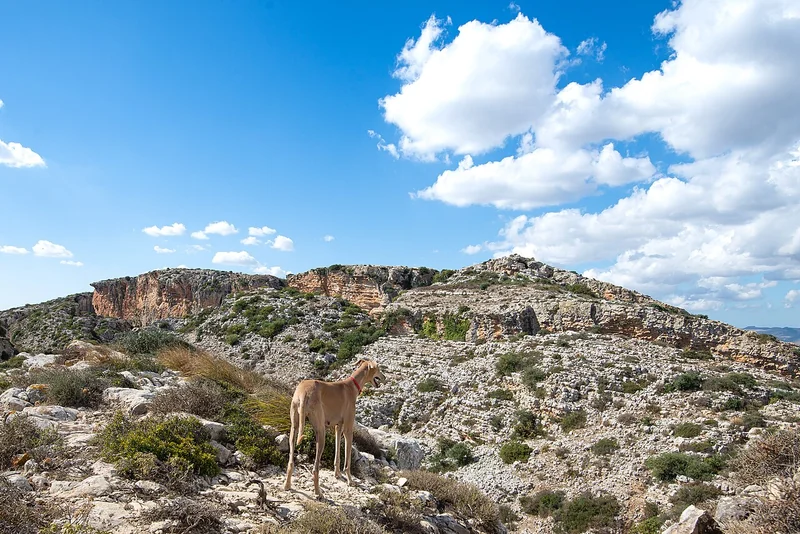 Featured photosloughi.jpg
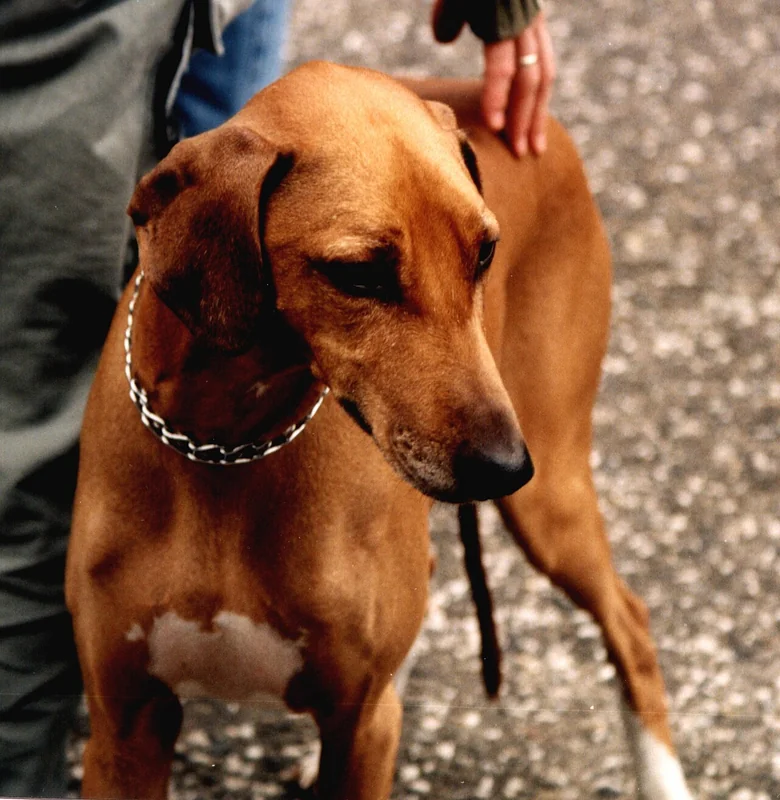
The Sloughi is an ancient smooth-coated sighthound from North Africa — principally Morocco, Algeria, Tunisia, and Libya — where it has been used for thousands of years by Berber and Arab peoples to course gazelle, hare, fox, and jackal across the deserts, mountains, and semi-arid steppes of the Maghreb. Its slender, muscular build, deep chest, and tucked-up abdomen are characteristic of the long-distance running sighthound type. The FCI has recognised the breed since 1935 with Morocco as patron country. The AKC admitted the Sloughi in 2016.
Quick facts
- AKC group
- Hound
- Origin country
- Morocco
- Origin period
- Ancient
- Coat type
- Short
- Coat colors
- Sand, Light Sand, Fawn, Red Sandy
- Average lifespan
- 12-16 years
- Recognition
- AKC 2016 · FCI 1935 · UKC 1995 · Group 10 — Sighthounds (Section 3: Short-haired Sighthounds)
Origin
The Sloughi has existed in North Africa since prehistoric times; rock engravings in the Tassili n'Ajjer plateau of Algeria and the Libyan Sahara depict coursing dogs matching the breed's profile, dated to approximately 3000 BCE. Berber and Arab tribal peoples of the Maghreb prized the Sloughi as a hunting companion for coursing gazelle, hare, fox, and jackal across the vast, arid landscapes of Morocco, Algeria, Tunisia, and Libya. The breed shared the tents of its nomadic owners and was treated with a reverence unusual in traditional Islamic societies, which generally regarded dogs as unclean.
Recognition
The FCI recognised the Sloughi in 1935 (FCI No. 188) with Morocco as the patron country. For a period, the FCI grouped the Sloughi with the Azawakh; after re-evaluation, both received independent standard status. The UKC recognised the Sloughi in 1995. The American Sloughi Association, founded in 1989, worked to establish the breed in North America, and the AKC admitted the Sloughi to the Miscellaneous Class in 2011 and granted full Hound Group recognition in 2016.
Standard
The FCI and AKC standards describe a medium-to-large, slender, muscular sighthound with a noble, somewhat melancholy expression conferred by large, dark eyes and a long, fine head. The skin is fine and tight with no wrinkles; the coat is smooth, fine, and close throughout. Accepted colours range from light sand to fawn with or without a black mask and black mantle; brindle markings are also acceptable. Males stand 66–72 cm; females 61–68 cm.
Sources & further reading (3)
- kennel-club-registry — accessed 2026-05-07
- encyclopedia — accessed 2026-05-07
- fci-standard — accessed 2026-05-07
Frequently asked questions
What AKC group does the Sloughi belong to?
The AKC places the Sloughi in the Hound Group as a sighthound — a type of hunting dog that pursues prey primarily by sight and speed. The Sloughi was developed in North Africa to course swift desert game such as gazelle and hare across arid terrain. The AKC granted full Hound Group recognition in 2016.
How does the Sloughi differ from the Azawakh and the Saluki?
All three are ancient Middle Eastern and African sighthounds, but they differ in origin and build. The Sloughi is from the North African Maghreb (Morocco–Libya), has a smooth coat with no feathering, and a generally more compact build than the Saluki. The Azawakh originates from the West African Sahel and has an even more extreme, angular build than the Sloughi. The Saluki, from the Fertile Crescent and Central Asia, often has silky feathering on ears, legs, and tail. All three are FCI Group 10 sighthounds.
When was the Sloughi recognised by the AKC?
The AKC granted full recognition to the Sloughi in 2016, placing it in the Hound Group. The breed entered the Miscellaneous Class in 2011. The FCI had recognised it since 1935 (FCI No. 188) with Morocco as patron, and the UKC followed in 1995.